
Car AC Compressor Diagnostics & Replacement in Daytona Beach, FL
The AC compressor circulates refrigerant through your vehicle's air-conditioning system and creates the pressure difference necessary for the system to cool the passenger compartment. When the compressor stops operating correctly, the AC may blow warm air, cool intermittently, make unusual noises, or fail to build the pressures required for proper cooling.
But warm air does not automatically mean the compressor is bad. Low refrigerant, an electrical control problem, failed pressure sensor, clutch problem, damaged wiring, incorrect system pressures, or another AC component can prevent a good compressor from operating.
Jimmy’s Mobile Care provides car AC compressor diagnostics and replacement in Daytona Beach, FL. We diagnose compressor operation and the conditions that control it before determining whether the compressor actually needs replacement.
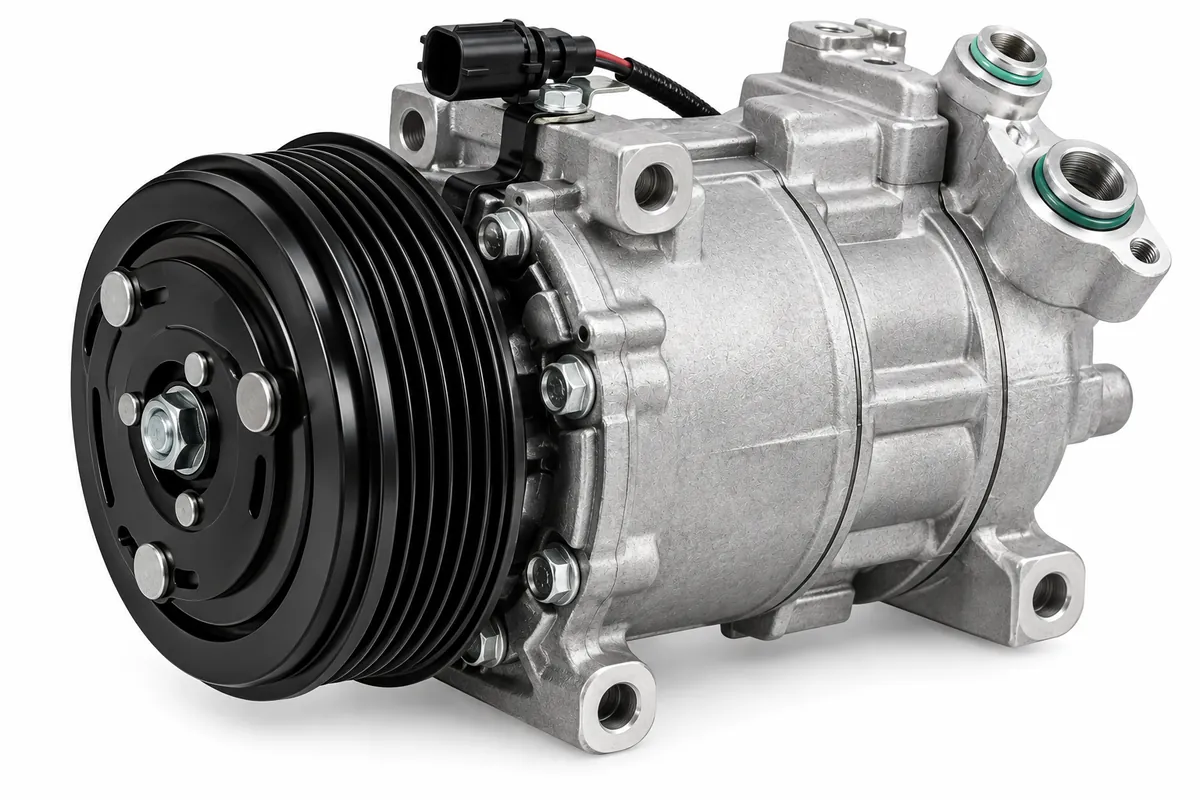
Mobile AC Compressor Diagnostics in Daytona Beach
The compressor is one of the most important—and potentially expensive—components in the automotive AC system.
That makes accurate diagnosis especially important.
Depending on the vehicle and symptoms, compressor diagnosis can include:
- AC system pressure testing
- Compressor engagement checks
- Compressor command evaluation
- AC clutch testing where equipped
- Compressor electrical circuit testing
- Fuse and relay checks
- Drive belt inspection
- Compressor pulley and bearing inspection
- Variable-displacement compressor evaluation
- Compressor control valve diagnosis where applicable
- Refrigerant level and leak considerations
- Unusual compressor noise diagnosis
- High-side and low-side pressure comparison
- Determining whether the compressor is pumping effectively
The objective is to distinguish an actual compressor failure from another AC problem that prevents the compressor from operating normally.
What Does a Car AC Compressor Do?
The compressor is the component responsible for moving refrigerant through the AC system.
It takes lower-pressure refrigerant returning from the evaporator side of the system, compresses it, and sends high-pressure refrigerant toward the condenser.
The system then continues circulating refrigerant through the remaining components before it returns to the compressor.
Without the correct refrigerant circulation and pressure relationship, the AC system cannot remove cabin heat effectively.
This is why compressor performance is evaluated using the entire refrigeration cycle rather than merely checking whether the compressor appears to be turning.
Signs of a Bad AC Compressor
Possible compressor-related symptoms include:
- AC blowing warm air
- AC not getting cold enough
- Intermittent cooling
- Compressor not engaging
- Compressor engaging but not cooling
- Abnormal high-side and low-side pressures
- Grinding or rattling from the compressor area
- Compressor pulley noise
- AC clutch slipping or failing to engage
- Drive belt problems associated with a seized compressor
- Refrigerant leaking from the compressor
- Compressor operating but failing to create the expected pressure difference
Some of these symptoms can also be caused by other components.
That is why compressor diagnosis needs to go beyond the symptom itself.
AC Compressor Not Turning On
If the compressor doesn't operate when the AC is requested, the compressor itself is only one possible cause.
The vehicle may prevent compressor operation because of:
- Low refrigerant pressure
- Excessive refrigerant pressure
- Pressure sensor or switch input
- Blown fuse
- Failed relay
- Wiring problem
- Clutch circuit problem
- Engine-control condition
- AC control-system fault
- Compressor control valve problem
- Internal compressor failure
Before replacing the compressor, we determine whether it is being commanded to operate and whether the electrical and refrigerant conditions allow it to do so.
AC Compressor Command Diagnostics
Modern vehicles often involve several controllers and sensor inputs before compressor operation is authorized.
When the driver requests AC, the system may consider:
- Refrigerant pressure
- Engine temperature
- Engine operating conditions
- AC control-panel request
- Ambient temperature
- Evaporator temperature
- Electrical system voltage
- Engine-control-module commands
A compressor that isn't operating may therefore be responding correctly to a command that has been withheld for another reason.
Diagnostic data can help determine whether the vehicle is requesting compressor operation.
Checking AC System Pressures
High-side and low-side refrigerant pressures provide important information about compressor performance.
A properly operating compressor should create a pressure difference between the high and low sides while the system is operating under the appropriate conditions.
Pressure readings can help identify situations where:
- The compressor isn't operating
- The compressor is operating but not pumping effectively
- Refrigerant charge may be low
- High-side pressure is excessive
- Low-side pressure is abnormal
- Refrigerant flow may be restricted
- Another system condition is affecting compressor operation
Pressure readings have to be interpreted in context. A single pressure number by itself doesn't automatically identify a failed compressor.
Compressor Runs but AC Is Not Cold
Seeing the compressor operate does not prove that it is compressing refrigerant effectively.
A compressor can rotate but fail internally to create the required pressure difference.
When this is suspected, we evaluate system pressures and operating behavior.
If high-side and low-side pressures remain too similar while the compressor is being driven and commanded appropriately, compressor pumping ability becomes an important diagnostic consideration.
But refrigerant quantity and other system conditions must still be considered before condemning the compressor.
AC Compressor Clutch
Many automotive AC compressors use an electromagnetic clutch.
When AC operation is requested, the clutch connects the compressor shaft to the belt-driven pulley.
With the clutch released, the pulley can rotate without driving the compressor internally.
This creates several possible failure points:
- Compressor itself
- Clutch coil
- Clutch plate
- Pulley
- Pulley bearing
- Electrical supply
- Relay or control circuit
A clutch failure does not necessarily mean the internal compressor mechanism has failed.
AC Compressor Clutch Not Engaging
If a clutch-equipped compressor isn't engaging, diagnosis can include determining whether the clutch is receiving the required electrical command.
Possible causes include:
- No power at the clutch
- Poor ground
- Open clutch coil
- Blown fuse
- Failed relay
- Wiring fault
- Excessive clutch air gap
- Low refrigerant pressure
- Control module withholding compressor operation
Testing the clutch circuit can prevent replacing an entire compressor when the problem is elsewhere in the control system.
AC Compressor Clutch Air Gap
The clutch plate must be positioned close enough to the pulley for the electromagnetic coil to pull it into engagement.
Excessive air gap can cause:
- Intermittent engagement
- Failure to engage when hot
- Clutch slipping
- Inconsistent compressor operation
This can create an AC system that works when cold but stops cooling after the vehicle has been driven.
On serviceable clutch designs, the clutch condition should be distinguished from an internal compressor failure.
AC Compressor Pulley and Bearing
On many clutch-equipped systems, the compressor pulley continues turning whenever the engine is running, even when the compressor isn't engaged.
A bearing allows that pulley to rotate independently.
A worn compressor pulley bearing can produce:
- Grinding
- Growling
- Roughness
- Excessive play
- Heat
- Belt noise
This is mechanically different from the compressor failing internally.
Determining whether noise comes from the pulley bearing, clutch, compressor, tensioner, idler, or another belt-driven accessory can prevent unnecessary compressor replacement.
AC Compressor Noise Diagnosis
Noise near the compressor doesn't automatically mean the compressor itself has failed.
We consider whether the sound changes when:
- AC is switched on
- Compressor engages
- Engine speed changes
- Belt load changes
Possible sources can include:
- Compressor internals
- Compressor clutch
- Pulley bearing
- Drive belt
- Belt tensioner
- Idler pulley
- Another nearby accessory
A noise that exists with the compressor disengaged may point in a different direction than a noise that begins only when the compressor starts pumping.
Seized AC Compressor
An internally seized compressor is a more serious mechanical failure.
Depending on the compressor design, a seizure can:
- Stop the compressor from turning
- Cause clutch slipping
- Damage the clutch
- Burn the drive belt
- Cause belt squeal
- Break or throw the belt
- Place excessive load on the belt drive
If the same serpentine belt drives other critical accessories, a seized compressor can potentially affect more than cabin cooling.
The compressor and belt-drive system need to be inspected before the vehicle is returned to normal operation.
AC Compressor Drive Belt Inspection
Many compressors are mechanically driven by the engine's accessory belt.
During compressor diagnosis we consider the condition of the belt and its ability to drive the compressor.
Problems can include:
- Missing belt
- Broken belt
- Loose belt
- Contaminated belt
- Cracked or deteriorated belt
- Belt slipping under compressor load
- Tensioner problems
Replacing a compressor without correcting a belt-drive problem can leave the AC system with the same symptoms.
Clutchless and Variable-Displacement AC Compressors
Not every modern compressor uses a traditional clutch that repeatedly turns the compressor on and off.
Many vehicles use variable-displacement compressors.
Some of these compressors remain mechanically driven while cooling output is controlled by changing the compressor's internal displacement.
This means a compressor may appear to be turning normally even though it isn't producing the expected cooling.
Diagnosis therefore has to consider the actual compressor design.
AC Compressor Control Valve
Many variable-displacement compressors use an electronic control valve to regulate compressor output.
A control-valve problem can cause symptoms such as:
- Poor cooling
- No cooling
- Intermittent cooling
- Incorrect refrigerant pressures
- Compressor appearing to run without producing adequate cooling
Depending on the application, the control valve may be serviceable separately.
This is an important diagnostic distinction because a control problem should not automatically result in replacement of an otherwise usable compressor.
Testing a Variable-Displacement Compressor
Diagnosing a variable compressor can involve more than determining whether the pulley is rotating.
Depending on the vehicle, we may evaluate:
- Compressor command
- Control-valve signal
- Refrigerant pressures
- Pressure response to command changes
- Relevant scan data
- Electrical circuit condition
If the compressor is commanded to increase output but system pressures don't respond appropriately, the compressor or its control mechanism becomes a stronger suspect.
Low Refrigerant Can Prevent Compressor Operation
A refrigerant leak can cause the system pressure to fall below the level required for normal compressor operation.
Many vehicles intentionally disable the compressor under low-pressure conditions to protect it.
That means a compressor that doesn't turn on may actually be responding to a refrigerant leak elsewhere in the AC system.
Adding a compressor will not fix a leaking condenser, evaporator, hose, seal, or another refrigerant leak.
Those conditions need to be diagnosed separately.
High Pressure Can Disable the Compressor
Excessive refrigerant pressure can also cause the vehicle to limit or disable compressor operation.
High pressure can involve conditions such as:
- Condenser airflow problems
- Cooling fan problems
- Refrigerant charge problems
- System restriction
- Other AC faults
Again, the compressor not operating may be a protective response rather than proof that the compressor failed.
AC Compressor Refrigerant Leaks
The compressor itself can be a source of refrigerant leakage.
Potential leak locations vary with compressor design but can include:
- Shaft seal area
- Compressor body seals
- Case joints
- Service connections
- Hose/manifold connections
A leak near the compressor should be traced to its actual source before replacement.
Refrigerant oil can spread across surrounding components, making the precise leak location less obvious than it initially appears.
Compressor Oil and Lubrication
The AC compressor depends on refrigerant oil circulating through the system for lubrication.
The correct oil type and quantity are important.
Too little lubrication can damage the compressor.
Incorrect oil or excessive oil can also affect system operation.
When replacing a compressor, the amount of oil contained in the replacement unit and the amount remaining elsewhere in the system need to be considered according to the vehicle's service requirements.
Simply filling a replacement compressor with an arbitrary amount of oil is not the correct approach.
Internal AC Compressor Failure
A compressor can fail internally because of wear, lubrication problems, overheating, contamination, or mechanical damage.
Internal failure can range from reduced pumping efficiency to complete seizure.
A particularly important question is whether the failed compressor has released debris into the refrigerant circuit.
That determines whether the repair can safely stop with compressor replacement or whether additional AC-system service is necessary.
Metal Debris From a Failed AC Compressor
A severe internal compressor failure can distribute metallic debris through the AC system.
Installing a new compressor into a contaminated system can allow that debris to circulate back into the replacement unit.
This can result in another compressor failure.
When evidence indicates internal mechanical destruction, the rest of the refrigerant circuit has to be considered before installing a replacement compressor.
Compressor Failure and the AC Condenser
Modern condensers often contain very small refrigerant passages.
If a compressor has contaminated the system with metal debris, some condenser designs can be difficult or impossible to clean adequately.
Depending on the vehicle, severity of compressor failure, and system design, condenser replacement may become part of a proper compressor repair.
That doesn't mean every compressor replacement automatically requires a condenser.
The failure mode determines the additional work.
Compressor Failure and the Expansion Device
Debris from a failed compressor can also affect the system's refrigerant-metering device.
Depending on the vehicle, this may be an:
- Expansion valve
- Orifice tube
- Other metering device
A contaminated or restricted metering device can prevent the replacement compressor from operating within the correct pressure range.
We evaluate the reason the original compressor failed rather than treating every replacement as an isolated component swap.
Flushing the AC System After Compressor Failure
Whether an AC system should or can be flushed depends on the type of failure and the design of the components.
Certain lines and components may be flushable.
Other components generally shouldn't be treated the same way because of their internal construction.
If internal compressor debris is present, the repair plan must account for where contamination may have traveled and which components can be safely cleaned or need replacement.
Receiver-Drier or Accumulator During Compressor Service
Automotive AC systems use a moisture-removing component such as a receiver-drier or accumulator, depending on system design.
When the system has been opened for major repairs or contaminated by a compressor failure, replacement of the applicable moisture-control component may be required or recommended according to the repair procedure.
Its job is different from the compressor, but its condition can matter to the reliability of the repaired system.
AC Compressor Replacement
Once diagnosis confirms that compressor replacement is required, the procedure varies by vehicle and compressor design.
A typical repair can involve:
- Confirming compressor failure. We verify that system pressures, electrical controls, and operating conditions support the diagnosis.
- Determining how the compressor failed. A leaking compressor, failed clutch, weak compressor, and internally destroyed compressor don't necessarily require identical supporting repairs.
- Recovering the refrigerant. Refrigerant must be properly recovered before the sealed AC system is opened.
- Removing components required for access. Belt, shields, brackets, or other parts may need removal depending on compressor location.
- Disconnecting refrigerant connections. AC lines are separated from the compressor using the appropriate procedure.
- Removing the failed compressor. Mounting hardware is removed and the compressor is taken out.
- Evaluating contamination when required. Evidence of internal compressor failure can change the repair procedure.
- Preparing the replacement compressor. Correct oil quantity and application requirements are addressed.
- Installing the replacement compressor. The unit is mounted and refrigerant connections are restored with appropriate seals.
- Restoring the belt drive. Belt routing, tension, and related components are checked.
- Evacuating the AC system. Air and moisture are removed from the opened refrigerant circuit.
- Checking system integrity. The system must be capable of maintaining the required vacuum or otherwise pass the appropriate leak checks.
- Charging the correct refrigerant quantity. The AC system is charged according to vehicle specifications.
- Operating and testing the system. Compressor operation, pressures, vent temperature, and related functions are evaluated.
Replacement is therefore much more than removing one compressor and bolting another one in its place.
Evacuating the AC System After Compressor Replacement
Any time the sealed refrigerant system is opened, air and moisture can enter.
Before charging the repaired system, a vacuum is applied to remove them.
Moisture inside an AC system can cause performance problems and interact with refrigerant and oil in undesirable ways.
Evacuation is therefore an essential part of compressor replacement.
Charging the AC System After Compressor Replacement
After the repair has been evacuated and checked, the system needs the correct amount of refrigerant.
Automotive AC systems are designed around a specified refrigerant charge.
Too little refrigerant can reduce cooling and lubrication.
Too much refrigerant can increase system pressures and also reduce performance.
The system should be charged according to the vehicle specification rather than by guessing from gauge readings alone.
Why We Don't Replace the Compressor Just Because the AC Is Warm
Warm air is one of the least specific AC symptoms.
It can result from:
- Low refrigerant
- Refrigerant leak
- Electrical problem
- Compressor control problem
- Failed clutch
- Pressure sensor problem
- Condenser airflow problem
- Cooling fan problem
- Expansion-device problem
- Blend-door or HVAC problem
- Actual compressor failure
The compressor is only one part of the system.
Diagnosing the operating conditions before replacement can prevent one of the most expensive AC components from being replaced unnecessarily.
Can an AC Compressor Be Repaired?
That depends on what has failed and the compressor design.
Certain external or control-related components may sometimes be serviceable separately, such as:
- Compressor clutch components on applicable designs
- Pulley or bearing components on some applications
- Electronic compressor control valve on certain variable-displacement compressors
An internally worn, seized, or mechanically damaged compressor generally requires compressor replacement rather than an on-vehicle internal rebuild.
The diagnosis determines whether the failure is actually inside the compressor.
Does the AC Compressor Have to Be Replaced With the Clutch?
Replacement configuration varies by application.
Some compressors are supplied as complete assemblies with the clutch and pulley.
Other components may be available separately.
Clutchless variable-displacement compressors use a different design altogether.
We identify the compressor installed on the vehicle before determining which component or assembly needs replacement.
How Much Does Car AC Compressor Replacement Cost?
AC compressor replacement cost varies considerably by vehicle and by the way the compressor failed.
Factors can include:
- Vehicle year, make, and model
- Compressor design
- Compressor accessibility
- Clutch-equipped or variable-displacement design
- Replacement compressor cost
- Refrigerant type and quantity
- Refrigerant recovery and recharge
- Required compressor oil
- Seals and related hardware
- Internal contamination
- Condenser involvement
- Expansion valve or orifice tube involvement
- Receiver-drier or accumulator requirements
- Drive belt condition
- Additional AC faults discovered during diagnosis
A compressor that simply has an external failure can require a very different repair from one that has internally destroyed itself and contaminated the refrigerant system.
Call Jimmy’s Mobile Care at (386) 308-2509 with your vehicle information and AC symptoms so we can discuss the appropriate diagnostic service.
Why Diagnose the AC Compressor Before Replacing It?
Compressor replacement should follow evidence that the compressor or its directly serviceable components have actually failed.
Diagnosis helps answer several important questions.
Is the Compressor Being Commanded On?
If not, the problem may be somewhere in the control system.
Does the Compressor Have the Required Electrical Supply?
A fuse, relay, wiring, clutch, or control circuit can prevent operation.
Is There Enough Refrigerant for the System to Permit Compressor Operation?
A refrigerant leak can cause a good compressor to remain disabled.
Is the Compressor Creating the Correct Pressure Difference?
A compressor can rotate without pumping effectively.
Is the Problem the Compressor or Its Clutch?
On clutch-equipped systems, those are not automatically the same failure.
Is It a Variable-Displacement Control Problem?
A compressor control valve can affect output even while the compressor is mechanically turning.
Has the Compressor Contaminated the System?
Internal debris can substantially change the repair required to protect the replacement compressor.
Answering these questions determines what actually needs to be repaired.
Mobile AC Compressor Diagnostics & Replacement in Daytona Beach
Jimmy’s Mobile Care brings AC compressor diagnostics and replacement directly to your Daytona Beach location.
If your car AC blows warm, the compressor doesn't engage, cooling is intermittent, the compressor is noisy, or another diagnosis suggests compressor failure, we can evaluate the compressor and its immediate operating controls before replacement.
When compressor replacement is confirmed and the repair can be appropriately performed on-site, we can replace the failed unit and complete the related AC service required for the application.
Schedule AC Compressor Diagnostics & Replacement in Daytona Beach
A compressor that doesn't turn on isn't necessarily bad, and a compressor that turns isn't necessarily pumping correctly.
Jimmy’s Mobile Care evaluates compressor command, electrical operation, refrigerant pressures, clutch or variable-displacement operation, mechanical condition, and evidence of internal failure to determine whether compressor replacement is actually required.
Call Jimmy’s Mobile Care at (386) 308-2509 to schedule car AC compressor diagnostics and replacement in Daytona Beach, FL. Call today and we'll come to your location.