
Car Battery Testing & Replacement in Daytona Beach, FL
A weak or failing car battery can cause slow cranking, clicking, intermittent electrical problems, repeated jump starts, or a vehicle that will not start at all. But a dead battery does not automatically mean the battery itself needs replacement.
Jimmy’s Mobile Care provides car battery testing and replacement in Daytona Beach, FL. We test battery condition and check the starting and charging system as appropriate before replacing the battery so an alternator problem, parasitic drain, loose terminal, damaged cable, poor ground, or another electrical fault is not mistaken for battery failure.
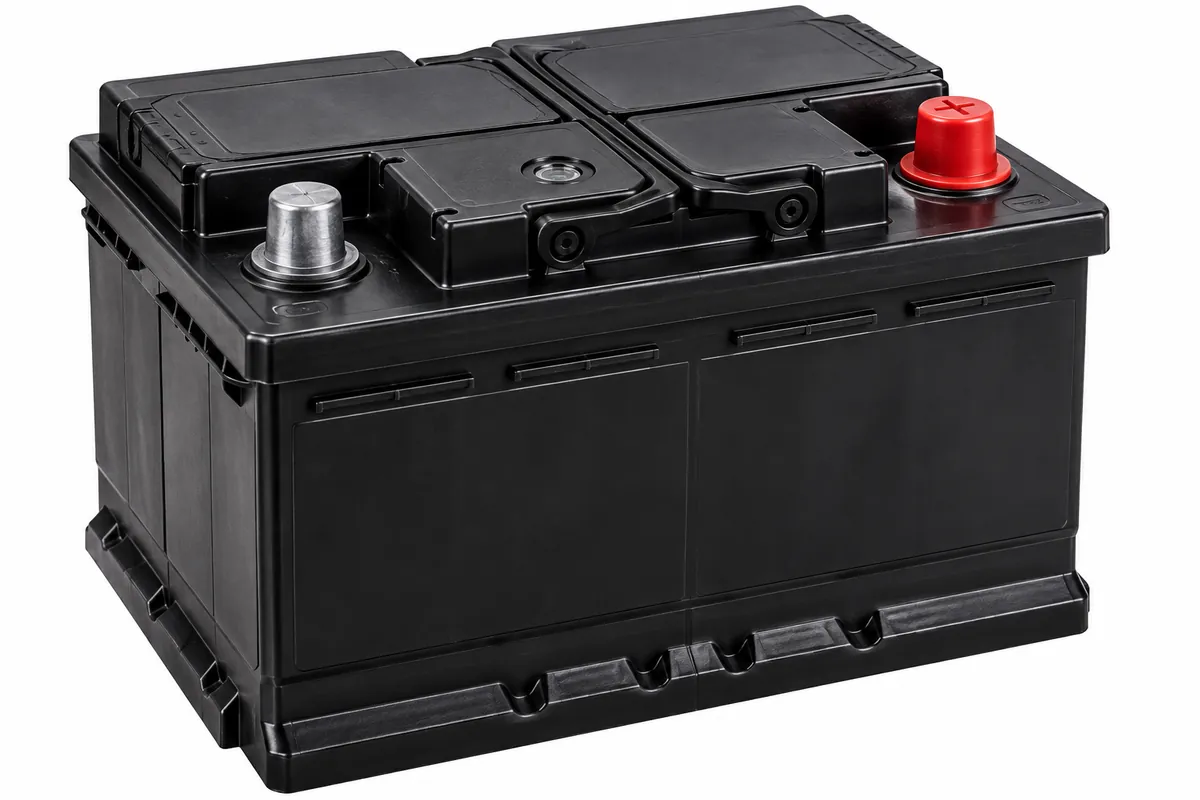
Mobile Car Battery Testing in Daytona Beach
A battery should be evaluated by more than simply checking voltage.
Depending on the vehicle and symptoms, battery testing can include:
- Battery state of charge
- Resting voltage
- Starting voltage
- Conductance or load testing
- Cold-cranking capability
- Battery health
- Battery age
- Terminal condition
- Battery cable condition
- Ground connections
- Charging voltage
- Alternator output
- Parasitic-drain symptoms
- Battery type and specifications
- Battery registration requirements where applicable
The purpose of testing is to determine whether the battery is discharged, weak, internally failed, or simply being affected by another electrical problem.
What Does a Car Battery Do?
The battery stores electrical energy used by the vehicle.
Its most demanding job is providing the high current needed to operate the starter motor during engine cranking.
The battery also supplies power when the engine is off and helps stabilize electrical voltage while the vehicle is operating.
Once the engine starts, the alternator normally supplies most of the vehicle’s electrical power and recharges the battery.
Car Battery vs. Alternator
The battery and alternator perform different functions.
Battery
Stores electrical energy and provides the high current needed to start the engine.
Alternator
Produces electrical power while the engine is running and restores charge to the battery.
A weak alternator can repeatedly discharge a good battery.
A defective battery can also put excessive load on a good alternator.
Both systems may need to be evaluated when a vehicle repeatedly goes dead.
Signs of a Bad Car Battery
Possible battery-failure symptoms include:
- Slow engine cranking
- Clicking when trying to start
- Vehicle will not crank
- Repeated jump starts
- Battery goes dead after sitting
- Electrical systems reset during startup
- Lights become very dim during cranking
- Battery tests weak
- Battery case swollen or damaged
- Battery will not hold a charge
- Intermittent starting problems
These symptoms can also occur because of cable, starter, charging-system, or parasitic-drain problems.
Testing should confirm battery condition before replacement.
Slow Cranking
A weak battery may not be able to provide enough current for normal starter operation.
The engine may:
- Turn slowly
- Struggle before starting
- Crank slower when cold
- Become progressively harder to start
However, slow cranking can also result from:
- Starter problem
- High resistance in battery cables
- Poor ground
- Engine mechanical resistance
Battery testing helps determine whether insufficient battery output is actually responsible.
Clicking When Trying to Start
Clicking can occur when the electrical system has enough voltage to operate a relay or starter solenoid but not enough current to crank the engine properly.
Possible causes include:
- Weak battery
- Discharged battery
- Corroded terminal
- Loose cable connection
- Starter problem
- Poor ground
A click does not prove that the battery is defective.
Car Won’t Start but Lights Work
Interior or dashboard lights require far less electrical current than the starter motor.
A battery can still operate:
- Lights
- Radio
- Instrument cluster
while being too weak to crank the engine.
The battery needs to be tested under load rather than judged only by whether accessories turn on.
Battery Voltage
Battery voltage gives useful information about state of charge, but voltage alone does not tell the complete story.
A 12-volt automotive battery that has been resting may commonly read around:
- 12.6 volts when well charged
- Lower as state of charge decreases
However, temperature, battery chemistry, recent charging, and surface charge can affect readings.
A battery can show acceptable voltage and still fail when asked to deliver starter current.
Battery Voltage With Engine Off
Engine-off voltage can help determine whether the battery is charged enough for meaningful testing.
A low reading may indicate:
- Discharged battery
- Battery deterioration
- Electrical drain
- Charging-system problem
If the battery is severely discharged, it may need to be charged before final battery-health testing.
Battery Voltage While Cranking
Battery voltage normally drops when the starter draws current.
An excessive voltage drop during cranking can indicate:
- Weak battery
- Low state of charge
- Excessive starter current
- Poor electrical connections
Cranking voltage should be evaluated together with battery condition and starter-circuit performance.
Battery Load Testing
A load test places the battery under controlled electrical demand to determine whether it can maintain adequate voltage.
This can reveal a battery that appears charged at rest but collapses under heavy load.
A load test can help identify:
- Weak battery
- Loss of capacity
- Internal battery failure
The battery should normally have sufficient state of charge before being judged by a traditional load test.
Battery Conductance Testing
Modern battery testers often use conductance measurements to estimate battery condition and available cranking capability.
These testers can provide information such as:
- Battery health
- Estimated cold-cranking amps
- State of charge
- Replace or recharge recommendation
The result should still be interpreted with battery age, temperature, vehicle symptoms, and charging-system condition.
Cold Cranking Amps
Cold cranking amps, or CCA, describe a battery’s ability to supply starting current under defined cold-temperature conditions.
A replacement battery should generally meet the vehicle’s required specifications.
Installing a battery with inadequate cranking capacity can contribute to:
- Slow starting
- Reduced reliability
- Shortened battery life
CCA rating is only one part of selecting the correct battery.
Reserve Capacity
Reserve capacity describes how long a battery can support an electrical load under specified conditions.
It can be important on vehicles with substantial electrical demand.
Two batteries with similar physical dimensions and CCA ratings can still have different reserve capacities.
The correct replacement should match the vehicle’s requirements rather than simply fitting in the battery tray.
Battery State of Charge vs. Battery Health
These are not the same thing.
State of Charge
Describes how much electrical energy is currently stored.
Battery Health
Describes how much useful capacity and cranking ability the battery still has compared with when it was new.
A good battery can be discharged.
A bad battery can also temporarily show a high state of charge after charging.
That is why a low battery should not automatically be condemned before its condition is properly tested.
Dead Battery vs. Bad Battery
A dead battery may simply be discharged.
Possible causes include:
- Lights left on
- Vehicle sitting for extended period
- Parasitic drain
- Alternator failure
- Loose connection
A bad battery has lost enough capacity or internal integrity that it can no longer reliably perform its job.
Testing helps determine which condition exists.
Battery Won’t Hold a Charge
If a battery repeatedly becomes discharged after being properly charged, possible causes include:
- Internally failed battery
- Parasitic drain
- Alternator not charging correctly
- Loose terminal
- Damaged cable
A battery should not be replaced repeatedly without determining why it keeps losing charge.
Car Battery Keeps Dying
Repeated battery failure can result from several different problems.
Possible causes include:
- Old battery
- Weak battery
- Charging-system problem
- Parasitic current draw
- Loose battery terminal
- Corroded cable
- Vehicle rarely driven
- Short-trip driving
The pattern of failure helps determine which system needs attention.
Battery Goes Dead Overnight
A battery that is healthy and fully charged should not normally become completely discharged overnight.
Possible causes include:
- Parasitic electrical draw
- Interior or trunk light staying on
- Module remaining awake
- Aftermarket accessory
- Alternator diode leakage
- Weak battery with very little reserve capacity
If the battery itself tests good, parasitic-draw diagnosis may be needed.
Parasitic Battery Drain
A parasitic draw is electrical current that continues flowing after the vehicle should have shut down.
Modern vehicles normally use some key-off current for memory and security systems.
The problem occurs when current remains high enough to discharge the battery.
Possible causes include:
- Module not going to sleep
- Light left on
- Faulty electrical component
- Aftermarket equipment
- Wiring problem
- Alternator diode problem
Battery replacement does not repair a parasitic drain.
Battery and Alternator Testing
If a battery repeatedly goes dead, charging-system performance should be considered.
Testing may include:
- Engine-running voltage
- Alternator response
- Charging cable condition
- Battery terminal condition
A replacement battery can quickly become discharged again if the alternator is not restoring charge.
Battery Light on the Dashboard
The battery-shaped dashboard light usually indicates a charging-system problem, not simply a weak battery.
Possible causes include:
- Alternator failure
- Broken belt
- Charging cable problem
- Voltage-regulator issue
- Electrical control fault
Replacing the battery alone may not correct a charging warning.
Battery Terminals
Battery terminals must provide a clean, secure electrical connection.
Problems can include:
- Corrosion
- Loose connection
- Damaged terminal end
- Cracked terminal
- Improper fit
A good battery can appear weak if resistance at the terminals prevents current from reaching the starter or charging system.
Corroded Battery Terminals
Battery corrosion can create electrical resistance.
Possible symptoms include:
- Slow cranking
- Clicking
- Intermittent no-start
- Charging problems
Minor corrosion can sometimes be cleaned.
A severely damaged terminal, cable end, or battery post may require repair or replacement.
Battery Cable Problems
Battery cables carry high current between:
- Battery
- Starter
- Engine ground
- Chassis ground
- Charging system
A cable can sometimes corrode internally even when the outside insulation looks acceptable.
Voltage-drop testing can help identify excessive resistance in the cable.
Bad Ground vs. Bad Battery
A poor engine or chassis ground can produce symptoms similar to a weak battery.
Possible symptoms include:
- Slow cranking
- Clicking
- Electrical resets
- Charging problems
Battery replacement will not correct a high-resistance ground connection.
Battery Case Swelling
A swollen or distorted battery case can indicate:
- Excessive heat
- Internal failure
- Overcharging
A visibly swollen battery should be handled carefully and generally should not remain in service.
The charging system may also need to be checked to determine whether excessive voltage contributed to the damage.
Leaking Car Battery
A battery can leak because of:
- Cracked case
- Physical damage
- Severe overcharging
- Internal failure
Battery electrolyte is corrosive.
A damaged leaking battery should be treated carefully and the surrounding area inspected for corrosion.
Battery Smells Like Rotten Eggs
A strong sulfur or rotten-egg odor near the battery can indicate excessive gassing.
Possible causes include:
- Overcharging
- Internal battery failure
- Excessive heat
This should be investigated promptly.
The battery and charging system should both be checked.
Car Battery Age
Automotive battery life varies according to:
- Battery construction
- Heat
- Driving habits
- Charging-system condition
- Vehicle electrical demand
- Time spent discharged
Florida heat can be particularly hard on batteries because elevated temperatures accelerate internal chemical deterioration.
Battery age is useful context, but age alone should not replace testing.
How Long Does a Car Battery Last in Florida?
There is no exact lifespan for every battery.
High temperatures common in Florida can shorten battery life compared with milder climates.
A battery that is several years old and beginning to show:
- Slow cranking
- Reduced test capacity
- Repeated discharge
deserves closer evaluation.
Actual test results are more useful than replacing a battery only because it has reached a particular age.
Car Battery in Daytona Beach Heat
Daytona Beach’s hot weather increases under-hood temperatures and can accelerate:
- Internal battery corrosion
- Electrolyte loss in applicable designs
- Battery aging
Heat damage may not cause immediate failure.
Instead, the battery can gradually lose reserve and cranking capacity until a starting problem becomes obvious.
Flooded Lead-Acid Battery
Traditional automotive batteries commonly use flooded lead-acid construction.
These batteries use liquid electrolyte and are designed for conventional starting and charging applications.
The replacement battery should match the charging strategy and specifications of the vehicle.
AGM Battery
AGM stands for Absorbent Glass Mat.
AGM batteries are commonly used in vehicles with:
- High electrical demand
- Start-stop systems
- Battery mounted inside cabin or trunk
- Advanced charging systems
AGM batteries are designed differently from conventional flooded batteries.
A vehicle designed for AGM should generally receive the proper battery type rather than being downgraded to a standard battery.
EFB Battery
EFB stands for Enhanced Flooded Battery.
EFB batteries are used in some start-stop vehicles and are designed for more frequent cycling than conventional flooded batteries.
The replacement should match the vehicle’s intended battery technology.
AGM, EFB, and conventional flooded batteries should not be treated as interchangeable simply because their dimensions are similar.
Start-Stop Car Battery
Vehicles equipped with automatic engine start-stop place greater cycling demands on the battery.
These vehicles may require:
- AGM battery
- EFB battery
- Specific capacity
- Battery monitoring reset
Installing an ordinary battery where a start-stop battery is required can result in shortened battery life and poor system performance.
Battery Group Size
Battery group size relates to physical dimensions and terminal configuration.
Examples include:
- Group 35
- Group 51R
- Group 48/H6
- Group 94R/H7
The correct group size helps ensure:
- Proper fit
- Correct terminal location
- Secure hold-down
- Adequate clearance
A battery should not be selected only because it can physically fit in the tray.
Group 35 Battery
Group 35 batteries are used in a number of passenger vehicles.
However, group size alone does not determine the correct battery.
CCA, reserve capacity, battery technology, and terminal configuration still need to match the vehicle’s requirements.
Group 51R Battery
A Group 51R battery uses a particular physical layout and reversed terminal orientation compared with some related group styles.
Correct terminal positioning matters because battery cables are designed to reach specific posts without being stretched or crossed.
Battery Size and Fitment
The correct battery should match:
- Length
- Width
- Height
- Terminal orientation
- Hold-down design
- Electrical specifications
An incorrect battery may create:
- Cable strain
- Hood clearance problems
- Poor hold-down
- Electrical incompatibility
Car Battery Replacement
Once testing confirms that battery replacement is appropriate, the service can generally include:
- Confirm the battery condition. We verify whether the battery is weak, internally failed, or simply discharged.
- Check the charging system where appropriate. This helps determine whether another problem caused the battery failure.
- Identify the correct replacement battery. Group size, CCA, battery type, terminal orientation, and vehicle requirements are checked.
- Turn the vehicle off and secure electrical systems.
- Access the battery. Some batteries are under the hood, while others may be in the trunk, under a seat, or beneath trim panels.
- Disconnect the battery terminals in the appropriate order.
- Remove the hold-down.
- Remove the old battery safely.
- Inspect the battery tray and cable ends.
- Clean or address minor terminal corrosion as appropriate.
- Install the correct replacement battery.
- Secure the battery hold-down.
- Reconnect electrical connections properly.
- Verify battery voltage.
- Start the vehicle.
- Check charging-system operation.
- Perform battery registration or reset when required and supported.
- Verify normal starting and electrical operation.
The replacement battery must be both electrically correct and physically secured.
Battery Hold-Down
The battery should be firmly retained in the vehicle.
A missing or loose hold-down can allow the battery to:
- Move
- Vibrate
- Damage terminals
- Contact surrounding components
- Suffer internal damage
The hold-down should be restored correctly during replacement.
Battery in the Trunk
Some vehicles place the battery in the trunk or rear of the vehicle.
These applications may use:
- Vent tube
- AGM battery
- Remote jump posts
- Battery monitoring sensor
Replacement should preserve the original venting and electrical configuration.
Battery Under the Seat
Certain vehicles locate the battery beneath a seat or interior panel.
These batteries may require:
- Additional access steps
- Venting provisions
- Specific battery type
The location does not change the need for correct electrical specifications.
Battery Vent Tube
Some enclosed battery installations use a vent tube to route battery gases outside the passenger compartment.
If the replacement battery requires venting, the tube should be reconnected correctly.
Leaving a required vent disconnected is not proper battery installation.
Battery Registration
Some modern vehicles monitor battery condition and adjust charging strategy as the battery ages.
When a replacement battery is installed, the vehicle may require battery registration or a battery replacement reset.
This tells the battery-management system that a new battery has been installed.
What Is Battery Registration?
Battery registration can reset stored battery-age or charging information.
Depending on vehicle design, the system may track:
- Battery age
- Charging history
- State of charge
- Battery type
Registering the replacement helps the charging system manage the new battery correctly.
Does Every Car Need Battery Registration?
No.
Many vehicles do not require battery registration.
Others may require it when replacing the battery.
The requirement depends on:
- Manufacturer
- Model
- Year
- Battery-management system
It should be determined for the specific vehicle.
BMW Battery Registration
Many BMW models use battery-management systems that require battery registration after replacement.
Some applications may also require additional coding if the replacement changes:
- Battery capacity
- AGM vs. conventional type
The correct procedure depends on the vehicle.
Battery Reset After Replacement
Some vehicles may require resets or relearns after battery replacement.
Depending on the model, this can involve:
- Battery monitoring reset
- Window initialization
- Steering-angle relearn
- Clock and memory settings
- Idle relearn
Many vehicles perform these functions automatically, while others have specific procedures.
Will Disconnecting the Battery Erase Settings?
It can.
Depending on vehicle design, battery disconnection may affect:
- Clock
- Radio presets
- Window auto-up function
- Seat memory
- Idle adaptation
- Stored diagnostic information
Modern vehicles vary considerably in how much information is retained.
Memory Saver During Battery Replacement
A memory-support device can sometimes preserve certain vehicle settings while the battery is disconnected.
However, it is not appropriate in every repair situation.
Safe battery replacement and protection of vehicle electronics take priority over preserving minor convenience settings.
New Battery but Car Still Won’t Start
If a new battery is installed and the vehicle still does not crank, possible causes include:
- Starter failure
- Battery cable problem
- Poor ground
- Neutral safety switch problem
- Starter relay problem
- Ignition-control issue
A battery should not be assumed to solve every no-start condition.
New Battery Keeps Dying
If a replacement battery repeatedly becomes discharged, the root cause may be:
- Alternator not charging
- Parasitic draw
- Cable or terminal problem
- Vehicle operating pattern
- Electrical-system fault
Repeated battery replacement without diagnosis can become expensive and unnecessary.
Battery Replacement After Alternator Failure
A failed alternator can leave the battery deeply discharged.
The battery should be tested after charging.
It may still be serviceable, or the repeated discharge may have reduced its capacity enough that replacement is appropriate.
Alternator failure does not automatically mean the battery must be replaced.
Battery Replacement After Jump Starting
A jump start proves only that additional electrical energy allowed the vehicle to start.
It does not prove the original battery is bad.
The battery may simply have been discharged because:
- Lights were left on
- Alternator stopped charging
- Vehicle sat too long
- Parasitic drain occurred
Testing should determine battery health.
Jump Starting a Car
A jump start can provide temporary power to start a vehicle with a discharged battery.
It is not a battery repair.
If the vehicle required a jump, the cause should be considered.
Improper jump-start connections can damage electrical components, so correct polarity and procedure are important.
Mobile Car Battery Replacement
Mobile battery replacement can be especially useful when the vehicle will not start at:
- Home
- Work
- Parking lot
- Another safe service location
Jimmy’s Mobile Care can test the battery and determine whether replacement is appropriate before installing another battery.
Car Battery Delivery vs. Battery Service
Simply delivering a battery is different from testing and replacing it correctly.
Battery service should consider:
- Is the old battery actually bad?
- Is the alternator charging?
- Are the terminals damaged?
- Does the vehicle require AGM or EFB?
- Is battery registration required?
- Is the battery securely mounted?
Installing the correct battery and verifying the electrical system provides more useful information than simply dropping off a battery.
Hybrid Battery vs. 12-Volt Battery
Hybrid vehicles generally contain more than one type of battery.
They may have:
- High-voltage hybrid traction battery
- Conventional 12-volt auxiliary battery
The 12-volt battery powers many normal vehicle electronics and control systems.
This page concerns conventional automotive starting and auxiliary batteries, not high-voltage hybrid battery pack replacement.
High-voltage hybrid battery service involves different safety requirements and procedures.
Electric Vehicle 12-Volt Battery
Electric vehicles can also contain a conventional low-voltage battery used for:
- Control modules
- Locks
- Lighting
- Vehicle startup sequence
An EV’s low-voltage battery is different from its high-voltage traction battery.
Service requirements depend on the specific vehicle.
Lithium Car Batteries
Some specialized vehicles use lithium-based low-voltage batteries, but conventional lead-acid, AGM, and EFB batteries remain common in passenger vehicles.
A lithium battery should not be substituted for a conventional battery unless the vehicle and charging system are specifically compatible with it.
Deep-Cycle Batteries
Deep-cycle batteries are designed for repeated deeper discharge cycles and are commonly used for applications such as:
- RVs
- Marine systems
- Auxiliary power
They are different from typical automotive starting batteries, which are designed to provide high current for short starting events.
A deep-cycle battery is not automatically an appropriate replacement for a normal car starting battery.
Golf Cart Batteries
Golf cart battery systems are different from standard passenger-car starting systems.
Golf carts may use:
- Multiple 6-volt batteries
- Multiple 8-volt batteries
- 12-volt batteries
- Lithium battery packs
This page concerns automotive battery testing and replacement for cars and light vehicles, not golf cart battery-pack service.
New vs. Premium Car Battery
Battery quality can vary by:
- Construction
- Warranty
- CCA
- Reserve capacity
- AGM/EFB technology
The best battery is not automatically the most expensive one.
The priority is selecting a battery that correctly matches the vehicle’s requirements and expected use.
Cheap Car Battery vs. Correct Car Battery
A lower-cost battery may be appropriate if it still meets the vehicle’s specifications.
However, selecting a battery only by price can result in:
- Insufficient CCA
- Wrong size
- Wrong terminal layout
- Wrong battery technology
- Reduced service life
Correct fit and specification matter more than simply choosing the cheapest battery available.
Car Battery Replacement Cost
Battery replacement cost depends on factors such as:
- Vehicle year, make, and model
- Battery group size
- CCA rating
- AGM vs. EFB vs. conventional battery
- Battery location
- Access difficulty
- Battery registration requirements
- Terminal or cable condition
- Hold-down condition
A standard under-hood battery can be very different from a trunk-mounted AGM battery requiring registration.
Call Jimmy’s Mobile Care at (386) 308-2509 with your vehicle information and starting symptoms so we can determine the appropriate battery service.
Why Test a Car Battery Before Replacing It?
Several different problems can make a battery appear bad.
Is the Battery Simply Discharged?
A good battery may need charging rather than replacement.
Can the Battery Deliver Starting Current?
Resting voltage alone does not establish battery capacity.
Is the Alternator Charging?
A new battery will become discharged if the charging system is not working.
Are the Battery Terminals Clean and Tight?
Connection resistance can cause slow or no cranking.
Are the Battery Cables Good?
Internal corrosion can reduce current flow.
Is There a Parasitic Drain?
A good battery can repeatedly die if something remains powered after shutdown.
Is the Starter Drawing Excessive Current?
A starter problem can make a healthy battery appear weak.
Does the Vehicle Require a Particular Battery Type?
AGM, EFB, and conventional batteries are not always interchangeable.
Testing these areas helps prevent unnecessary battery replacement.
Mobile Car Battery Testing in Daytona Beach
Jimmy’s Mobile Care provides mobile car battery testing in Daytona Beach for vehicles experiencing:
- Slow cranking
- Clicking
- No-start conditions
- Repeated dead battery
- Battery going dead overnight
- Weak electrical power during startup
- Suspected battery failure
We test battery condition and consider the related charging and starting systems before recommending replacement.
Mobile Car Battery Replacement in Daytona Beach
When testing confirms battery failure, Jimmy’s Mobile Care can replace the battery at your Daytona Beach location.
We can verify:
- Correct battery size
- Appropriate battery technology
- CCA requirements
- Terminal orientation
- Secure battery mounting
- Charging-system operation
- Registration or reset requirements where applicable
The goal is to install the correct battery and make sure another electrical problem is not going to immediately discharge it.
Schedule Car Battery Testing & Replacement in Daytona Beach
A dead battery does not always mean you need another battery.
The real problem could be an alternator, cable, terminal, parasitic electrical drain, starter, or charging-system fault.
Jimmy’s Mobile Care tests the battery before replacement so the decision is based on actual battery condition.
Call Jimmy’s Mobile Care at (386) 308-2509 to schedule car battery testing and replacement in Daytona Beach, FL. Call today and we'll come to your location.