
Car Brake Booster Diagnostics & Replacement in Daytona Beach, FL
The brake booster reduces the amount of physical force you need to apply to the brake pedal when stopping your vehicle. When the booster or its supporting vacuum or hydraulic system fails, the brakes may still operate mechanically, but the pedal can become unusually hard and considerably more effort may be required to stop the vehicle.
Jimmy’s Mobile Care provides car brake booster diagnostics and replacement in Daytona Beach, FL, at your location. We diagnose the booster and the components responsible for providing brake assist before recommending replacement, because a hard brake pedal does not automatically mean the booster itself has failed.
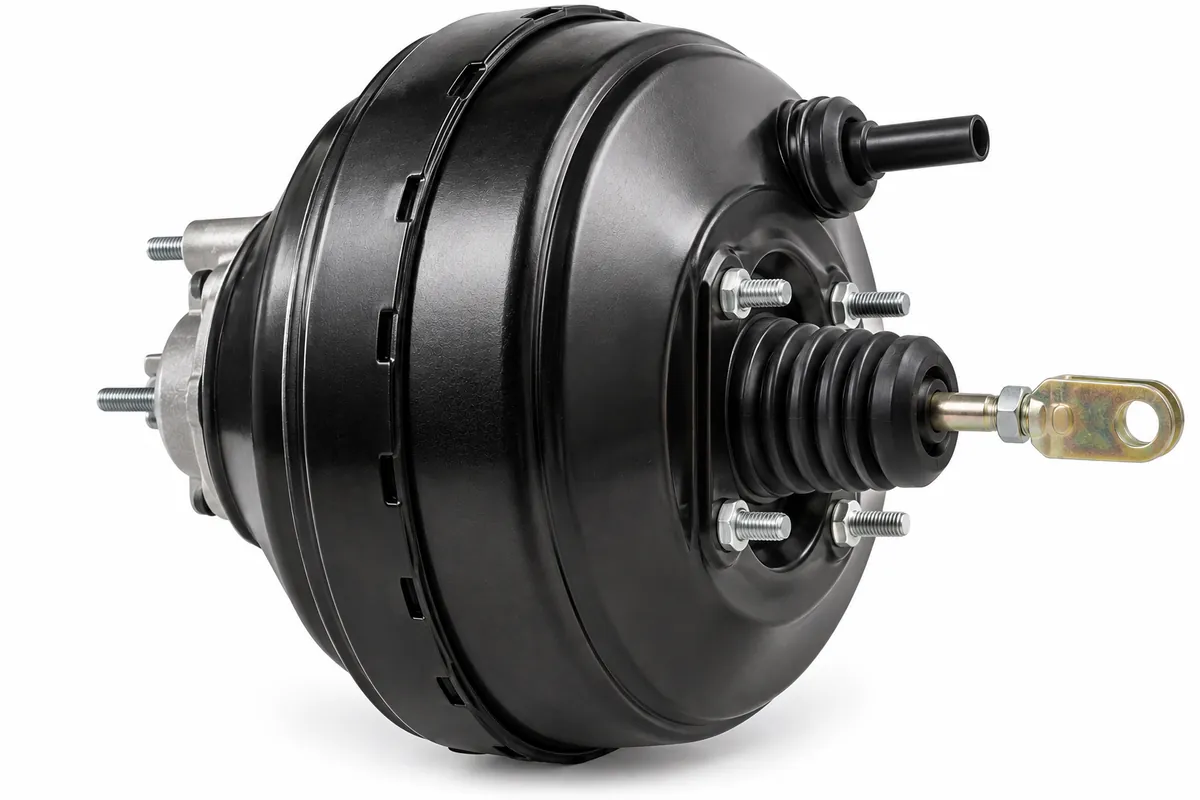
Mobile Brake Booster Diagnostics in Daytona Beach
Brake booster diagnosis begins with the symptom.
A typical power-assist complaint is a brake pedal that requires significantly more effort than normal. Depending on the vehicle and type of booster system, other symptoms can include vacuum noise, changes in engine operation while braking, inconsistent brake assist, or fluid-related problems on hydraulically assisted systems.
Before replacing a booster, we determine what type of power-assist system the vehicle uses and whether the booster is actually receiving what it needs to operate.
The problem can be the booster itself, but it can also involve the vacuum supply, vacuum hose, check valve, vacuum pump, hydraulic pressure source, or another related component.
What Does a Brake Booster Do?
Without power assistance, the force you apply to the brake pedal has to provide the mechanical input needed to operate the master cylinder.
The brake booster multiplies or assists that input.
On a conventional vacuum-assisted system, the booster uses a pressure differential involving engine vacuum or another vacuum source to increase the force applied to the master cylinder.
When you press the pedal, the booster assists your input so adequate master-cylinder force can be produced without requiring excessive pedal effort.
The booster therefore works between two important parts of the brake system:
Brake pedal → Brake booster → Master cylinder
The booster provides assistance. The master cylinder creates hydraulic brake pressure.
Understanding that distinction is important when diagnosing brake pedal complaints.
Brake Booster vs. Brake Servo
The terms brake booster and brake servo generally describe the power-assist component of the braking system.
“Brake booster” is the terminology commonly used in the United States, while “brake servo” is frequently used for the same or a similar power-assisted braking component in other automotive terminology.
Regardless of the name, its purpose is to reduce the pedal force required from the driver.
Signs of a Bad Brake Booster
Symptoms that can justify brake booster diagnosis include:
- An unusually hard brake pedal
- Increased effort required to stop the vehicle
- Reduced or inconsistent power assist
- Brake assist that changes between applications
- Hissing or vacuum noise near the booster or pedal area
- Changes in engine idle when the brake pedal is pressed
- Brake pedal behavior that changes after the engine starts
- Loss of vacuum-assisted braking
- A booster that does not appear to retain vacuum
- Fluid leakage associated with a hydraulic booster system
These symptoms don't all prove that the booster needs replacement.
The assist system needs to be tested to determine whether the booster is faulty or whether the source of vacuum or hydraulic pressure has been lost.
Diagnosing a Hard Brake Pedal
A hard brake pedal is one of the most recognizable symptoms of lost power brake assist.
The important diagnostic question is:
Why did the assist disappear?
On a vacuum-operated system, possibilities can include:
- Failed brake booster
- Insufficient vacuum supply
- Damaged or disconnected booster vacuum hose
- Leaking vacuum connection
- Failed booster check valve
- Vacuum pump problem on vehicles using a pump
- Internal booster diaphragm or valve failure
On a hydraulic booster system, the causes are different and may involve the hydraulic pressure source rather than engine vacuum.
Replacing the booster before checking how it receives its assist can result in replacing a good component.
Vacuum Brake Booster Operation
A large number of passenger vehicles use a vacuum brake booster.
The booster contains a diaphragm or comparable internal arrangement that uses a pressure difference to assist brake pedal force.
When the system is operating normally, vacuum is available to the booster. Pressing the brake pedal changes the pressure relationship inside the unit, producing assistance that helps move the master-cylinder piston.
If the booster loses its vacuum source or develops an internal failure, that assistance can disappear.
The brakes do not necessarily stop working completely, but substantially more pedal effort may be required.
Testing Brake Booster Assist
One useful part of booster diagnosis is determining whether power assistance is actually being produced.
A basic functional evaluation can involve observing pedal behavior with stored assist depleted and then determining whether the pedal responds appropriately when the engine or applicable assist source becomes available.
On a properly operating conventional vacuum system, the pedal will generally show a noticeable change as vacuum assist becomes available.
If there is no expected change, the next step isn't automatically booster replacement.
We need to determine whether adequate vacuum is reaching the booster.
Brake Booster Vacuum Supply Testing
A vacuum booster cannot operate correctly without an adequate vacuum source.
Depending on the vehicle, vacuum may come directly from the engine intake system or from a dedicated mechanical or electric vacuum pump.
During diagnosis, we consider whether sufficient vacuum is available at the booster.
If vacuum is missing or inadequate, the booster may be perfectly capable of operating but have nothing available to power it.
The cause then needs to be traced upstream rather than solved by replacing the booster.
Brake Booster Vacuum Hose Inspection
The vacuum hose connects the booster to its vacuum source.
Damage or leakage in this hose can reduce or eliminate booster assistance.
We inspect the applicable hose and connections for conditions such as:
- Cracks
- Splits
- Loose connections
- Collapsed hose
- Deterioration
- Disconnection
- Vacuum leakage
A failed hose can produce symptoms similar to booster failure and is generally much simpler to correct than replacing the entire booster.
That's why vacuum supply inspection belongs early in the diagnostic process.
Brake Booster Check Valve Testing
Vacuum brake booster systems commonly use a one-way check valve in or near the booster vacuum connection.
Its job is to allow vacuum to reach the booster while helping prevent the stored vacuum from immediately escaping when engine vacuum decreases or the engine is shut off.
A faulty check valve can interfere with booster operation or vacuum retention.
During diagnosis, the valve can be evaluated for correct one-way operation as appropriate for the system.
If the valve has failed while the booster itself remains functional, replacing the entire booster would be unnecessary.
Why a Brake Booster Stores Vacuum
A properly operating vacuum booster can retain some vacuum assistance after the engine is switched off.
This provides a limited reserve of assisted brake applications rather than making the pedal immediately lose all power assistance.
If stored vacuum disappears unusually quickly, the system may have a leak.
Potential leak sources include:
- The booster itself
- Booster check valve
- Vacuum hose
- Hose connections
- Other related vacuum components
Determining where the vacuum is being lost helps separate a booster failure from an external leak.
Hissing Noise When Pressing the Brake Pedal
A hissing noise around the brake pedal or booster area can indicate a vacuum leak, particularly when the sound changes as the brake pedal is applied.
Possible sources include the booster, internal booster valve components, vacuum hose, check valve, or connections.
The location and behavior of the sound need to be evaluated.
A hissing noise by itself isn't enough to determine which component has failed, but it is useful evidence when combined with a hard pedal or reduced brake assist.
Engine Idle Changes When Braking
A significant vacuum leak in a booster system can sometimes affect engine operation.
Because many vacuum boosters receive vacuum from the engine intake system, an internal booster leak or another leak in the vacuum circuit can introduce unwanted air.
The driver may notice symptoms such as:
- Rough idle when pressing the brake
- Engine speed changing during brake application
- Hissing accompanied by idle changes
- Stalling or near-stalling under certain conditions
These symptoms require diagnosis because engine vacuum problems outside the booster can also affect both engine operation and brake assist.
Brake Booster Vacuum Pump Diagnosis
Not every vacuum-assisted brake system relies entirely on naturally produced intake manifold vacuum.
Some engines don't consistently produce enough vacuum for the brake booster under all operating conditions. These vehicles may use a dedicated vacuum pump.
Vacuum pumps may be mechanically or electrically driven depending on the application.
When a vehicle uses a vacuum pump, a loss of brake assist can involve:
- The pump itself
- Electrical supply or control
- Vacuum hoses
- Check valves
- Vacuum reservoir
- Connections
- The brake booster
The presence of a vacuum pump changes the diagnostic process. We identify the system before deciding which component is responsible.
Brake Booster Vacuum Canister or Reservoir
Some vehicles use a vacuum reservoir or canister to help maintain a supply of vacuum for systems including brake assist.
A leaking reservoir or its associated hoses and valves can affect available vacuum.
If the vehicle's booster system includes a reservoir, it becomes part of the vacuum-supply diagnosis when power assist is weak or inconsistent.
Again, the goal is to determine whether the booster has failed or whether the booster simply isn't receiving or retaining the vacuum it needs.
Brake Booster Diaphragm Failure
The diaphragm is a critical internal component in many vacuum boosters.
If it leaks or becomes damaged, the booster may no longer maintain the pressure differential required to provide normal assist.
Possible results include:
- Hard brake pedal
- Reduced power assist
- Hissing
- Vacuum loss
- Engine idle changes during braking
The diaphragm is internal to the booster, so a confirmed internal booster failure will generally require replacement of the booster assembly rather than an external adjustment.
Brake Booster Pushrod and Pedal Connection
The booster mechanically connects the brake pedal to the master cylinder.
That connection has to transmit pedal movement correctly whether or not power assistance is available.
During booster service, the pedal linkage, booster pushrod, and master-cylinder relationship matter.
Incorrect installation or an unsuitable pushrod relationship can affect brake operation.
For that reason, brake booster replacement isn't simply a matter of attaching a large vacuum housing to the firewall. The mechanical connection between the pedal, booster, and master cylinder has to remain correct.
Brake Booster vs. Master Cylinder Problems
The brake booster and master cylinder are often bolted directly together, but they perform different jobs.
The brake booster provides power assistance.
The master cylinder creates hydraulic brake pressure.
That distinction helps with diagnosis.
A failed booster commonly produces a hard pedal requiring excessive effort.
A master-cylinder problem may instead produce:
- A sinking pedal
- Hydraulic pressure loss
- Excessive pedal travel
- Brake-fluid leakage
There can be exceptions and overlapping symptoms, so pedal feel alone shouldn't be used as the entire diagnosis.
We evaluate which system—power assist or hydraulics—is actually failing.
Brake Fluid Behind the Master Cylinder
Although the booster itself normally doesn't contain brake fluid on a conventional vacuum system, brake fluid can enter the booster area if the rear seal of the master cylinder leaks.
This is an important distinction.
Finding brake fluid at the master-cylinder-to-booster connection doesn't necessarily mean the booster caused the leak. The master cylinder may be the hydraulic source.
If brake fluid has entered the booster, however, the booster should also be evaluated for contamination or damage.
The source and extent of the problem determine which components require attention.
Hydro-Boost Brake Systems
Not all brake boosters use vacuum.
Some vehicles use a hydraulic brake booster, commonly referred to as a hydro-boost system.
Instead of engine vacuum, hydro-boost uses pressurized hydraulic fluid—commonly supplied by the power steering system—to provide brake assistance.
These systems can provide strong braking assistance even on engines that don't produce sufficient intake vacuum.
Because hydro-boost operates differently from a vacuum booster, its diagnosis is also different.
Diagnosing a Hydro-Boost Brake Booster
A hydraulic booster depends on a suitable source of hydraulic pressure and fluid flow.
Depending on the vehicle, reduced brake assist can involve:
- Hydro-boost unit failure
- Power steering pump problems
- Low hydraulic fluid
- Hydraulic leaks
- Restricted hoses or lines
- Pressure or flow problems
- Internal hydraulic booster faults
A hard brake pedal on a hydro-boost vehicle should therefore not be diagnosed using vacuum-booster assumptions.
We first identify which type of booster the vehicle uses and diagnose the appropriate assist system.
Brake Booster and Power Steering Symptoms
Because many hydro-boost systems share hydraulic pressure with the power steering system, brake and steering symptoms can sometimes occur together.
For example, a hydraulic pressure problem may affect both steering assistance and brake assistance.
That relationship can provide useful diagnostic information.
If both systems change at the same time, the hydraulic supply needs to be considered before the booster itself is condemned.
Electronic and Integrated Brake Assist Systems
Some modern vehicles use more complex brake-assist arrangements that don't follow the traditional vacuum-booster layout.
Hybrid, electric, and certain electronically controlled braking systems may use electric pumps, accumulator pressure, integrated actuator assemblies, or electronically controlled brake-booster systems.
These systems can require specialized diagnostic procedures and may integrate power assist with ABS, stability control, or regenerative braking.
We identify the system installed on the vehicle before applying conventional booster tests or recommending replacement.
Brake Booster Replacement
Once diagnosis confirms that the booster itself has failed, replacement requires separating it from the components connected to it.
The exact procedure varies considerably by vehicle, but brake booster replacement can include:
- Confirming the loss of power assist. We verify that the complaint involves the booster system rather than an unrelated brake problem.
- Testing the assist source. Vacuum or hydraulic supply is evaluated as appropriate before the booster is condemned.
- Inspecting hoses, valves, and connections. External causes of lost assist are checked.
- Accessing the pedal-to-booster connection. The mechanical linkage between the brake pedal and booster must be disconnected as required.
- Separating the master cylinder from the booster. The master cylinder is moved or removed according to the vehicle's design and available clearance.
- Disconnecting the booster supply. Vacuum hoses or applicable hydraulic connections are separated.
- Removing the failed booster. The booster is detached from the firewall or applicable mounting structure.
- Installing the replacement booster. The new component is positioned and secured correctly.
- Restoring pedal and master-cylinder connections. Mechanical relationships are reassembled according to the vehicle's design.
- Restoring the assist source. Vacuum or hydraulic connections are properly reconnected.
- Checking booster operation. Brake assist and pedal operation are verified before the vehicle is returned to service.
Additional procedures may be required for hydro-boost or electronically controlled systems.
Does Brake Booster Replacement Require Brake Bleeding?
Not always.
On many conventional vacuum-booster replacements, the master cylinder can sometimes be carefully separated from the booster without disconnecting the hydraulic brake lines.
If the hydraulic system remains closed, brake bleeding may not be necessary solely because the booster was replaced.
If the master cylinder or hydraulic lines have to be disconnected, however, air can enter the brake system and bleeding will then be required.
The correct procedure depends on the vehicle and the amount of access available.
When Does a Brake Booster Need Replacement?
Brake boosters don't have a standard mileage at which they should automatically be replaced.
Replacement is appropriate when diagnosis identifies a booster failure that prevents the power-assist system from operating correctly.
Reasons can include:
- Confirmed internal vacuum leak
- Failed internal diaphragm
- Booster that cannot maintain appropriate assist
- Mechanical failure inside the booster
- Hydraulic leakage or internal failure of a hydro-boost unit
- Physical damage
- A confirmed booster fault after the external vacuum or hydraulic supply has been ruled out
A hard pedal by itself isn't enough.
The booster should be replaced when the diagnosis supports booster failure.
Can a Brake Booster Be Repaired?
Some specialty, classic, or unusual brake boosters can be rebuilt by companies equipped to restore them.
For most routine modern passenger-vehicle repairs, however, a confirmed failed booster is generally replaced as an assembly rather than disassembled and rebuilt during mobile service.
The correct approach depends on the vehicle, booster design, parts availability, and application.
How Much Does Brake Booster Replacement Cost?
Brake booster replacement cost varies significantly because booster designs and installation requirements differ between vehicles.
Factors that can affect the price include:
- Vehicle year, make, and model
- Vacuum or hydraulic booster design
- Parts cost
- Booster accessibility
- Amount of interior pedal-area disassembly required
- Master-cylinder access
- Vacuum hose or check-valve condition
- Hydraulic lines on hydro-boost systems
- Additional problems discovered during diagnosis
- Specialized procedures on electronically controlled systems
A conventional vacuum booster on one vehicle can be a very different repair from a hydro-boost unit or an integrated electronic brake-assist system.
Call Jimmy’s Mobile Care at (386) 308-2509 with your vehicle information and the symptoms you're experiencing. We can discuss the diagnostic visit and the repair your vehicle may require.
Why Diagnose the Brake Booster Before Replacing It?
Several problems can cause reduced brake assist without the booster itself being defective.
Diagnosis helps answer the questions that determine the correct repair.
Is Adequate Vacuum Reaching the Booster?
A good vacuum booster cannot provide normal assistance if its vacuum supply is missing.
Is the Vacuum Hose Leaking?
A damaged hose can create the same loss-of-assist complaint as a failed booster.
Is the Check Valve Working?
A failed one-way valve can prevent the booster from receiving or retaining vacuum correctly.
Does the Vehicle Use a Vacuum Pump?
If it does, pump operation and its supporting components need to be considered.
Is the Booster Leaking Internally?
An internal diaphragm or valve failure can cause vacuum loss, hissing, reduced assist, and sometimes engine-running problems.
Is the Problem Actually the Master Cylinder?
A sinking or hydraulically soft pedal requires a different diagnostic direction from a typical loss-of-assist hard pedal.
Does the Vehicle Use Hydro-Boost?
A hydraulic booster depends on hydraulic pressure rather than engine vacuum and must be diagnosed accordingly.
Answering these questions helps us replace the booster when the booster is actually defective—and avoid replacing it when the problem is somewhere else.
Mobile Brake Booster Replacement in Daytona Beach
Jimmy’s Mobile Care brings brake booster diagnostics and replacement directly to your Daytona Beach location.
If your brake pedal has suddenly become hard, requires excessive effort, makes a hissing noise, or appears to have lost power assistance, we can inspect the booster system at your home, workplace, or another suitable location.
When diagnosis confirms that the booster has failed and the repair can be safely completed on-site, we can replace the component and verify proper brake-assist operation without the traditional repair-shop visit.
Schedule Brake Booster Diagnostics & Replacement in Daytona Beach
A hard brake pedal doesn't automatically mean you need a new brake booster. Vacuum supply problems, failed check valves, damaged hoses, vacuum-pump faults, hydraulic-assist problems, and other conditions can produce similar symptoms.
Jimmy’s Mobile Care diagnoses the power-assist system first to determine whether the booster itself has failed or another component is preventing it from operating correctly.
Call Jimmy’s Mobile Care at (386) 308-2509 to schedule car brake booster diagnostics and replacement in Daytona Beach, FL. Call today and we'll come to your location.