
Car Spark Plug Inspection & Replacement in Daytona Beach, FL
Spark plugs ignite the air-fuel mixture inside a gasoline engine’s combustion chambers. Each plug has to fire reliably under heat, pressure, and electrical load thousands of times per minute. As spark plugs wear, the electrode gap can increase, deposits can accumulate, porcelain can crack, threads can become damaged, and ignition voltage requirements can rise.
Jimmy’s Mobile Care provides car spark plug inspection and replacement in Daytona Beach, FL. We inspect spark-plug condition and related ignition components before recommending replacement so an ignition coil, fuel injector, vacuum leak, compression problem, wiring fault, or another engine issue is not mistaken for a bad spark plug.
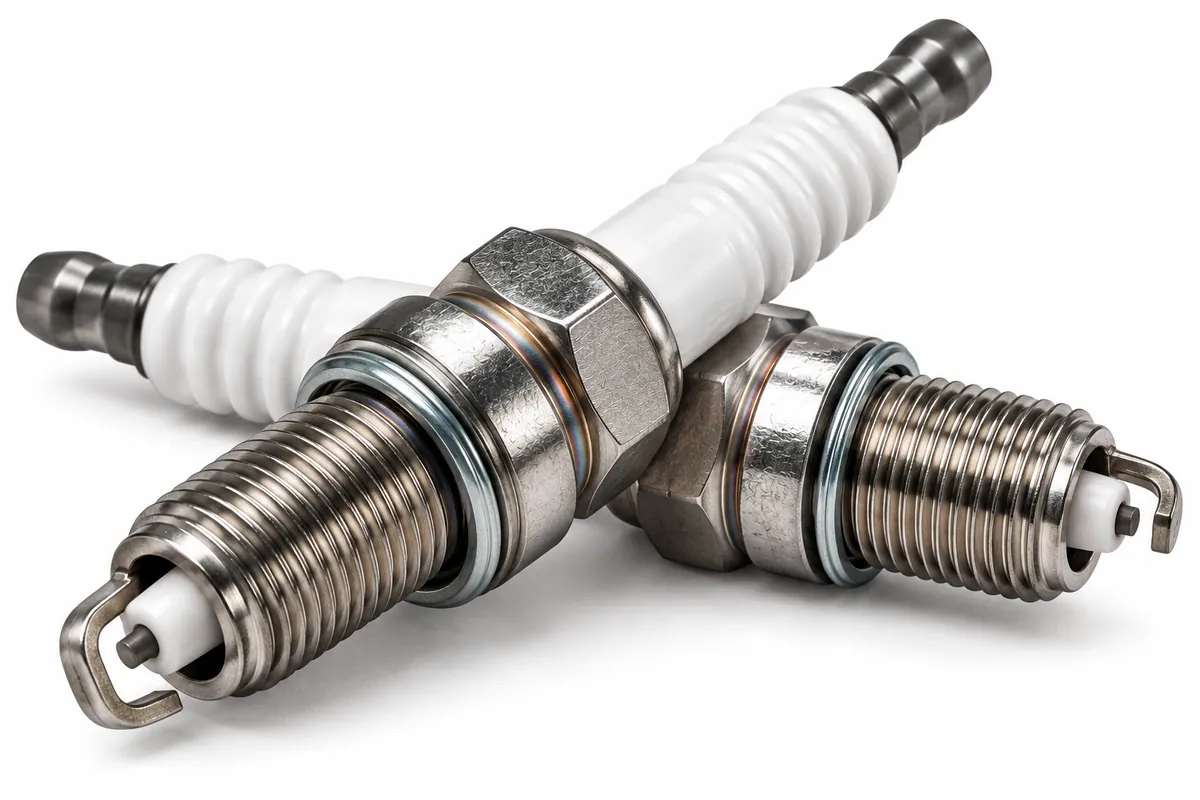
Mobile Spark Plug Inspection in Daytona Beach
A misfire or rough-running engine does not automatically mean the spark plugs need replacement.
Depending on the vehicle and symptoms, inspection can include checking:
- Spark plug electrodes
- Center electrode wear
- Ground electrode wear
- Spark-plug gap
- Porcelain insulator
- Carbon deposits
- Oil fouling
- Fuel fouling
- Ash deposits
- Overheating evidence
- Thread condition
- Spark-plug seat
- Ignition-coil boots
- Plug-well oil or water
- Carbon tracking
- Misfire trouble codes
- Cylinder-specific misfire data
- Ignition-coil operation
- Fuel-injector operation
- Engine compression where needed
The goal is to determine whether the spark plugs are actually responsible for the complaint and what their condition tells us about the engine.
What Does a Spark Plug Do?
A spark plug creates an electrical spark inside the combustion chamber.
High voltage from the ignition system travels to the plug and jumps the gap between:
- Center electrode
- Ground electrode
That spark ignites the compressed air-fuel mixture.
For proper combustion, the spark plug must have:
- Correct design
- Correct gap
- Correct heat range
- Good electrical insulation
- Proper installation
Spark Plug vs. Ignition Coil
The spark plug and ignition coil perform different jobs.
Ignition Coil
Produces the high voltage required to create a spark.
Spark Plug
Provides the controlled gap where that electrical energy jumps inside the combustion chamber.
A worn plug can make the ignition coil work harder because a larger or contaminated gap may require higher voltage.
A failed coil can prevent a perfectly good spark plug from firing.
That is why both components should be considered when diagnosing a misfire.
Spark Plug vs. Fuel Injector
A spark plug ignites the mixture.
A fuel injector delivers fuel.
A cylinder can misfire because of:
- Weak spark
- No spark
- Too little fuel
- Too much fuel
- Mechanical compression problem
A misfire code identifies the affected cylinder but does not automatically identify the spark plug as the failed part.
Spark Plug vs. Compression Problem
A cylinder needs adequate compression for combustion.
Low compression can result from:
- Burned valve
- Worn piston rings
- Mechanical timing problem
- Head-gasket problem
- Other internal engine damage
Installing new spark plugs will not correct low compression.
If ignition and fuel checks do not explain a persistent misfire, mechanical engine condition may need to be evaluated.
Signs of Worn Spark Plugs
Possible symptoms include:
- Rough idle
- Engine misfire
- Hesitation
- Poor acceleration
- Hard starting
- Reduced fuel economy
- Check-engine light
- Increased ignition-coil demand
- Engine shaking under load
These symptoms overlap with many other engine problems, so plug condition should be inspected rather than assumed.
Spark Plug Misfire
A worn, fouled, cracked, incorrectly gapped, or damaged plug can cause a cylinder to misfire.
Possible trouble codes include:
- P0300
- P0301
- P0302
- P0303
- P0304
- Additional cylinder-specific P030x codes
These codes indicate misfire activity.
They do not prove that the spark plug is the cause.
P0300 Random Misfire
P0300 generally indicates a random or multiple-cylinder misfire.
Possible causes include:
- Spark plugs
- Ignition coils
- Fuel pressure
- Vacuum leak
- Multiple injectors
- Mechanical engine problem
- Sensor input problem
If several cylinders misfire at once, a common system problem may be more likely than several plugs failing simultaneously.
Cylinder-Specific Misfire
A cylinder-specific misfire such as P0302 points toward one cylinder.
Possible causes include:
- Spark plug
- Ignition coil
- Fuel injector
- Wiring
- Compression problem
Inspecting the plug can provide valuable clues, but it should be considered with the rest of the cylinder diagnosis.
Flashing Check-Engine Light
A flashing check-engine light often indicates an active misfire severe enough to risk catalytic-converter damage.
Unburned fuel can enter the exhaust and overheat the converter.
The vehicle should not simply be driven indefinitely while the light is flashing.
The cause of the misfire should be diagnosed.
Spark Plug Electrode Wear
Every time a plug fires, a tiny amount of electrode material can erode.
Over time, this can:
- Round electrode edges
- Increase gap
- Raise required firing voltage
Different electrode materials wear at different rates.
Condition should be evaluated along with the vehicle’s recommended replacement interval.
Spark Plug Gap
The spark-plug gap is the distance between:
- Center electrode
- Ground electrode
The gap affects the amount of voltage required to create a spark.
If the gap becomes too large, the ignition system may struggle to fire under:
- Heavy acceleration
- High cylinder pressure
- Engine load
An incorrect gap can contribute to misfires even if the plug otherwise looks normal.
Spark Plug Gap Too Wide
A gap that is too wide may require more ignition voltage than the system can reliably provide.
Possible symptoms include:
- Misfire under load
- Hesitation
- Hard starting
- Increased coil stress
Excessive gap often develops from normal electrode wear.
Spark Plug Gap Too Small
A gap that is too narrow can produce a smaller spark kernel.
Depending on engine design, this may affect combustion quality.
The correct gap should match the engine manufacturer’s specification.
Pre-Gapped Spark Plugs
Many modern replacement spark plugs are supplied with a factory-set gap.
That does not mean the gap should be ignored.
It should still be verified against the vehicle application.
Care is required with fine-wire:
- Iridium
- Platinum
electrodes because aggressive gap adjustment can damage them.
Can Iridium Spark Plugs Be Gapped?
Some iridium plugs can be carefully adjusted if the manufacturer allows it.
The fine center electrode should never be used as a leverage point.
If the plug is supplied specifically for the application and the gap is correct, unnecessary adjustment should be avoided.
Spark Plug Heat Range
Heat range describes how quickly a spark plug transfers heat from its firing end into the cylinder head.
A hotter plug retains more heat at the tip.
A colder plug transfers heat away more quickly.
The correct heat range helps the plug remain hot enough to resist fouling without becoming hot enough to contribute to pre-ignition.
Wrong Spark Plug Heat Range
A plug that is too cold may be more likely to foul under certain operating conditions.
A plug that is too hot may increase the risk of:
- Electrode overheating
- Pre-ignition
- Engine damage
The vehicle should use the specified heat range unless the engine has been intentionally modified for a different application.
Copper Spark Plugs
“Copper spark plug” generally refers to a conventional plug using a copper core with a traditional electrode design.
These plugs can provide good conductivity but typically wear faster than long-life precious-metal designs.
They may be correct for certain older or performance applications.
They should not automatically replace a specified iridium or platinum plug.
Platinum Spark Plugs
Platinum spark plugs use platinum on one or more electrode surfaces.
Benefits can include:
- Better wear resistance
- Longer service life
Some ignition systems are specifically designed around platinum-style plugs.
The correct plug design should follow the engine application.
Double Platinum Spark Plugs
Double-platinum plugs use platinum on both the center and ground electrode wear surfaces.
They are commonly associated with certain distributorless ignition systems.
The correct design matters because some ignition systems fire plugs with different electrical polarity.
Iridium Spark Plugs
Iridium plugs commonly use a very fine center electrode.
Advantages can include:
- Long service life
- Consistent spark characteristics
- Lower firing-voltage requirement for a given gap geometry
Many modern vehicles use iridium plugs as original equipment.
Ruthenium Spark Plugs
Some newer replacement spark plugs use ruthenium-based electrode technology.
As with other materials, the important factor is whether the plug:
- Matches the application
- Has the correct heat range
- Has the correct reach
- Has the correct seat design
Electrode material alone does not determine whether a plug is correct for a vehicle.
Best Spark Plugs for a Car
The best spark plug is usually the one that matches the engine manufacturer’s required:
- Heat range
- Reach
- Thread diameter
- Seat type
- Electrode design
- Resistance
- Gap
A more expensive or “performance” plug is not automatically better for a stock engine.
OEM Spark Plugs
Original-equipment spark-plug specifications are chosen around the engine’s combustion chamber and ignition system.
A quality replacement should match the required:
- Dimensions
- Heat range
- Electrical characteristics
An aftermarket brand can be appropriate if it is the correct cross-reference for the application.
Performance Spark Plugs
Performance plugs may be useful in certain modified engines, but they do not create large power gains by themselves on an otherwise stock engine.
Modified engines may require a different plug because of:
- Increased boost
- Higher cylinder pressure
- Different fuel
- Different heat requirements
The plug should match the actual engine setup.
Spark Plug Reach
Reach is the length of the threaded portion that extends into the cylinder head.
Incorrect reach can be dangerous.
A plug that is too short may:
- Position the spark incorrectly
- Accumulate deposits in exposed head threads
A plug that is too long may:
- Extend too far into combustion chamber
- Contact internal engine components
- Overheat
The replacement plug must match the original specification.
Spark Plug Thread Diameter
Spark plugs come in several thread diameters.
The plug must match the cylinder-head threads exactly.
Forcing the wrong plug can destroy the cylinder-head threads.
Spark Plug Seat Type
Common spark-plug seat designs include:
- Gasket seat
- Tapered seat
These are not interchangeable simply because the thread diameter is the same.
The seat is part of how the plug seals combustion pressure against the cylinder head.
Spark Plug Resistor
Most modern automotive spark plugs include an internal resistor.
The resistor helps reduce electrical interference.
Using an incorrect non-resistor or resistor specification can affect vehicle electronics or ignition behavior in certain applications.
Spark Plug Porcelain Insulator
The ceramic insulator electrically separates the high-voltage center electrode from the metal shell.
A cracked insulator can allow voltage to escape before reaching the plug gap.
Possible symptoms include:
- Misfire
- Carbon tracking
- Intermittent ignition failure
Cracks can be very small and may require careful inspection.
Cracked Spark Plug
A cracked spark plug can result from:
- Impact
- Improper installation
- Incorrect socket angle
- Manufacturing defect
- Thermal stress
A cracked porcelain insulator generally requires plug replacement.
Carbon Tracking on Spark Plug
Carbon tracking appears as a dark conductive line on:
- Spark plug porcelain
- Ignition-coil boot
It can form when ignition voltage travels along the outside of the insulator rather than across the intended electrode gap.
Possible causes include:
- Worn plug gap
- Contamination
- Damaged coil boot
If the track is present on both the plug and boot, replacing only one part may allow the misfire to return.
Spark Plug Fouling
Fouling occurs when deposits interfere with the plug’s ability to fire properly.
Common forms include:
- Carbon fouling
- Oil fouling
- Fuel fouling
- Ash deposits
The appearance of the plug can help identify the underlying engine condition.
Carbon-Fouled Spark Plug
A carbon-fouled plug may appear dry and black.
Possible causes include:
- Rich mixture
- Excessive idling
- Weak ignition
- Too-cold plug
- Repeated short trips
The cause should be identified before simply installing another set of plugs.
Oil-Fouled Spark Plug
An oily spark plug can indicate engine oil entering the combustion chamber.
Possible causes include:
- Worn piston rings
- Valve-guide or valve-seal problems
- Other internal oil-control issues
A new plug may temporarily improve the misfire but can foul again if oil consumption continues.
Fuel-Fouled Spark Plug
A wet plug that smells strongly of gasoline can result from:
- Repeated unsuccessful starting
- No spark
- Leaking injector
- Very rich mixture
Fuel fouling is evidence of a condition, not necessarily proof that the plug caused the problem.
Ash Deposits on Spark Plug
Light-colored or crusty deposits may be related to additives or engine fluid consumption.
Heavy deposits can interfere with spark quality.
Their appearance may provide clues about:
- Oil consumption
- Fuel additives
- Engine condition
White Spark Plug Deposits
A very light or overheated appearance can be associated with:
- High combustion temperature
- Incorrect heat range
- Lean operation
- Deposits
Plug appearance should not be interpreted by color alone because modern fuels and engine-control strategies vary.
Melted Spark Plug Electrode
A melted or severely overheated electrode is a serious finding.
Possible causes include:
- Pre-ignition
- Severe overheating
- Incorrect heat range
- Abnormal combustion
Simply installing another plug without diagnosing the cause can result in repeated damage or engine failure.
Spark Plug Detonation Damage
Abnormal combustion can damage the insulator or electrode.
Signs can include:
- Chipped porcelain
- Electrode damage
- Unusual deposits
Possible causes include:
- Incorrect fuel octane
- Excessive ignition advance
- Lean condition
- Excessive boost
- Combustion-chamber problems
Engine operation should be evaluated if the plug shows physical damage.
Spark Plug and Pre-Ignition
Pre-ignition occurs when the mixture ignites before the intended spark event.
An overheated spark-plug tip can potentially contribute if the wrong heat range is used.
Other hot spots inside the combustion chamber can also cause pre-ignition.
This is different from normal spark-plug firing.
Spark Plug and Engine Knocking
Spark knock or detonation is not usually corrected simply by installing new plugs.
Possible causes include:
- Fuel quality
- Excessive combustion temperature
- Carbon deposits
- Engine-control issue
Incorrect spark plugs can contribute if their heat range is inappropriate, but the complete cause should be diagnosed.
Oil in Spark Plug Well
Oil around the outside of a spark plug does not necessarily mean the engine is burning oil.
Oil can leak into the plug well from:
- Valve-cover gasket
- Spark-plug tube seals
This can damage ignition-coil boots and contribute to external ignition leakage.
The external oil leak should be corrected separately.
Water in Spark Plug Well
Water can enter plug wells because of:
- Washing engine
- Rainwater intrusion
- Damaged seals
- Improperly installed covers
Moisture can cause:
- Misfire
- Corrosion
- Carbon tracking
The well should be dried and the source of water entry corrected.
Spark Plug Well Debris
Dirt and debris can accumulate around a spark plug before removal.
If the plug is removed without cleaning the area, contamination may fall into the cylinder.
The plug well should be cleaned before removal when necessary.
Spark Plug Threads
The threads must hold the plug securely in the cylinder head and allow heat transfer.
Problems can include:
- Cross-threading
- Galling
- Corrosion
- Stripped aluminum threads
Thread condition should be evaluated during removal and installation.
Cross-Threaded Spark Plug
A cross-threaded plug may:
- Bind during installation
- Damage cylinder-head threads
- Fail to seat properly
Spark plugs should be started by hand whenever access allows.
A plug that does not thread smoothly should not be forced with a ratchet.
Stripped Spark Plug Threads
Damaged cylinder-head threads can prevent the plug from tightening securely.
Possible symptoms include:
- Plug loosening
- Compression leakage
- Plug being expelled from cylinder head
Thread repair may require:
- Thread insert
- Specialized repair procedure
This is different from ordinary spark-plug replacement.
Spark Plug Thread Insert
A properly installed thread insert can restore damaged cylinder-head threads in certain applications.
The repair requires:
- Correct alignment
- Correct insert type
- Control of metal debris
Some repairs can be performed with the cylinder head installed, while others may require more extensive disassembly depending on the damage and engine design.
Spark Plug Blown Out of Cylinder Head
If a plug loses thread engagement, combustion pressure can force it out of the cylinder head.
Possible damage includes:
- Stripped threads
- Damaged ignition coil
- Damaged plug
Simply installing another spark plug is not a safe repair if the cylinder-head threads no longer hold torque.
Broken Spark Plug During Removal
Spark plugs can seize or break because of:
- Corrosion
- Carbon buildup
- Long service interval
- Plug design
- Excessive previous torque
Certain engines are particularly sensitive to difficult plug removal.
A broken plug may require specialized extraction procedures.
Seized Spark Plug
A plug can become difficult to remove because of:
- Corrosion
- Carbon deposits
- Damaged threads
- Excessive torque
Excessive force can damage the cylinder head.
Removal strategy should account for the specific engine and plug design.
Spark Plug Torque
Correct torque is important.
Too little torque can allow:
- Plug loosening
- Poor heat transfer
- Combustion leakage
Too much torque can cause:
- Thread damage
- Plug shell distortion
- Cracked porcelain
Vehicle- and plug-specific specifications should be followed.
Overtightened Spark Plug
An overtightened plug can damage:
- Cylinder-head threads
- Plug shell
- Gasket or seat
It may also be much harder to remove later.
A torque wrench is appropriate on applications where access permits and specifications are available.
Undertightened Spark Plug
A loose spark plug may:
- Leak combustion pressure
- Overheat
- Damage threads
- Create ticking noise
Severe looseness can eventually damage both the plug and cylinder head.
Spark Plug Anti-Seize
Modern spark-plug manufacturers often specify installing plated spark plugs without additional anti-seize.
Applying lubricant changes thread friction and can alter the relationship between applied torque and actual clamping force.
Anti-seize should only be used when the plug or vehicle manufacturer specifically calls for it.
Spark Plug Dielectric Grease
Dielectric grease may be used in the ignition-coil boot area when appropriate.
It should generally be applied lightly to help:
- Exclude moisture
- Prevent boot sticking
It should not be packed onto the spark plug electrodes.
The electrical connection is made through metal contact, not through the grease.
Spark Plug Replacement Interval
Replacement intervals vary substantially.
Possible intervals can depend on:
- Plug material
- Engine design
- Manufacturer maintenance schedule
- Operating conditions
Traditional plugs may require more frequent replacement than long-life iridium or platinum plugs.
The vehicle’s maintenance schedule and actual plug condition should both be considered.
Do Spark Plugs Really Last 100,000 Miles?
Some modern engines specify long replacement intervals approaching or exceeding 100,000 miles.
That does not mean every plug in every engine will remain perfect until that mileage.
Factors such as:
- Oil contamination
- Ignition problems
- Engine operating conditions
can shorten plug life.
Conversely, plugs should not automatically be replaced early if they remain within service recommendations and are functioning correctly.
Old Spark Plugs and Ignition Coils
As spark-plug electrodes wear and the gap increases, the ignition system may require more voltage to fire the plug.
This can place additional stress on:
- Ignition coil
- Coil boot
- Insulation
Keeping spark plugs within the proper service condition can help reduce unnecessary ignition-system stress.
Should Ignition Coils Be Replaced With Spark Plugs?
Not automatically.
A good ignition coil does not require replacement simply because spark plugs are being changed.
Coils should be replaced when:
- Testing identifies a coil fault
- Housing or boot is damaged
- Carbon tracking cannot be corrected appropriately
Routine spark-plug service and ignition-coil replacement are separate decisions.
Should Coil Boots Be Replaced With Spark Plugs?
Coil boots should be inspected for:
- Cracks
- Carbon tracking
- Oil damage
- Hardening
- Torn rubber
Some coil designs allow boots to be serviced separately.
A healthy boot does not automatically require replacement.
Spark Plug Replacement and Coil Removal
Many modern engines use coil-on-plug ignition.
To reach the spark plugs, the ignition coils must first be removed.
The general sequence may include:
- Disconnect electrical connector.
- Remove coil retaining bolt where used.
- Lift coil from spark-plug well.
- Inspect boot and well.
- Remove spark plug.
The coil should be reinstalled in the correct position after service.
Coil-on-Plug Spark Plugs
Coil-on-plug systems place one ignition coil directly over each spark plug.
Advantages include:
- Short high-voltage path
- Individual cylinder control
During spark-plug replacement, each coil should be inspected for:
- Boot condition
- Oil contamination
- Carbon tracking
- Connector damage
Spark Plug Wires
Older ignition systems may use spark-plug wires instead of individual coils.
Plug wires can develop:
- High resistance
- Cracks
- Arcing
- Heat damage
A new spark plug cannot correct a defective plug wire.
Wire condition should be inspected when servicing these engines.
Distributor Ignition Systems
Older vehicles may use:
- Distributor
- Distributor cap
- Rotor
- Spark-plug wires
- Single ignition coil
Spark plugs are only one portion of that ignition system.
Misfire diagnosis should consider the entire ignition path.
Spark Plug Reading
Inspecting the removed plug can provide information about:
- Combustion
- Oil consumption
- Fuel mixture
- Heat condition
- Ignition quality
However, plug appearance should be interpreted carefully.
Modern fuel formulations and engine-management systems can make traditional color charts less definitive than they were on older engines.
Normal Spark Plug Appearance
A healthy plug may show:
- Normal electrode wear
- Light deposits
- No severe oil or fuel fouling
- Intact porcelain
The exact appearance varies with:
- Fuel
- Mileage
- Engine design
A plug does not need to look brand new to be functioning normally.
Spark Plug Inspection After Misfire
When diagnosing a single-cylinder misfire, comparing the suspect plug with plugs from other cylinders can reveal:
- Unusual deposits
- Fuel wetness
- Oil contamination
- Cracked porcelain
- Different electrode wear
Cylinder-to-cylinder comparison can be useful when combined with scan data and ignition testing.
Spark Plug Swap Test
Moving a suspected spark plug to another cylinder can sometimes help determine whether a misfire follows the plug.
However, this is not always the most efficient approach if the plug is:
- Clearly worn
- Physically damaged
- Due for replacement as a complete set
The test must also avoid introducing incorrect plug torque or damage during repeated removal.
Misfire Under Acceleration
A plug with an excessive gap or damaged insulator may misfire primarily under acceleration because cylinder pressure is higher.
Higher cylinder pressure increases the voltage required for the spark to jump the gap.
This can reveal ignition weaknesses that are not obvious at idle.
Misfire at Idle
A plug can contribute to an idle misfire, but other common causes include:
- Vacuum leak
- Fuel injector problem
- Low compression
- Ignition coil
The plug should be inspected along with the rest of the cylinder.
Hard Starting and Spark Plugs
Severely worn or fouled plugs can contribute to difficult starting.
However, hard starting can also result from:
- Weak battery
- Fuel pressure
- Crankshaft sensor
- Engine temperature input
- Compression
Spark plugs should not be replaced solely because the engine takes longer to start.
Poor Fuel Economy and Spark Plugs
Worn plugs can contribute to inefficient combustion if misfires or incomplete ignition occur.
But fuel economy is influenced by many factors, including:
- Driving conditions
- Tire pressure
- Fuel trims
- Engine temperature
- Injector operation
A drop in fuel economy alone does not prove the plugs are bad.
Spark Plugs and Catalytic Converter Damage
A spark plug that causes repeated misfires can allow unburned fuel to enter the exhaust.
The catalytic converter may overheat as that fuel burns inside it.
This is why an active ignition misfire should not be ignored.
Spark Plug Replacement
Once inspection or maintenance requirements show that spark plugs need replacement, the general procedure can include:
- Confirm the correct spark plugs for the engine.
- Verify thread size, reach, seat style, heat range, and electrode design.
- Allow the engine to cool when appropriate.
- Remove engine covers or intake components needed for access.
- Disconnect ignition-coil connectors or plug wires.
- Remove ignition coils where applicable.
- Inspect coil boots.
- Inspect spark-plug wells for oil, water, or debris.
- Clean debris from around the spark plugs.
- Remove each plug using the correct spark-plug socket and extension.
- Monitor removal effort for possible thread problems.
- Inspect each removed spark plug.
- Compare plugs between cylinders.
- Verify replacement plug gap where appropriate.
- Inspect cylinder-head threads.
- Start each new plug by hand.
- Thread the plug until the seat contacts properly.
- Torque the spark plug to the correct specification.
- Reinstall the ignition coils or plug wires.
- Reconnect electrical connectors.
- Reinstall any components removed for access.
- Start the engine.
- Verify smooth operation.
- Check for misfire codes or data when appropriate.
- Road-test the vehicle when needed.
The exact procedure varies substantially by engine.
Why Start Spark Plugs by Hand?
Starting the plug by hand helps confirm that the threads are correctly aligned.
A spark plug should generally rotate smoothly for several turns before a wrench is used.
If it immediately binds, the plug should be removed and alignment checked.
This reduces the risk of cross-threading an aluminum cylinder head.
Spark Plug Socket
A spark-plug socket is designed to reach and remove the plug while reducing the chance of damage.
Depending on engine design, service may require:
- Different socket sizes
- Long extensions
- Swivel joints
- Thin-wall socket
Correct tool selection is especially important on deep plug wells.
Spark Plug Replacement on V6 and V8 Engines
Access varies significantly.
Some engines provide direct access to every plug.
Others may require removal of:
- Intake manifold
- Plenum
- Engine covers
- Brackets
Rear-cylinder access on transverse V6 engines can be significantly more involved than front-bank plugs.
Spark Plug Replacement Under Intake Manifold
Certain engines position some spark plugs beneath or behind intake components.
If intake-manifold removal is required, additional items may need attention, such as:
- Intake gaskets
- Vacuum hoses
- Electrical connectors
This makes the repair more involved than an engine with exposed coil-on-plug access.
Spark Plug Replacement on Turbocharged Engines
Turbocharged engines often operate at higher cylinder pressures.
Correct spark-plug:
- Type
- Gap
- Heat range
can be especially important.
Modified boost levels may require different plug specifications, but factory engines should use the specified application.
Spark Plugs in Direct-Injection Engines
Direct injection changes how fuel enters the combustion chamber, but gasoline direct-injection engines still generally use spark plugs.
These engines may have specific plug requirements based on:
- Electrode position
- Heat range
- Ignition system
The correct application should be used.
Spark Plugs in Hybrid Vehicles
Many gasoline-electric hybrids still use conventional gasoline engines with spark plugs.
Service access and safety procedures may differ because of the hybrid system.
The high-voltage system itself is separate from the spark-plug ignition circuit.
Diesel Engines and Spark Plugs
Diesel engines generally do not use spark plugs to ignite the fuel-air mixture.
Compression heat initiates combustion.
Some diesel engines use:
- Glow plugs
for cold-start assistance.
Glow plugs are a different component and should not be confused with gasoline-engine spark plugs.
One Bad Spark Plug vs. Replacing the Set
If one spark plug is physically damaged unusually early and the remaining plugs are nearly new, a single replacement may sometimes be reasonable.
However, when plugs are worn from normal mileage, the other plugs have usually experienced similar service.
Spark plugs are therefore commonly replaced as an engine set at the scheduled interval.
Should All Spark Plugs Be Replaced at Once?
For normal maintenance, yes, replacing the full engine set is usually appropriate.
Benefits include:
- Consistent electrode condition
- Consistent gap
- Consistent service age
That does not mean every misfire automatically requires replacing every plug before diagnosis.
Different Spark Plugs in the Same Engine
Using different plug types, heat ranges, or designs across cylinders can lead to inconsistent performance.
Unless the manufacturer specifies otherwise, the engine should generally use a matching set of correctly specified plugs.
New Spark Plugs but Engine Still Misfires
If plugs are replaced and the misfire remains, possible causes include:
- Ignition coil
- Fuel injector
- Wiring
- Vacuum leak
- Compression problem
- Mechanical timing
- Sensor input
Another set of plugs is unlikely to correct a non-plug problem.
New Spark Plug Fouls Again
If a new plug quickly becomes fouled, the underlying cause may include:
- Oil entering cylinder
- Leaking injector
- Weak ignition
- Excessively rich mixture
Repeated plug replacement is not a permanent repair.
New Spark Plug Cracks
A plug can be damaged during installation by:
- Dropping it
- Side-loading the socket
- Excessive torque
The porcelain should be treated carefully during installation.
New Spark Plugs Cause Rough Running
If the engine runs worse immediately after plug replacement, possible causes include:
- Incorrect plug
- Incorrect gap
- Coil connector left loose
- Damaged ignition-coil boot
- Crossed plug wires on older engines
- Vacuum hose disconnected during access
- Plug not properly seated
The installation should be checked before unrelated components are replaced.
Spark Plug Replacement Cost
Spark-plug replacement cost depends on factors such as:
- Vehicle year, make, and model
- Number of cylinders
- Plug type
- Plug access
- Intake-manifold removal
- Seized plugs
- Damaged threads
- Coil or boot condition
A four-cylinder engine with exposed coils can be very different from a transverse V6 requiring intake removal or an engine with difficult plug extraction.
Call Jimmy’s Mobile Care at (386) 308-2509 with your vehicle information and symptoms so we can determine the appropriate spark-plug inspection or replacement service.
Why Inspect Spark Plugs Before Replacing Them?
Spark plugs can provide valuable information about what is happening inside the engine.
Is the Electrode Actually Worn?
A large gap or rounded electrodes can justify replacement.
Is the Plug Fouled?
The type of fouling can point toward an underlying fuel, oil, or ignition problem.
Is the Porcelain Cracked?
A damaged insulator can cause voltage leakage and misfire.
Is Oil in the Plug Well?
That may point toward a valve-cover or plug-tube seal leak rather than combustion-chamber oil burning.
Is the Ignition Coil Actually the Problem?
A good plug cannot fire properly without adequate ignition voltage.
Is the Fuel Injector Working?
A fuel-delivery problem can create the same cylinder-specific misfire.
Does the Cylinder Have Compression?
Mechanical engine problems can continue misfiring even with a new plug and coil.
Inspection helps avoid treating every misfire as a routine spark-plug problem.
Mobile Spark Plug Inspection in Daytona Beach
Jimmy’s Mobile Care provides mobile car spark plug inspection in Daytona Beach for vehicles experiencing:
- Engine misfire
- Rough idle
- Hesitation
- Hard starting
- Check-engine light
- Misfire under acceleration
- Poor fuel economy
- Suspected fouled plugs
- Worn spark plugs
- Oil or water in spark-plug wells
We inspect plug condition and the nearby ignition components needed to determine whether the spark plugs are actually responsible.
Mobile Spark Plug Replacement in Daytona Beach
When inspection or the maintenance interval shows that the spark plugs need replacement and the repair is appropriate for mobile service, Jimmy’s Mobile Care can replace spark plugs on many vehicles at your Daytona Beach location.
After replacement, we can verify:
- Correct spark-plug application
- Proper gap where applicable
- Correct seating and torque
- Ignition-coil connection
- Normal engine operation
- Improvement of the original misfire when the plugs were the cause
Vehicles with seized or broken plugs, stripped cylinder-head threads, extensive intake-manifold disassembly, or other engine problems may require additional repair procedures.
Schedule Car Spark Plug Inspection & Replacement in Daytona Beach
A misfire, rough idle, hesitation, or check-engine light does not automatically mean the spark plugs are bad.
The problem may involve an ignition coil, injector, vacuum leak, wiring problem, compression fault, or another engine condition. The removed plugs themselves can also provide important clues about what is happening inside each cylinder.
Jimmy’s Mobile Care inspects spark-plug condition and related ignition components before replacement so the plugs are replaced for a legitimate service or wear condition.
Call Jimmy’s Mobile Care at (386) 308-2509 to schedule car spark plug inspection and replacement in Daytona Beach, FL. Call today and we'll come to your location.