
Car Tie Rod Inspection & Replacement in Daytona Beach, FL
Tie rods are critical steering-linkage components that connect the steering rack or center-link system to the steering knuckles at the wheels. Their job is to transfer steering movement from the rack to the wheels while allowing the suspension to move up, down, and through steering angles.
When an inner or outer tie rod develops excessive looseness, a worn socket, damaged boot, bent shaft, loose mounting point, or deteriorated joint, the driver may notice steering play, wandering, clunking, uneven front-tire wear, a loose steering-wheel feel, or difficulty maintaining proper wheel alignment.
Jimmy’s Mobile Care provides car tie rod inspection and replacement in Daytona Beach, FL. We inspect inner and outer tie rods for actual looseness, damaged boots, improper movement, bent components, stud or socket wear, rack-side movement, and related steering concerns before recommending replacement so a wheel bearing, ball joint, control-arm bushing, steering rack, strut, or other front-end component is not mistaken for a bad tie rod.
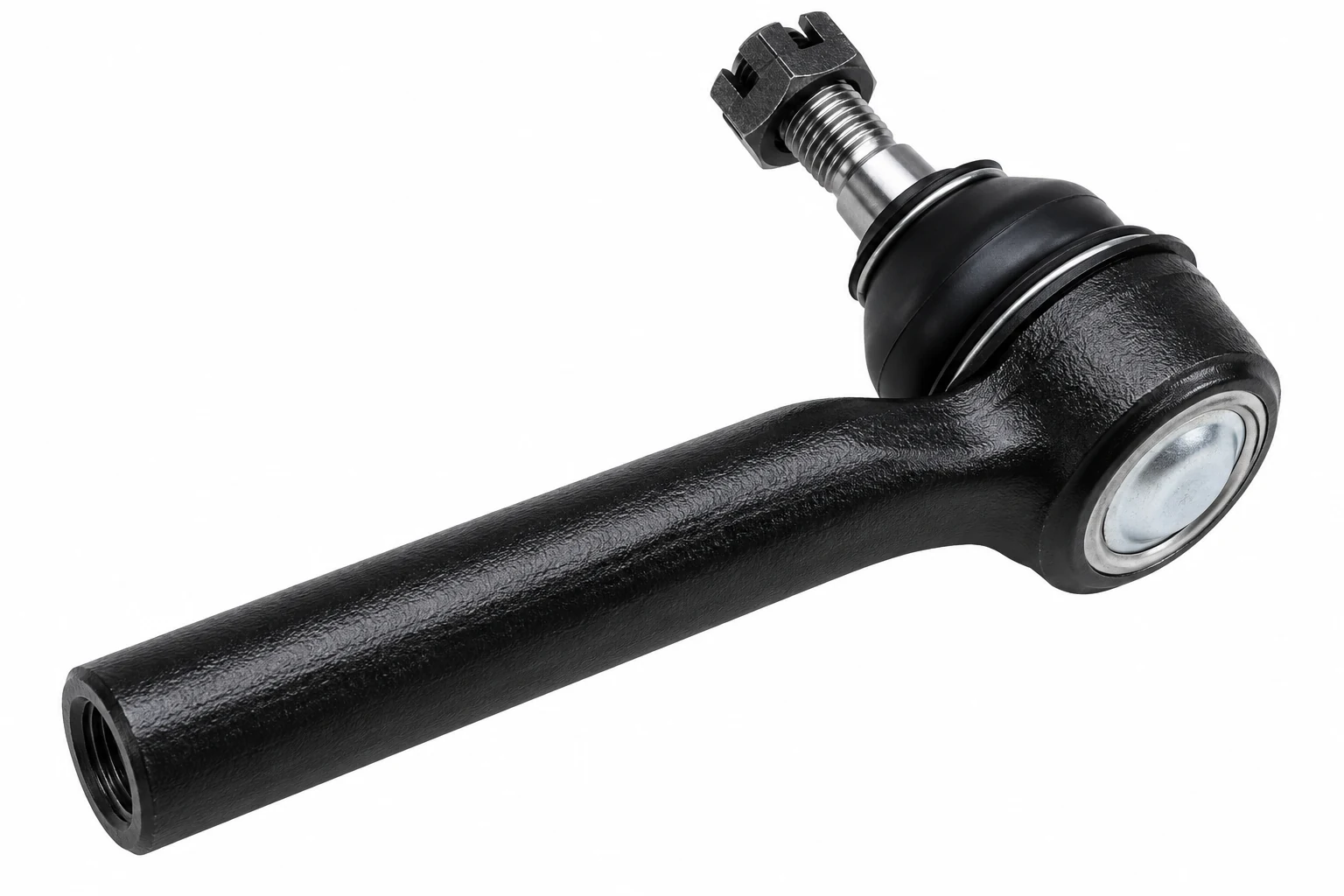
Mobile Tie Rod Inspection in Daytona Beach
Tie rods should be evaluated by physically inspecting the steering linkage and checking for unwanted movement rather than replacing them based only on tire wear or a vague steering complaint.
Depending on the vehicle and symptoms, inspection can include checking:
- Outer tie rod ends
- Inner tie rods
- Tie rod boots
- Ball-and-socket play
- Stud movement
- Steering linkage looseness
- Inner rack-end movement
- Lock nuts and adjustment hardware
- Bent tie rod shafts
- Corrosion
- Torn dust boots
- Grease loss
- Steering-rack movement
- Steering-wheel free play
- Wheel movement during inspection
- Front tire wear
- Toe-related alignment symptoms
- Related suspension components
The objective is to identify exactly where unwanted steering movement originates.
What Is a Tie Rod?
A tie rod is part of the vehicle’s steering linkage.
On most rack-and-pinion steering systems, each side commonly consists of:
- Inner tie rod
- Outer tie rod end
Together, they connect the steering rack to the steering knuckle.
When the steering wheel turns:
- The steering rack moves left or right.
- The inner tie rod moves with the rack.
- The outer tie rod transfers that motion to the steering knuckle.
- The wheel changes direction.
The tie rod therefore has a direct mechanical role in steering the vehicle.
What Is an Outer Tie Rod End?
The outer tie rod end connects the tie rod to the steering knuckle.
It commonly contains:
- Ball-and-socket joint
- Tapered stud
- Dust boot
- Threaded adjustment section
The ball joint allows the steering linkage to articulate while the wheel and suspension move.
What Is an Inner Tie Rod?
The inner tie rod connects the outer steering linkage to the steering rack.
Depending on the design, it may be called:
- Inner tie rod
- Rack end
- Steering rack end
It commonly contains a joint near the steering rack that allows angular movement while transmitting steering force.
Inner Tie Rod vs. Outer Tie Rod
These components are related but serve different locations in the steering linkage.
Inner Tie Rod
Located closer to the steering rack.
It connects directly or indirectly to the rack mechanism.
Outer Tie Rod
Located near the steering knuckle.
It connects the tie rod assembly to the wheel-side steering arm.
Either one can develop play independently.
Tie Rod End vs. Ball Joint
A tie rod end and suspension ball joint both use ball-and-socket-type articulation, but they serve different purposes.
Tie Rod End
Transfers steering movement.
Ball Joint
Acts as a suspension pivot between the control arm and steering knuckle.
A loose ball joint can create front-end movement or clunking that resembles a worn tie rod.
The source of play should be identified before replacing parts.
Tie Rod vs. Steering Rack
The steering rack creates the left-and-right movement used to steer the wheels.
The tie rods transfer that movement from the rack to the steering knuckles.
A loose steering rack, worn rack bushing, or internal rack problem can sometimes feel like tie rod looseness.
The rack should therefore be considered when the tie rods themselves do not show excessive play.
Tie Rod vs. Wheel Bearing
A worn wheel bearing can cause:
- Wheel play
- Humming
- Growling
- Looseness
but it is not part of the steering linkage.
Wheel-bearing play should be differentiated from tie rod play by observing where movement originates during inspection.
Tie Rod vs. Control-Arm Bushing
Control-arm bushings allow controlled suspension movement at the chassis.
Worn bushings can cause:
- Wandering
- Clunking
- Alignment changes
- Tire wear
These symptoms can overlap with tie rod wear.
A tie rod should not be replaced unless the steering linkage itself shows a fault.
Tie Rod vs. Strut
A strut is a structural suspension component that also controls suspension movement.
A worn strut or strut mount can cause:
- Noise
- Poor handling
- Steering concerns
but it does not perform the steering-linkage function of the tie rod.
Tie Rod vs. Sway-Bar Link
A sway-bar link commonly causes:
- Clunking over bumps
but it does not control toe or transmit steering motion.
A noise complaint alone should not lead to tie rod replacement.
What Does a Tie Rod Do?
The tie rod performs several important functions.
It:
- Transfers steering-rack movement to wheel
- Allows steering articulation
- Helps determine wheel toe
- Maintains steering geometry
- Allows suspension movement while steering
Because tie rod length directly influences wheel direction, its condition and adjustment are important to both steering feel and alignment.
Tie Rod and Wheel Toe
Toe describes whether the front edges of the wheels point:
- Slightly inward
- Slightly outward
Tie rod adjustment is commonly used to set front toe during a wheel alignment.
Changing tie rod length changes steering-knuckle position.
For this reason, tie rod replacement usually affects alignment.
Tie Rods and Alignment
Replacing a tie rod can change toe even if the replacement is installed close to the old adjustment.
Counting threads or measuring the old tie rod can help approximate the previous setting, but it does not guarantee correct alignment.
A proper wheel alignment is generally recommended after tie rod replacement.
Signs of a Worn Tie Rod
Possible symptoms include:
- Steering-wheel play
- Vehicle wandering
- Loose steering feel
- Clunk when steering
- Front-end looseness
- Uneven tire wear
- Feathered tire wear
- Difficulty maintaining alignment
- Steering wheel off center
- Vehicle pulling
- Visible tie rod looseness
- Torn tie rod boot
These symptoms can also result from other steering or suspension faults.
Physical inspection is necessary.
Loose Steering From a Worn Tie Rod
As the tie rod joint wears, movement can occur before the steering knuckle responds.
The driver may feel:
- Delay between steering-wheel movement and vehicle response
- Loose or vague steering
- Need for frequent steering correction
The amount of looseness depends on severity and whether one or multiple joints are worn.
Vehicle Wanders on Road
Worn steering linkage can allow the front wheels to change direction slightly without direct steering input.
The vehicle may:
- Drift
- Wander
- Require constant correction
However, wandering can also result from:
- Tire pressure
- Alignment
- Control-arm bushings
- Ball joints
- Steering rack
- Road conditions
Tie rods should be physically checked before replacement.
Tie Rod Clunking Noise
A severely worn joint can produce a:
- Clunk
- Knock
- Clicking movement
during steering or over road irregularities.
But front-end clunks can also come from:
- Ball joints
- Sway-bar links
- Strut mounts
- Control-arm bushings
The noise source should be isolated.
Tie Rod Noise While Turning
A worn tie rod end may produce noise when steering load changes.
However, turning noise can also come from:
- CV joints
- Strut bearings
- Steering rack
- Ball joints
Noise by itself is not enough to condemn a tie rod.
Steering Wheel Feels Loose
Loose steering can result from movement in:
- Outer tie rods
- Inner tie rods
- Steering rack
- Intermediate steering shaft
- Steering gear
Inspection should determine where the lost motion occurs.
Tie Rod and Uneven Tire Wear
Tie rod wear can allow toe to change.
Incorrect toe commonly causes:
- Feathered tread
- Rapid tire wear
- Uneven inner or outer tread wear
However, tire wear can also result from:
- Camber
- Caster
- Tire pressure
- Worn bushings
- Ball joints
Tire wear should be treated as supporting evidence, not proof of tie rod failure.
Feathered Tire Wear
Toe misalignment often creates a feathered tread pattern.
The tread blocks may feel:
- Smooth in one direction
- Sharp in the opposite direction
Worn tie rods can contribute by allowing toe to change dynamically while driving.
Tire Wear After Tie Rod Replacement
If the vehicle is driven without correcting toe after tie rod replacement, tire wear can continue even though the new joint is mechanically sound.
Alignment is an important part of completing the repair.
Steering Wheel Off Center
A steering wheel that sits crooked while driving straight can result from incorrect toe adjustment.
Possible causes include:
- Recent tie rod replacement without alignment
- Incorrect tie rod adjustment
- Other alignment changes
The steering wheel position alone does not indicate a failed tie rod.
Can a Bad Tie Rod Cause Pulling?
A severely worn tie rod can allow toe to change and may contribute to unstable steering.
However, a consistent pull can also result from:
- Tire condition
- Brake drag
- Alignment
- Suspension damage
The tie rod should be inspected for actual play.
Tie Rod Dust Boot
The dust boot protects the tie rod joint from:
- Water
- Dirt
- Road debris
and helps retain lubricant around the joint.
A torn boot allows contamination to enter the joint and can accelerate wear.
Torn Tie Rod Boot
A torn boot does not automatically prove the tie rod joint has excessive mechanical play.
However, it increases the risk of:
- Grease loss
- Water intrusion
- Corrosion
- Accelerated joint wear
The joint should be inspected carefully.
Grease Around Tie Rod End
Visible grease around a torn boot can indicate the joint has lost some lubrication.
If the boot is damaged and the joint is loose, replacement is generally appropriate.
If no looseness is present, the serviceability of the boot depends on the component design.
Grease Fitting on Tie Rod
Some aftermarket or older tie rod ends use a grease fitting.
These are commonly called:
- Zerk fitting
- Grease fitting
Periodic lubrication may be part of their maintenance.
Many modern OEM tie rods are sealed and do not have grease fittings.
Can Greasing Fix a Loose Tie Rod?
No.
Lubrication can reduce friction in a serviceable joint, but it cannot restore worn:
- Ball
- Socket
- Bearing surfaces
If excessive mechanical play exists, the joint requires replacement.
Outer Tie Rod Play
Outer tie rod play can often be observed while:
- Moving the wheel side-to-side
- Watching the tie rod joint
- Having another person move steering wheel
The stud and housing should move together without obvious unwanted movement inside the socket.
Inner Tie Rod Play
Inner tie rod looseness may be more difficult to see because the joint is often covered by the steering-rack boot.
Inspection can involve:
- Side-to-side wheel movement
- Feeling inner joint
- Observing rack movement
- Separating outer tie rod where necessary
The source of movement should be confirmed.
Inner Tie Rod Rack Boot
The inner tie rod is commonly covered by an accordion-style rack boot.
The boot protects:
- Inner joint
- Steering rack
from dirt and water.
A torn boot should be inspected because contamination can affect both the inner tie rod and steering rack.
Fluid Inside Steering Rack Boot
On hydraulic steering racks, fluid inside a rack boot can indicate an internal rack seal leak.
That is a steering-rack problem, not an inner tie rod failure by itself.
The source should be identified before replacing the inner tie rod.
How Tie Rods Are Inspected
Inspection commonly includes physically loading the steering linkage.
Depending on vehicle design, the technician may:
- Raise the wheel
- Move wheel at 3 and 9 o’clock
- Watch outer tie rod
- Feel inner tie rod
- Observe steering rack
- Inspect boot condition
- Check mounting hardware
The goal is to locate movement rather than simply feel that “something is loose.”
3 and 9 O’Clock Wheel Test
Holding the tire near the 3 and 9 o’clock positions and moving it side-to-side can reveal steering-system looseness.
Possible movement sources include:
- Outer tie rod
- Inner tie rod
- Steering rack
- Wheel bearing
The test is useful, but the technician still must watch or feel individual components to identify the source.
Wheel Play Does Not Automatically Mean Tie Rod
A loose wheel can result from:
- Tie rod
- Wheel bearing
- Ball joint
- Steering rack
The location and direction of the movement must be determined.
Replacing the tie rod solely because the tire moves is not sufficient diagnosis.
Tie Rod Inspection With Steering Wheel Movement
Another method is to have the steering wheel moved gently left and right while observing the linkage.
Excess movement between:
- Tie rod stud
- Socket
- Inner joint
can reveal looseness.
Tie Rod Stud
The outer tie rod commonly uses a tapered stud to attach to the steering knuckle.
The taper creates a tight mechanical fit when the nut is properly tightened.
The stud should not move loosely in the knuckle.
Tie Rod Taper
The tapered joint between the stud and steering knuckle is important.
A damaged or enlarged taper can prevent the new tie rod from seating securely.
If the knuckle taper is damaged, replacing the tie rod alone may not provide a safe repair.
Tie Rod Castle Nut
Some tie rod ends use a:
- Castle nut
- Cotter pin
The cotter pin prevents the nut from loosening.
A new cotter pin should normally be used when the joint is reassembled.
Other applications use different self-locking hardware.
Tie Rod Jam Nut
The jam nut locks the outer tie rod adjustment against the inner tie rod.
It helps prevent the toe setting from changing.
The jam nut should be:
- Secure
- Free enough to adjust during service
Severe corrosion can make adjustment difficult.
Seized Tie Rod Adjustment
Rust and corrosion can seize the threads between:
- Inner tie rod
- Outer tie rod
- Jam nut
This can make alignment adjustment difficult or impossible.
In severe cases, additional steering components may need service even if only one joint is worn.
Bent Tie Rod
A tie rod can bend after:
- Curb impact
- Collision
- Pothole impact
- Off-road impact
A bent tie rod can change toe even if the ball-and-socket joint itself is not loose.
Bent steering linkage should be replaced rather than straightened unless the manufacturer specifically provides another approved procedure.
Tie Rod Damage From Curb Impact
After a significant curb strike, inspection should include:
- Tie rod
- Steering knuckle
- Control arm
- Wheel
- Strut
- Alignment
A bent tie rod may be only one part of the damage.
Inner Tie Rod and Rack End
The term rack end commonly refers to the inner tie rod on rack-and-pinion steering systems.
The inner joint screws or attaches to the steering rack and allows articulation as the rack moves.
Inner Tie Rod Socket Wear
The inner tie rod uses an internal joint that can loosen with:
- Mileage
- Impact
- Contamination
- Boot failure
Excess play can create steering looseness even when the outer tie rod remains tight.
Outer Tie Rod Ball-and-Socket Wear
The outer tie rod contains a ball stud retained within a socket.
As the joint wears, clearance increases.
Eventually the joint may develop:
- Side-to-side looseness
- Vertical movement
- Clunking
Severe wear can compromise steering control.
How Much Tie Rod Play Is Acceptable?
The correct answer depends on vehicle design and manufacturer specifications.
Some steering joints are expected to have essentially no perceptible looseness.
Other inspection procedures may specify allowable movement.
There is no universal amount of play that should be applied to every vehicle.
Tie Rod End Separation
A severely worn tie rod end can eventually separate.
If the steering knuckle is no longer connected correctly to the steering linkage, steering control at that wheel can be lost.
This is why substantial tie rod looseness is a safety concern.
Can You Drive With a Bad Tie Rod?
A tie rod with minor boot deterioration but no mechanical play is different from a joint with significant looseness.
A tie rod with obvious excessive movement or insecure attachment can affect steering control and should be repaired promptly.
If a joint appears close to separation, continued driving may be unsafe.
Tie Rod Failure Symptoms Can Progress
Tie rod wear often begins with:
- Small amount of play
and may progress into:
- Loose steering
- Tire wear
- Clunking
- Severe movement
The joint does not generally repair itself.
Tie Rods and Steering Safety
Tie rods are part of the direct mechanical connection between the steering system and the front wheels.
Their condition should be taken seriously.
A severely worn tie rod can compromise the driver’s ability to control wheel direction.
Inner Tie Rod Replacement
Inner tie rod replacement generally requires access behind the rack boot.
Depending on the vehicle, service can involve:
- Removing outer tie rod
- Removing rack boot
- Releasing boot clamps
- Unscrewing inner tie rod
- Using inner tie rod tool
- Installing new locking hardware
The exact procedure varies substantially.
Outer Tie Rod Replacement
Outer tie rod replacement generally includes:
- Marking or measuring adjustment position
- Loosening jam nut
- Removing stud nut
- Separating stud from steering knuckle
- Unscrewing outer tie rod
- Installing new tie rod
- Reassembling steering connection
- Setting approximate toe
- Performing alignment
Tie Rod Separator Tool
A tie rod end can be separated from the steering knuckle with tools such as:
- Ball-joint/tie-rod separator
- Puller
Some methods can preserve the boot better than others.
Hammering indiscriminately on the threaded stud can damage:
- Threads
- Joint
The correct service method should be used.
Pickle Fork and Tie Rod Ends
A pickle-fork-style separator can be effective but may damage the dust boot.
This matters if the tie rod is being reused.
When replacing the tie rod, boot preservation is less important, but surrounding components should still be protected.
Inner Tie Rod Tool
Some inner tie rods require a long tubular tool that fits over the tie rod and engages flats on the inner joint.
Others require:
- Special crowfoot tool
- Manufacturer-specific adapter
Access and tool requirements determine whether the repair is practical on a given vehicle.
Tie Rod Thread Count Method
Technicians sometimes count the number of turns required to remove the outer tie rod.
The new tie rod can then be installed approximately the same number of turns.
This can help keep toe reasonably close for transport to an alignment.
It does not replace a proper alignment.
Measuring Tie Rod Length Before Replacement
Another approach is to measure:
- Overall tie rod length
- Distance between reference points
before disassembly.
This can provide an approximate initial setting.
Again, final toe should be measured accurately afterward.
Tie Rod Replacement and Steering Wheel Position
If replacement changes toe unevenly between sides, the steering wheel may no longer be centered.
A proper alignment corrects:
- Toe
- Steering-wheel center
where adjustment permits.
Tie Rod Replacement and Wheel Alignment
Because tie rod adjustment directly sets toe, wheel alignment is generally recommended after:
- Outer tie rod replacement
- Inner tie rod replacement
Even careful measurements during installation cannot account for:
- Manufacturing variation
- Previous wear
- Existing alignment errors
Can You Replace a Tie Rod Without Alignment?
The mechanical component can be replaced, but driving indefinitely without checking alignment is not recommended.
Incorrect toe can cause:
- Rapid tire wear
- Steering instability
- Crooked steering wheel
A proper alignment completes the repair.
Do Both Tie Rods Need Replacement?
Not automatically.
If only one tie rod has excessive play and the other side is in good condition, replacing only the failed component can be appropriate.
Pair replacement may make sense when:
- Both are worn
- Both boots are deteriorated
- Both have similar high mileage
Condition should determine replacement rather than a blanket rule.
Inner and Outer Tie Rod Replacement Together
The inner and outer tie rod on one side do not automatically need to be replaced together.
If:
- Outer joint is worn
- Inner joint remains tight
the outer may be serviced separately.
If both show wear, replacing both during the same repair can be appropriate.
Tie Rod Replacement on Both Sides
Left and right tie rods should be inspected individually.
A failure on one side does not prove the opposite side is bad.
Replacement should be based on actual condition.
Rear Tie Rods
Some vehicles use rear suspension links that may be referred to as:
- Rear tie rods
- Toe links
- Rear toe arms
These components control rear-wheel toe rather than front steering input.
Their inspection principles include checking:
- Joint play
- Bushings
- Bent links
but they are different from conventional front steering tie rods.
Tie Rods on Conventional Steering Gear Systems
Older vehicles and some trucks may use:
- Center link
- Drag link
- Pitman arm
- Idler arm
- Tie rod assemblies
instead of a simple rack-and-pinion layout.
On these systems, tie rods still connect steering linkage to the wheel-side steering arms, but the architecture differs.
Tie Rod vs. Drag Link
A drag link is another steering-linkage component used on certain systems.
It transfers steering motion between:
- Steering gear
- Other steering links
Tie rods then connect the linkage toward the wheels.
These components should not be treated as interchangeable.
Tie Rod vs. Center Link
A center link is used on certain steering systems to connect:
- Pitman arm
- Idler arm
- Tie rod assemblies
The tie rod ends still control wheel-side steering position.
Tie Rod and Power Steering
Whether the vehicle uses:
- Hydraulic power steering
- Electric power steering
- Manual steering
the tie rod still performs a mechanical steering-linkage function.
A power-steering problem does not automatically indicate tie rod wear.
Tie Rod and Electric Power Steering
Electric power steering changes how steering assist is generated, not how the steering rack connects to the wheels.
Most EPS rack systems still use:
- Inner tie rods
- Outer tie rods
and those joints can wear normally.
Tie Rod and Hydraulic Power Steering
Hydraulic power assist operates inside the rack or steering gear.
The tie rods remain mechanical linkage components.
A power-steering fluid leak does not automatically mean the tie rods require replacement.
Tie Rod and Steering Rack Boot Leak
If hydraulic power-steering fluid accumulates inside the rack boot, the rack may have an internal seal leak.
Replacing the inner tie rod will not stop an internal rack leak.
The rack itself should be evaluated.
Tie Rod and Rack Movement
If both tie rods appear tight but steering still has play, the technician may need to inspect:
- Rack mounting bushings
- Internal rack movement
- Steering shaft
The tie rods are only one possible source of steering looseness.
Tie Rod and Steering Shaft
A worn intermediate steering shaft or steering-column joint can cause:
- Play
- Clunking
that can feel similar to worn tie rods.
Observing the steering linkage while the wheel is moved helps separate these faults.
Tie Rod and Ball Joint Play Test
Because both components can cause wheel movement, the technician may need to hold or observe each joint during inspection.
If the tie rod moves rigidly with the steering knuckle but the ball joint shifts, the tie rod is not the source of the looseness.
Tie Rod and Wheel Bearing Play Test
A loose wheel bearing may allow the entire wheel and hub to move while the tie rod itself remains tight.
The hub should be observed during the wheel-play test.
Tie Rod and Control-Arm Bushing Inspection
Control-arm bushing wear can allow the whole wheel assembly to shift under braking or acceleration.
That movement can alter toe dynamically and create steering instability.
A tight tie rod should not be replaced to correct bushing movement.
Tie Rod and Tire Pressure
Low or uneven tire pressure can cause:
- Wandering
- Pulling
- Heavy steering
Before interpreting steering feel, tire pressure should be verified.
Tie Rod and Tire Condition
Damaged or unevenly worn tires can make a vehicle:
- Track poorly
- Pull
- Feel unstable
Tire condition should be considered along with steering linkage.
Tie Rod and Front-End Alignment
Alignment measurements can provide clues, but alignment alone cannot determine whether a tie rod joint is mechanically sound.
A worn tie rod may make toe:
- Unstable
- Difficult to set
The joint should be inspected physically before alignment.
Tie Rod and Steering Play at Highway Speed
A worn tie rod can make steering feel especially vague at higher speed.
However, highway instability can also come from:
- Tires
- Alignment
- Wheel bearings
- Control-arm bushings
A physical inspection is still necessary.
Tie Rod Vibration
Tie rod wear more commonly causes looseness and steering instability than a classic speed-related vibration.
Vibration can also be caused by:
- Tires
- Wheels
- CV axles
- Wheel bearings
A vibration complaint should not automatically be attributed to tie rods.
Tie Rod Clicking
Clicking during low-speed steering can originate from:
- Tie rod
- Strut mount
- CV joint
- Ball joint
The joint should be watched and felt during steering movement.
Tie Rod Popping
A popping sensation may occur when a worn joint shifts under load.
However, popping can also come from other suspension pivots.
Diagnosis should identify the component that actually moves.
Tie Rod Corrosion
Tie rods are exposed to:
- Water
- Road debris
- Salt or coastal air
- Heat
Corrosion can affect:
- Adjustment threads
- Jam nuts
- Stud threads
Severe corrosion can complicate replacement and alignment.
Tie Rod Service in Coastal Florida
Vehicles driven in the Daytona Beach area can still develop corrosion from:
- Moisture
- Coastal salt exposure
- Road splash
Corroded adjustment threads may make an otherwise straightforward tie rod repair more involved.
Tie Rod Thread Direction
Some steering systems use:
- Standard threads
- Opposite-direction threads
depending on linkage design.
The correct direction should be identified before applying force.
Tie Rod Locking Washer
Some inner tie rods use:
- Locking washer
- Tab washer
- Thread-locking compound
to secure the inner joint to the steering rack.
The correct locking method should be restored during replacement.
Rack Damage During Inner Tie Rod Removal
Applying excessive force to the steering rack while loosening an inner tie rod can potentially damage:
- Rack mechanism
- Internal seals
Proper counterholding or manufacturer procedure may be necessary.
Tie Rod Replacement Procedure
Once inspection confirms a worn or damaged tie rod, replacement generally includes:
- Verify the steering complaint.
- Inspect tire condition and pressure.
- Check wheel movement for looseness.
- Observe the outer tie rod joint.
- Check inner tie rod movement.
- Inspect tie rod boots.
- Check related ball joints and wheel bearings.
- Inspect steering rack movement.
- Confirm which tie rod component has failed.
- Raise and safely support the vehicle.
- Remove the wheel if required.
- Measure or mark the existing tie rod adjustment.
- Loosen the jam nut when servicing the outer tie rod.
- Remove the tie rod stud retaining nut.
- Separate the tie rod stud from the steering knuckle.
- Remove the outer tie rod if being replaced.
- Remove the steering-rack boot if inner tie rod service is required.
- Release the inner tie rod locking method.
- Remove the inner tie rod using the correct tool.
- Compare the replacement part with the original.
- Install the inner tie rod where applicable.
- Apply or install the specified locking device.
- Reinstall the rack boot securely.
- Install the outer tie rod to the approximate previous adjustment.
- Insert the tapered stud into the steering knuckle.
- Tighten the stud nut to specification.
- Install a new cotter pin where required.
- Tighten the jam nut.
- Reinstall the wheel.
- Verify steering movement.
- Check for remaining looseness.
- Have wheel alignment performed.
- Verify steering wheel center and normal road behavior.
The exact procedure varies by steering-system design.
Outer Tie Rod Replacement Procedure
When only the outer tie rod is worn, the inner tie rod may remain installed.
Important steps include:
- Preserve approximate adjustment
- Separate tapered stud correctly
- Confirm correct replacement length
- Secure jam nut
- Torque stud hardware
- Align vehicle afterward
Inner Tie Rod Replacement Procedure
Inner tie rod replacement is more involved because the joint is located at the steering rack.
The repair may require:
- Rack boot removal
- Special inner tie rod tool
- Locking washer replacement
- Repositioning rack boot
The rack itself should be protected from excessive twisting force.
Tie Rod Boot Clamp
Rack boots may use:
- Metal clamp
- Spring clamp
- Plastic tie
- Manufacturer-specific retainer
The boot must be sealed correctly after inner tie rod replacement to keep contamination away from the joint and steering rack.
Tie Rod Replacement and ABS Wiring
Depending on vehicle design, ABS wheel-speed sensor wiring may run near the steering knuckle.
Care should be taken not to stretch or damage:
- ABS wires
- Brake hoses
during tie rod service.
Tie Rod Replacement and Brake Hose
The steering knuckle must still move freely without pulling the brake hose.
After replacement, hose routing should be checked through steering travel.
Tie Rod Replacement and Torque Specifications
Tie rod hardware should be tightened to the correct specification.
Important fasteners can include:
- Inner tie rod
- Outer stud nut
- Jam nut
- Wheel lug nuts
Overtightening or undertightening steering hardware can create safety problems.
Cotter Pin Replacement
If the tie rod uses a castle nut and cotter pin, the old cotter pin should not generally be reused.
A new cotter pin should be installed after the nut is properly torqued and aligned.
Tie Rod Taper Seating
The tapered stud must seat fully in the steering knuckle.
A loose taper can cause:
- Movement
- Noise
- Damage
The stud should not be drawn into a damaged or contaminated taper improperly.
Damaged Steering Knuckle Taper
If the tapered hole in the steering knuckle is enlarged or damaged, a new tie rod may not seat securely.
The knuckle may need replacement.
A tie rod should never be installed into an obviously damaged taper and assumed safe.
Tie Rod Replacement and Thread Matching
Inner and outer tie rods must have the correct:
- Thread diameter
- Thread pitch
- Length
- Stud taper
A part that appears similar may still be incorrect.
Wrong Tie Rod Length
An incorrect tie rod can make proper toe adjustment impossible.
Possible results include:
- Excessive toe-in
- Excessive toe-out
- Insufficient thread engagement
The exact application should be verified.
Minimum Tie Rod Thread Engagement
The outer tie rod must have adequate thread engagement with the inner tie rod or adjusting sleeve.
Insufficient engagement can weaken the steering connection.
A proper replacement should allow correct alignment without leaving dangerously few threads engaged.
OEM vs. Aftermarket Tie Rods
Tie rod quality can affect:
- Joint durability
- Boot sealing
- Stud fit
- Thread accuracy
A quality replacement matched to the exact vehicle application is important for a steering safety component.
Cheap Tie Rod Problems
Poor-quality tie rods can experience:
- Premature joint looseness
- Boot failure
- Poor stud fit
- Incorrect dimensions
Part quality matters because steering linkage operates under repeated loads.
Greasable vs. Sealed Tie Rod Ends
Aftermarket replacements may be:
- Greasable
- Permanently sealed
Both designs can work when properly manufactured.
A greasable joint requires periodic maintenance if specified.
A sealed joint should not be drilled or modified to accept grease.
Tie Rod Replacement Cost
Tie rod replacement cost depends on:
- Vehicle year, make, and model
- Inner vs. outer tie rod
- One side vs. multiple components
- Corrosion
- Steering-rack access
- Special tool requirements
- Alignment requirements
- Related damage
An easily accessible outer tie rod can be relatively straightforward.
A seized inner tie rod or heavily corroded steering linkage may require considerably more work.
Call Jimmy’s Mobile Care at (386) 308-2509 with your vehicle information and symptoms so we can determine the appropriate tie rod inspection and repair approach.
Why Inspect a Tie Rod Before Replacing It?
Tie rod symptoms overlap with many other steering and suspension problems.
Is There Actual Play in the Outer Tie Rod?
The stud and housing should move together without excessive socket movement.
Is the Inner Tie Rod Loose?
Inner joint wear can produce steering play even when the outer tie rod is tight.
Is the Wheel Bearing Moving Instead?
Wheel-bearing play can imitate steering-linkage looseness.
Is the Ball Joint Worn?
Ball-joint play may be felt at the wheel but comes from the suspension pivot rather than the tie rod.
Are the Control-Arm Bushings Moving?
Bushing movement can create wandering and toe changes.
Is the Steering Rack Loose?
Rack mounting or internal rack wear can cause steering play with good tie rods.
Is the Tie Rod Bent?
Impact damage can alter toe without creating socket looseness.
Is the Boot Torn but the Joint Still Tight?
A damaged boot increases future wear risk but should be evaluated separately from actual joint looseness.
Are the Tires Causing the Steering Complaint?
Uneven tire pressure or damaged tires can create wandering or pulling.
Inspecting each possible source helps ensure the correct steering component is replaced.
Mobile Outer Tie Rod Inspection in Daytona Beach
Jimmy’s Mobile Care can inspect outer tie rod ends for:
- Ball-and-socket looseness
- Stud movement
- Torn dust boots
- Grease leakage
- Corrosion
- Bent linkage
- Loose hardware
- Steering play
Outer tie rods are often easier to inspect visually because they are located at the steering knuckle.
Mobile Inner Tie Rod Inspection in Daytona Beach
Inner tie rod diagnosis focuses on movement near the steering rack.
Inspection can include:
- Feeling inner joint play
- Observing steering response
- Checking rack boot condition
- Separating inner movement from rack movement
Because the joint is often hidden by a boot, diagnosis may require more careful inspection than an outer tie rod.
Mobile Tie Rod Replacement in Daytona Beach
When inspection confirms a worn tie rod and the repair is appropriate for mobile service, Jimmy’s Mobile Care can replace many inner and outer tie rods at your Daytona Beach location.
After replacement, we can verify:
- Secure steering connection
- Proper stud seating
- Correct hardware installation
- Secure jam nut
- Proper rack-boot installation where applicable
- Smooth steering movement
- No obvious remaining tie rod looseness
Because tie rod replacement affects toe, a professional wheel alignment should normally be performed afterward.
When Tie Rod Repair May Require Additional Work
Some vehicles can require more extensive service because of:
- Severely seized adjustment threads
- Damaged steering knuckle taper
- Damaged steering rack
- Significant corrosion
- Bent suspension parts
- Special alignment requirements
The complete steering system should be evaluated before assuming the repair is limited to one tie rod.
Schedule Car Tie Rod Inspection & Replacement in Daytona Beach
Loose steering, wandering, clunking, uneven tire wear, or a crooked steering wheel can point toward a tie rod problem, but those symptoms can also be caused by ball joints, wheel bearings, control-arm bushings, steering-rack problems, tires, or alignment.
Jimmy’s Mobile Care physically checks the steering linkage to determine whether the inner tie rod, outer tie rod, or another steering or suspension component is actually responsible before replacing parts.
Call Jimmy’s Mobile Care at (386) 308-2509 to schedule car tie rod inspection and replacement in Daytona Beach, FL. Call today and we'll come to your location.