
Car Brake Caliper Diagnostics & Replacement in Daytona Beach, FL
A brake caliper has to apply the brake pads when you press the pedal and release them when braking force is no longer needed. A caliper that sticks, leaks, seizes, or fails to move correctly can cause brake drag, uneven brake pad wear, excessive heat, pulling while braking, and damage to other brake components.
Jimmy’s Mobile Care provides car brake caliper diagnostics and replacement in Daytona Beach, FL, at your location. Before replacing a caliper, we diagnose how the brake assembly is operating and look for other problems that can produce similar symptoms.
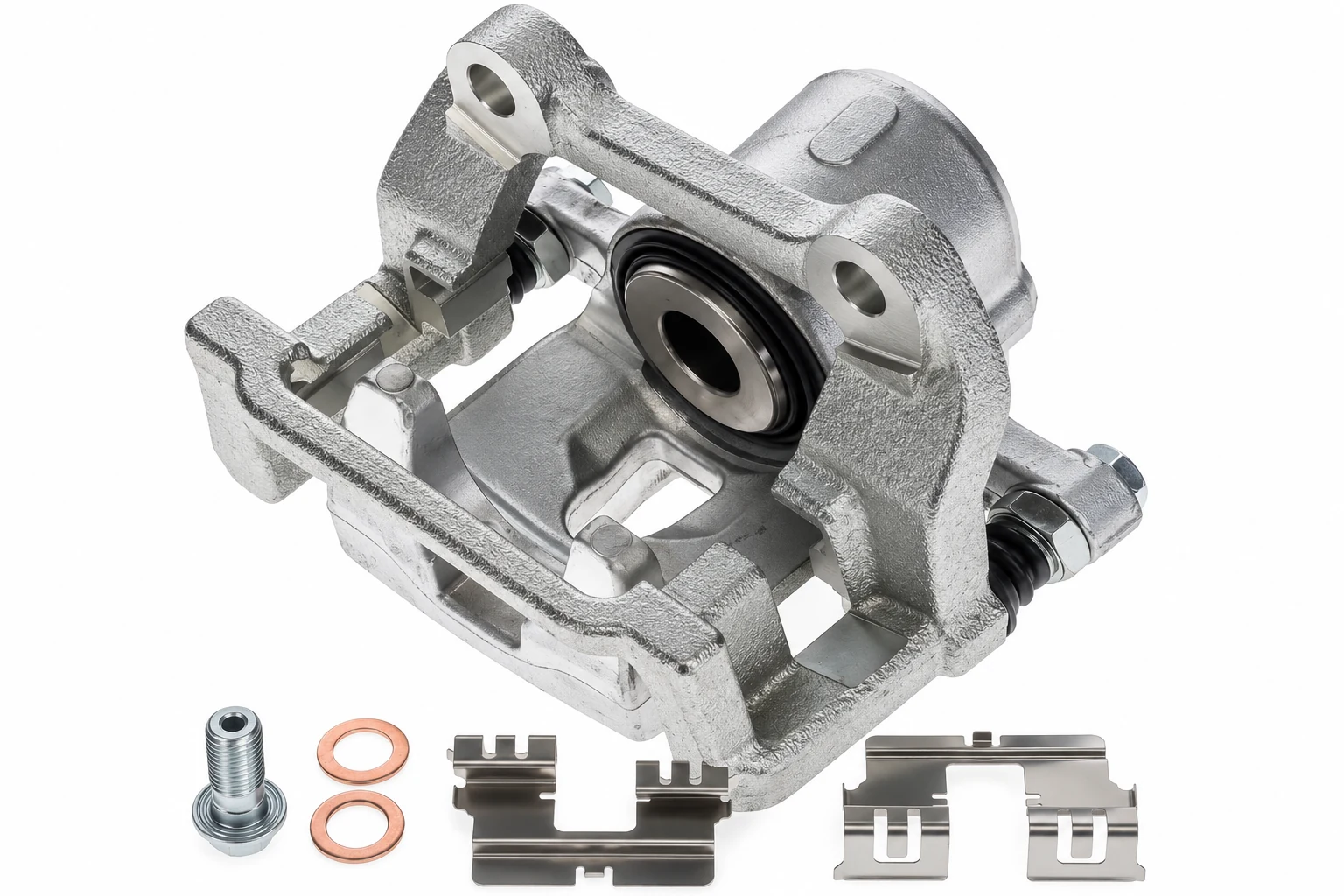
Mobile Brake Caliper Diagnostics in Daytona Beach
A hot wheel, worn brake pad, or pulling condition does not automatically prove that the brake caliper itself is bad.
The caliper operates as part of a hydraulic and mechanical system. A restricted brake hose, seized slide, binding brake pad, hydraulic problem, or damaged hardware can sometimes produce symptoms that resemble caliper failure.
Our diagnostic approach is designed to determine what is actually preventing the brake from applying or releasing correctly before a replacement caliper is installed.
How a Brake Caliper Works
In a disc brake system, hydraulic pressure generated when the brake pedal is applied reaches the caliper. The caliper piston moves outward and applies the brake pads against the rotor.
When the pedal is released, hydraulic pressure decreases and the brake assembly must allow the pads to release sufficiently from the rotor.
Many vehicles use floating or sliding calipers. In these systems, piston movement and caliper movement work together to apply the inner and outer brake pads.
Other applications use fixed calipers containing multiple pistons.
Understanding which design is on the vehicle matters because different failures produce different wear patterns and symptoms.
Diagnosing a Sticking Brake Caliper
A sticking brake is one of the most common reasons a caliper is suspected, but several components need to be considered before condemning the caliper.
We begin by examining the symptoms and physical condition of the brake assembly.
Evidence of a brake that is not releasing correctly can include:
- One wheel becoming significantly hotter than the others
- A burning smell after driving
- Excessive brake dust at one wheel
- Rapid or uneven brake pad wear
- Vehicle pulling while driving or braking
- Reduced vehicle coasting
- A wheel that is difficult to rotate when raised safely
- Brake components showing signs of excessive heat
- Premature rotor discoloration or damage
The next step is determining why that brake is remaining applied.
Checking Whether the Brake Is Actually Dragging
When conditions allow, the affected wheel and brake assembly can be checked for excessive resistance.
A brake that remains partially applied after the pedal has been released can create noticeably more drag than a properly releasing brake.
This establishes that a problem exists at the wheel, but it still does not identify the caliper as the cause. Further testing is needed to separate a mechanical caliper problem from trapped hydraulic pressure or another restriction.
Brake Caliper Piston Testing
The piston is one of the primary moving components inside the caliper.
Corrosion, internal deterioration, contamination, seal problems, or physical damage can interfere with piston movement.
During diagnosis and service, piston operation may be evaluated to determine whether it moves as expected and whether it can be retracted using the correct procedure for that caliper design.
A piston that cannot be retracted normally can indicate a caliper problem, but the brake design has to be considered first.
This is particularly important on rear brakes because some caliper pistons are mechanically connected to the parking-brake mechanism and cannot simply be pushed straight inward.
Distinguishing a Bad Caliper From a Restricted Brake Hose
A brake hose problem can imitate a seized caliper.
The flexible brake hose carries hydraulic pressure to the caliper. Internal hose deterioration can sometimes allow pressure to reach the brake but interfere with its release.
The result can be a brake that remains applied even though the caliper itself is capable of moving.
When trapped hydraulic pressure is suspected, diagnostic testing can help determine whether releasing pressure changes the amount of brake drag.
That distinction matters.
Replacing a caliper when the actual restriction is in the brake hose may leave the vehicle with exactly the same problem after the repair.
Caliper Slide Pin Inspection
On a floating-caliper brake system, the caliper must move correctly on its guide pins or slides.
A seized or restricted slide can prevent the caliper from applying and releasing the pads evenly.
We inspect slide movement when the brake design and symptoms indicate it is appropriate.
Problems can include:
- Corroded guide pins
- Restricted slide movement
- Damaged protective boots
- Contamination
- Dried or unsuitable lubricant
- Physical damage to the slide or mounting components
A slide problem is important to distinguish from a failed piston because the repair may be different.
What Brake Pad Wear Can Tell Us About a Caliper
The old brake pads provide valuable diagnostic information.
We compare the inner and outer pads and, when relevant, compare the affected wheel with the brake on the opposite side of the axle.
Abnormal patterns can include:
- Inner pad substantially thinner than the outer pad
- Outer pad substantially thinner than the inner pad
- Both pads at one wheel wearing unusually quickly
- Tapered pad wear
- Heat-damaged or glazed friction material
- One side of the vehicle wearing differently from the other
The pattern does not automatically identify one failed component, but it helps determine where additional inspection is needed.
This is why replacing pads without examining unusual wear can allow an underlying caliper or hardware problem to continue damaging the new parts.
Diagnosing a Seized Brake Caliper
A severely seized caliper may prevent the brake from releasing or prevent the brake from applying correctly.
The diagnosis depends on the failure.
A caliper that remains applied can create constant friction and heat. A piston that no longer moves outward correctly may prevent that wheel from developing the expected braking force.
We evaluate the brake assembly rather than treating every seized-caliper complaint as the same problem.
If the piston or caliper mechanism is confirmed to be mechanically seized or damaged, replacement may be necessary.
Brake Caliper Leak Inspection
Brake calipers contain hydraulic brake fluid under pressure. A leaking caliper is therefore different from a component that is merely sticking.
We inspect for evidence of brake fluid around the caliper, piston area, bleeder, hose connection, and other relevant locations.
Signs that warrant attention include:
- Visible brake fluid around the caliper
- Wetness near the piston or dust boot
- Brake fluid collecting around a wheel
- Falling brake-fluid level
- A change in brake pedal feel
- Fluid contamination of the brake pads or rotor
A confirmed hydraulic leak needs prompt attention.
Brake fluid on the friction surfaces can also damage or contaminate brake pads, so replacing the leaking caliper may not be the only repair required.
Brake Caliper Dust Boots and Seals
The piston area is protected by components designed to help keep contaminants away from the caliper's working surfaces.
A torn or deteriorated dust boot can allow water, dirt, and road contaminants into areas where corrosion can develop.
Visible boot damage does not always mean that the entire caliper has already failed, but it is important evidence when combined with piston corrosion, leakage, or restricted movement.
Internal hydraulic seals are equally important because they must contain brake pressure while allowing proper piston operation.
External brake-fluid leakage from the piston area is a strong indication that the caliper requires attention.
Front Brake Caliper Diagnostics & Replacement
Front brakes frequently perform a substantial portion of the vehicle's braking work, so front caliper problems can produce noticeable symptoms.
When diagnosing a suspected front caliper problem, we may compare:
- Left and right brake pad wear
- Inner and outer pad thickness
- Wheel drag
- Caliper slide movement
- Piston operation
- Rotor condition
- Evidence of excessive heat
- Brake hose condition
- Hydraulic release behavior when appropriate
The purpose is to determine whether the caliper itself has failed or another component is causing the brake to remain applied or operate incorrectly.
If the caliper is confirmed faulty and replacement is appropriate, we replace it using the procedure required for the vehicle.
Rear Brake Caliper Diagnostics & Replacement
Rear brake calipers can require additional diagnostic and service considerations because the parking brake may be incorporated into the rear brake assembly.
Some rear calipers use a mechanical parking-brake mechanism. Others are part of an electronic parking brake system.
Depending on the design, piston retraction may require the piston to rotate, a specific mechanical procedure, or activation of an electronic service mode.
Forcing a rear caliper piston backward without identifying the system can damage the caliper or electronic parking-brake mechanism.
We determine how the rear brake is designed before attempting piston retraction or replacement.
Electronic Parking Brake Calipers
Electronic parking brakes are increasingly common on modern vehicles.
On some systems, an electric actuator operates the rear caliper or parking-brake mechanism. Servicing the rear pads or calipers may require placing the system into a maintenance or service mode before disassembly.
After repairs, the system may also require the appropriate procedure to restore normal operation.
A rear caliper that will not retract should therefore not automatically be diagnosed as seized until the electronic parking-brake design and required service procedure have been considered.
Brake Caliper, Rotor, and Pad Damage
A failed caliper can damage more than the caliper itself.
If a brake remains applied while the vehicle is moving, continuous friction can generate substantial heat.
That can lead to:
- Rapid brake pad wear
- Glazed or damaged pads
- Rotor discoloration
- Rotor scoring
- Heat-related rotor damage
- Excessive brake dust
- Reduced component life
For this reason, caliper replacement includes evaluating the condition of the pads and rotor at the affected wheel.
Installing a replacement caliper while leaving severely heat-damaged friction components in place would not fully address the brake problem.
Does a Sticking Caliper Always Need Replacement?
No.
The first question is what is sticking.
A brake that isn't releasing correctly could involve the caliper piston, caliper slides, pad movement, brake hose, parking-brake mechanism, or another part of the brake assembly.
If the caliper piston or caliper mechanism itself is seized, leaking, damaged, or otherwise unserviceable, replacement may be necessary.
If testing identifies another component as the cause, replacing a good caliper would add unnecessary cost without fixing the actual fault.
That's why we diagnose the problem before recommending the part.
Brake Caliper Replacement
Once diagnosis confirms that a caliper needs replacement, the repair involves more than simply unbolting one component and installing another.
The exact procedure depends on the vehicle, but caliper replacement can include:
- Confirming the caliper fault. We verify the condition that makes replacement necessary.
- Inspecting the pads and rotor. We check for uneven wear, contamination, scoring, and heat damage caused by the caliper problem.
- Identifying the brake and parking-brake design. Rear and electronic parking-brake systems may require specific procedures.
- Disconnecting the hydraulic connection. The brake hose is separated from the caliper while controlling brake-fluid loss and contamination.
- Removing the faulty caliper. The caliper is removed from its mounting assembly.
- Installing the replacement caliper. The replacement component is fitted correctly with the appropriate hardware.
- Restoring the hydraulic system. Connections are secured and brake fluid is addressed as required.
- Bleeding air from the brake circuit. Opening the hydraulic system can introduce air, which must be removed before proper braking operation can be restored.
- Checking for leaks. Hydraulic connections and the replacement caliper are inspected before the vehicle is returned to service.
- Verifying brake operation. Pedal feel, brake application, and release are checked after the repair.
The brake system must be properly restored before the vehicle is moved.
Why Brake Bleeding Is Required After Caliper Replacement
A brake caliper is connected directly to the vehicle's hydraulic braking system.
Removing it opens that hydraulic circuit and can introduce air.
Unlike brake fluid, air compresses. Air remaining in the hydraulic system can therefore cause an abnormal or soft brake pedal and interfere with proper transfer of braking force.
After caliper replacement, the affected hydraulic circuit must be bled as required to remove trapped air and restore proper pedal operation.
Brake-fluid level is also checked during the repair.
Replacing One Brake Caliper or Both?
Brake calipers do not automatically have to be replaced in pairs simply because one has failed.
The correct decision depends on the condition of the vehicle's brake components and the nature of the failure.
If diagnosis confirms that one caliper has failed while the opposite caliper is operating normally, the required repair may be limited to the failed component.
If inspection reveals significant problems on both sides, then additional repair may be appropriate.
We base the recommendation on the condition of the vehicle rather than automatically doubling the repair.
How Much Does Brake Caliper Replacement Cost?
Brake caliper replacement cost varies because calipers and brake-system designs differ considerably between vehicles.
Factors affecting the price can include:
- Vehicle year, make, and model
- Front or rear caliper
- Caliper design
- Number of pistons
- Electronic parking-brake components
- Replacement caliper type
- Brake hose condition
- Brake pad condition
- Rotor condition
- Brake-fluid and bleeding requirements
- Additional damage caused by the failed caliper
A straightforward front floating-caliper replacement can be very different from replacing a rear electronic parking-brake caliper.
Call Jimmy’s Mobile Care at (386) 308-2509 with your vehicle information and the symptoms you're experiencing. We can discuss the diagnostic visit and the repair your vehicle may require.
Why Diagnose the Brake Caliper Before Replacing It?
Several brake problems can look like a bad caliper.
Proper diagnosis helps answer the questions that actually determine the repair.
Is the Caliper Piston Sticking?
We evaluate whether piston operation is consistent with the symptoms and brake design.
Are the Caliper Slides Moving Correctly?
A seized slide on a floating caliper can cause uneven pad application and wear without the piston itself being the primary failure.
Is Hydraulic Pressure Being Trapped?
A restricted brake hose or another hydraulic issue can keep a brake applied and imitate a seized caliper.
Is the Caliper Leaking?
Visible brake-fluid leakage can confirm a hydraulic caliper problem and may also require inspection of contaminated friction components.
Has the Caliper Damaged the Pads or Rotor?
A dragging caliper can generate enough heat to damage both components, so they need to be evaluated before the repair is completed.
Is the Rear Caliper Operating Normally for Its Design?
Parking-brake mechanisms and electronic systems can change how a rear piston is supposed to retract.
These checks help us replace the caliper when the caliper is actually the problem—and avoid replacing it when it isn't.
Mobile Brake Caliper Replacement in Daytona Beach
Jimmy’s Mobile Care brings brake caliper diagnostics and replacement directly to your Daytona Beach location.
If you have a sticking brake, unusually hot wheel, uneven brake pad wear, brake-fluid leak, pulling condition, or suspected seized caliper, we can inspect the brake assembly at your home, workplace, or another suitable location.
When testing confirms that the caliper has failed and the repair can be performed safely on-site, we can replace the caliper and restore the hydraulic brake system without the traditional repair-shop visit.
Schedule Brake Caliper Diagnostics & Replacement in Daytona Beach
Don't replace a brake caliper based on symptoms alone. A sticking brake can be caused by the caliper, slides, brake hose, pad movement, parking-brake mechanism, or another problem that needs to be identified first.
Jimmy’s Mobile Care diagnoses the brake assembly to determine why the brake isn't applying or releasing correctly before recommending replacement.
Call Jimmy’s Mobile Care at (386) 308-2509 to schedule car brake caliper diagnostics and replacement in Daytona Beach, FL. Call today and we'll come to your location.