
Car AC Evaporator Diagnostics & Replacement in Daytona Beach, FL
The AC evaporator is the cold heat exchanger inside your vehicle's HVAC system. Refrigerant flowing through the evaporator absorbs heat from cabin air as the blower pushes air across its fins. The cooled air then travels through the vents into the passenger compartment.
Because the evaporator is usually enclosed inside the HVAC housing behind the dashboard, a leaking or restricted evaporator can be much harder to confirm than a damaged condenser at the front of the vehicle. Replacing one can also require substantial interior disassembly.
Jimmy’s Mobile Care provides car AC evaporator diagnostics and replacement in Daytona Beach, FL. We diagnose refrigerant loss and evaporator performance before recommending the extensive work that may be required to replace an evaporator core.
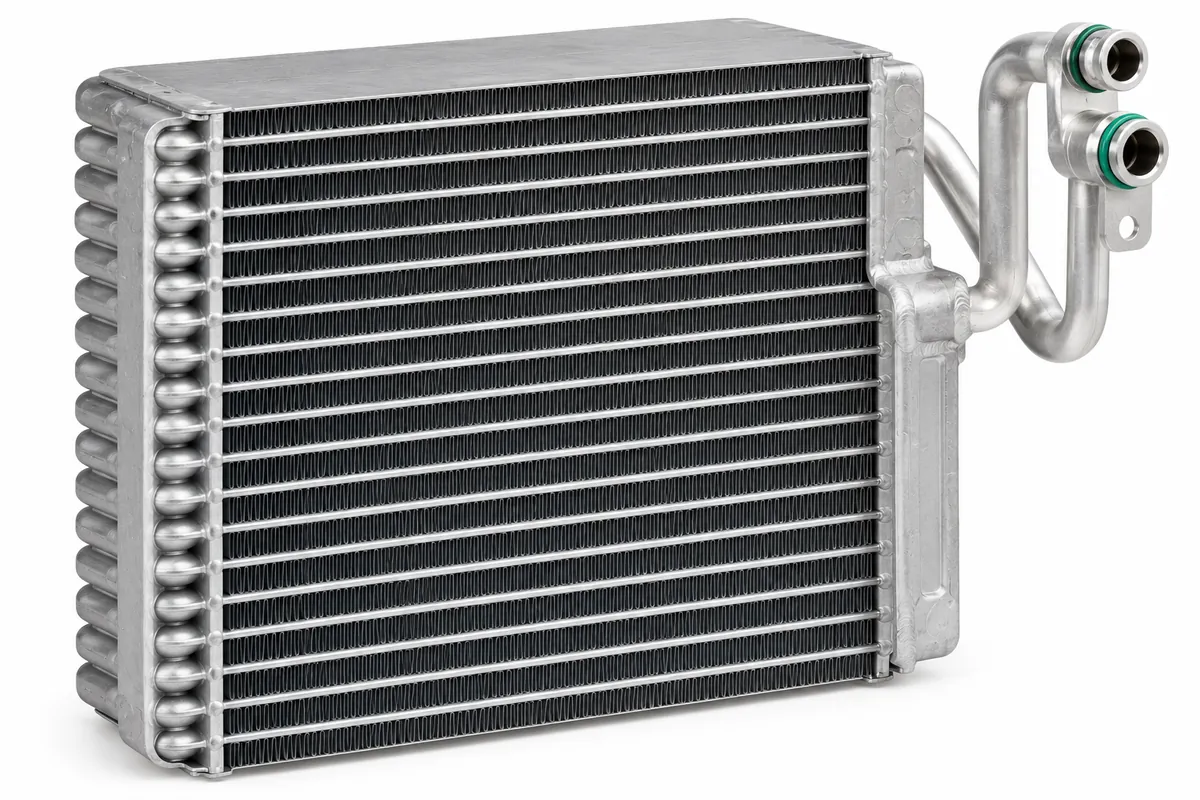
Mobile AC Evaporator Diagnostics in Daytona Beach
An evaporator should not be replaced merely because the AC is blowing warm.
Poor cooling can result from many conditions elsewhere in the AC system.
When an evaporator problem is suspected, diagnosis can include:
- AC performance testing
- Refrigerant pressure evaluation
- Refrigerant leak diagnosis
- Electronic leak detection
- Inspection for refrigerant dye where applicable
- Evaporator drain inspection
- Vent-temperature evaluation
- Refrigerant line temperature checks
- Evaluating evaporator temperature
- Checking for evaporator icing or freeze-up
- Considering airflow through the evaporator
- Determining whether the evaporator is leaking or restricted
The objective is to develop convincing evidence that the evaporator itself is defective before removing major portions of the dashboard.
What Does a Car AC Evaporator Do?
The evaporator is where the AC system actually removes heat from the air entering the passenger compartment.
Refrigerant enters the evaporator after passing through the system's metering device.
Inside the evaporator, the refrigerant absorbs heat.
At the same time, the blower motor pushes cabin or outside air across the evaporator fins.
Heat transfers from that air into the refrigerant.
The air leaving the evaporator is therefore substantially cooler than the air entering it.
That cooled air is then directed through the HVAC housing and vehicle vents.
Where Is the AC Evaporator Located?
Unlike the condenser, which is normally visible at the front of the vehicle, the evaporator is usually hidden inside the HVAC housing.
Depending on the vehicle, it may be located:
- Behind the dashboard
- Inside the HVAC case
- Near the heater core
- Above or behind the glove-box area
- Deep within the instrument-panel structure
This location protects the evaporator from road debris but makes diagnosis and replacement considerably more involved.
On many vehicles, you cannot simply look under the hood and visually inspect the complete evaporator core.
AC Evaporator vs. AC Condenser
The evaporator and condenser are both heat exchangers, but they perform opposite jobs in different parts of the AC system.
AC Evaporator
The evaporator is inside the HVAC system and absorbs heat from cabin air.
AC Condenser
The condenser is near the front of the vehicle and releases refrigerant heat into outside air.
The evaporator becomes cold.
The condenser becomes hot.
That distinction is fundamental to understanding automotive air conditioning.
AC Evaporator vs. Heater Core
The evaporator and heater core are often located close together inside the HVAC housing, but they belong to different systems.
The evaporator contains AC refrigerant and cools the air.
The heater core contains engine coolant and heats the air.
This distinction is especially important when diagnosing fluid or odors inside the passenger compartment.
A leaking heater core and leaking AC evaporator require completely different repairs.
Signs of an AC Evaporator Problem
Possible evaporator-related symptoms include:
- AC gradually losing cooling
- Repeated refrigerant loss
- Warm vent air
- Weak cooling despite proper compressor operation
- Refrigerant leak detected near the evaporator
- Refrigerant dye appearing at the evaporator drain
- AC performance changing as the evaporator freezes
- Restricted airflow after extended AC operation
- Unusual temperature behavior across the evaporator
These symptoms are not exclusive to evaporator failure.
Diagnosis is particularly important because evaporator replacement can require extensive labor.
Leaking AC Evaporator Core
Refrigerant leakage is one of the primary reasons an evaporator needs replacement.
Leaks can develop because of:
- Corrosion
- Material deterioration
- Cracks
- Failed joints
- Physical damage
- Manufacturing defects
- Long-term vibration or thermal cycling
Because the core is hidden inside the HVAC housing, the exact leak may not be directly visible.
We therefore look for evidence that isolates the leak to the evaporator area before recommending replacement.
Why Evaporator Leaks Can Be Difficult to Find
A condenser leak may leave visible evidence at the front of the vehicle.
An evaporator leak occurs inside an enclosed HVAC box.
Escaping refrigerant can travel through:
- HVAC ducts
- Evaporator drain
- Case seams
- Interior vents
This makes pinpointing the source more challenging.
A refrigerant leak somewhere in the engine compartment should not be mistaken for an evaporator leak simply because the system repeatedly loses charge.
The leak needs to be traced.
Electronic Leak Detection at the Evaporator
An electronic refrigerant leak detector can be useful when an evaporator leak is suspected.
Depending on vehicle design and access, testing may be performed near:
- Evaporator drain
- HVAC vents
- HVAC housing
- Evaporator connections
The objective is to detect refrigerant escaping from the area containing the evaporator.
Care is required because refrigerant from another leak can sometimes travel with airflow and produce misleading readings.
The test results need to be considered with the rest of the diagnosis.
Checking the Evaporator Drain for Refrigerant Leaks
Moisture removed from cabin air condenses on the cold evaporator.
That water normally drains through a tube and drips underneath the vehicle.
Because the drain originates at the evaporator housing, it can provide a useful diagnostic location when looking for an evaporator refrigerant leak.
Evidence of refrigerant or fluorescent dye at the drain can strongly point toward leakage inside the HVAC case.
This allows evaporator diagnosis without immediately dismantling the dashboard just to look for a leak.
UV Dye and AC Evaporator Leaks
If fluorescent refrigerant dye is present in the AC system, a leaking evaporator may leave dye in condensate draining from the HVAC housing.
Depending on the leak and vehicle design, dye may be detected:
- At the evaporator drain
- Around accessible evaporator connections
- Near the HVAC housing
Because the evaporator itself is usually hidden, indirect evidence like this can be particularly useful.
Refrigerant Loss With No Visible Under-Hood Leak
An evaporator becomes a stronger suspect when the AC repeatedly loses refrigerant but a thorough inspection fails to locate an external leak.
That still does not prove the evaporator is leaking.
Other concealed or difficult-to-access refrigerant connections may exist.
However, when leak-detection evidence points toward the HVAC housing and no external source can be identified, evaporator leakage becomes an important diagnostic possibility.
AC Evaporator Temperature
The evaporator must become cold enough to remove cabin heat without becoming so cold that moisture freezes across its surface.
Its operating temperature depends on:
- Refrigerant pressure
- Refrigerant flow
- Compressor operation
- Metering-device operation
- Airflow
- HVAC control strategy
An evaporator that is not reaching the expected temperature can be affected by problems elsewhere in the refrigeration system.
That is why poor evaporator cooling does not automatically mean the evaporator core itself needs replacement.
Evaporator Icing and Freeze-Up
Because moisture condenses on the evaporator, the core can become covered with ice if its temperature falls below freezing for too long.
As ice accumulates between the fins, airflow through the evaporator decreases.
A driver may notice:
- AC starts cold.
- Cooling works normally for a period of time.
- Airflow from the vents gradually becomes weaker.
- The system may recover after the AC is switched off and the ice melts.
Possible causes of evaporator icing can include:
- Incorrect refrigerant conditions
- Evaporator temperature sensor problems
- Airflow problems
- Control-system faults
- Metering problems
An icing evaporator therefore should not automatically be replaced.
The reason it is freezing needs to be diagnosed.
Evaporator Temperature Sensor
Many modern vehicles monitor evaporator temperature with a sensor.
This helps the HVAC or powertrain control system prevent the evaporator from freezing.
If the sensor reports incorrect information, compressor operation may not be controlled properly.
This can produce:
- Evaporator icing
- Intermittent cooling
- Compressor cycling problems
- Incorrect AC operation
A failed temperature sensor is different from a failed evaporator core.
If the sensor is the problem, replacing the evaporator itself would not correct the underlying fault.
Airflow Through the Evaporator
The evaporator can only cool air that actually passes through it.
Restricted airflow can therefore create an AC complaint even when the refrigeration side is operating normally.
Possible airflow problems include:
- Dirty cabin air filter
- Blower motor problem
- Blower speed-control problem
- Debris inside the HVAC case
- Evaporator icing
- Severely contaminated evaporator fins
- HVAC door problems
A weak stream of air from the vents should therefore be separated from a situation where airflow is strong but the air is not cold.
Those symptoms lead diagnosis in different directions.
Dirty AC Evaporator
Because air continually passes across the evaporator, dirt and organic material can accumulate on its surface over time.
A cabin air filter helps prevent contamination on vehicles equipped with one, but it cannot eliminate every particle.
A heavily contaminated evaporator can:
- Restrict airflow
- Reduce heat transfer
- Retain moisture
- Contribute to unpleasant HVAC odors
Surface contamination is different from an internal refrigerant failure.
The appropriate service depends on the condition and accessibility of the evaporator.
Musty Smell From the AC
A musty or mildew-like odor from the vents is often associated with moisture and biological growth in the HVAC system.
The evaporator remains wet after AC operation because water condenses on it.
That environment can contribute to odor.
However, a musty smell does not automatically mean the evaporator core needs replacement.
Possible considerations include:
- Evaporator surface contamination
- Cabin air filter condition
- HVAC case contamination
- Drainage problems
Evaporator replacement is generally reserved for an actual core failure rather than odor alone.
Water Under the Car From the Evaporator
Water dripping underneath the vehicle while the AC is operating is normally not an evaporator refrigerant leak.
It is usually condensation.
As humid air passes across the cold evaporator, water condenses on the fins and collects in the HVAC case.
That water exits through the evaporator drain.
In Daytona Beach's humid climate, a substantial amount of condensate can be completely normal during AC operation.
Clear water under the vehicle should therefore not be confused with leaking refrigerant.
Water Inside the Passenger Compartment
If evaporator condensation cannot drain properly, water can collect inside the HVAC case and potentially enter the passenger compartment.
Possible causes include:
- Blocked evaporator drain
- Disconnected drain
- Damaged HVAC case
- Debris obstructing drainage
This is primarily a condensate drainage problem, not proof that the evaporator core has failed.
The drain system should be inspected before recommending evaporator replacement.
AC Evaporator Restriction
Although leakage is a common evaporator failure, refrigerant flow through the evaporator can also be affected by restriction or contamination.
Possible contributors can include:
- Internal debris
- Contamination from compressor failure
- Metering-device problems
- Moisture-related contamination
Pressure and temperature behavior can help distinguish a refrigerant-flow problem from a simple refrigerant leak.
Because the metering device is located immediately before the evaporator in the refrigerant circuit, the two need to be differentiated during diagnosis.
Evaporator vs. Expansion Valve or Orifice Tube
The expansion valve or orifice tube controls refrigerant entering the evaporator.
The evaporator then absorbs heat from the air.
A restriction at the metering device can make the evaporator perform poorly even though the evaporator itself is not defective.
That means abnormal evaporator temperature or poor cooling can involve the component feeding the evaporator rather than the core itself.
Jimmy’s Mobile Care treats metering-device problems separately rather than automatically replacing the evaporator.
Evaporator Problems After Compressor Failure
A severe internal compressor failure can circulate contamination through the AC system.
Depending on the failure, debris can move into other refrigerant components.
When compressor contamination is present, the evaporator and associated refrigerant circuit need to be considered as part of the overall repair.
However, compressor failure does not automatically mean the evaporator needs replacement.
The system design, contamination level, and service procedure determine what additional components require attention.
Why Evaporator Replacement Can Be Labor-Intensive
The evaporator itself may not be particularly large.
The difficulty is reaching it.
On many vehicles, the evaporator is buried inside an HVAC case located behind the dashboard.
Access can require removal or repositioning of components such as:
- Center console
- Glove box
- Dashboard trim
- Instrument panel
- Steering-column components
- Electrical connectors
- Air ducts
- HVAC controls
- Cross-car structural supports
- HVAC housing
The exact procedure varies dramatically between vehicles.
This explains why evaporator replacement cost can be high even when the evaporator core itself is not an unusually expensive part.
Dashboard Removal for AC Evaporator Replacement
Some vehicles require substantial dashboard removal to access the HVAC housing.
This work must be approached systematically.
Modern dashboards can contain:
- Airbag circuits
- Electronic modules
- Wiring harnesses
- Infotainment equipment
- HVAC controls
- Instrument-cluster connections
- Sensors
- Structural supports
The difficulty isn't merely getting the dashboard apart.
Everything must also be correctly connected, aligned, and reassembled after the evaporator repair.
Does Every Vehicle Require Dashboard Removal?
No.
Evaporator access varies considerably by vehicle.
Some applications require extensive instrument-panel removal.
Others provide:
- Partial HVAC-case access
- Removable lower panels
- Split HVAC housings
- Different service openings
The vehicle's construction determines the actual procedure.
This is why evaporator replacement labor can vary dramatically from one car to another.
AC Evaporator Replacement
Once diagnosis confirms an evaporator-core failure, replacement can involve:
- Confirming the evaporator fault. Refrigerant leakage or another core failure should be established before major disassembly begins.
- Recovering the refrigerant. The sealed AC system must be properly discharged using refrigerant-recovery equipment.
- Disconnecting the battery and preparing the interior. Electrical and safety procedures depend on the vehicle.
- Removing required interior components. Trim, console pieces, glove box, instrument-panel components, or the dashboard may need removal.
- Disconnecting refrigerant lines from the evaporator. Connections at the firewall or HVAC case are opened as required.
- Accessing the HVAC housing. The case containing the evaporator is exposed.
- Opening or removing the HVAC case as required. Vehicle design determines the exact procedure.
- Removing the old evaporator core. The failed core is separated from the housing.
- Inspecting the HVAC case. Drainage, seals, contamination, and surrounding components can be checked while access is available.
- Installing the replacement evaporator. The new core is correctly positioned within the HVAC case.
- Replacing applicable seals. Refrigerant connections and case seals are renewed where required.
- Reassembling the HVAC housing and dashboard. Removed interior components and electrical connections are restored.
- Evacuating the AC system. Air and moisture are removed from the opened refrigerant circuit.
- Checking system integrity. The repaired system is checked before charging.
- Charging the specified refrigerant amount. Refrigerant is restored according to vehicle specifications.
- Testing AC and HVAC operation. Cooling, airflow, controls, vent temperature, and related functions are verified.
The extensive access work is why confirming evaporator failure before replacement is so important.
Refrigerant Line Connections at the Evaporator
The evaporator normally connects to refrigerant lines near the HVAC housing or firewall.
Those connections use seals designed to contain refrigerant under changing pressure and temperature.
A leak in this area needs to be distinguished from a leak in the evaporator core itself.
If the connection or seal is leaking while the evaporator remains sound, replacing the entire evaporator may not be necessary.
Evaporator Seals and O-Rings
Whenever evaporator refrigerant connections are opened, applicable seals should be handled according to the service procedure.
Old or damaged O-rings can create a new refrigerant leak after an otherwise successful evaporator replacement.
The correct seal:
- Size
- Material
- Lubrication
- Installation
all matter.
The connection must remain leak-free once the system is evacuated and recharged.
Evaporator Replacement and AC Oil
Some refrigerant oil can remain within the evaporator being removed.
The replacement procedure may require accounting for that oil according to the vehicle manufacturer's specifications.
Too little oil can reduce compressor lubrication.
Too much oil can interfere with system performance.
Oil quantity and type should therefore be determined for the particular AC system rather than estimated.
Evacuating the AC System After Evaporator Replacement
Replacing the evaporator opens the refrigerant system to atmospheric air and moisture.
Before refrigerant is restored, the system must be evacuated.
Vacuum evacuation helps remove:
- Air
- Moisture
- Non-condensable gases
It also provides an opportunity to evaluate whether the repaired system can maintain vacuum before charging.
This is an essential part of evaporator replacement.
Recharging the AC After Evaporator Replacement
After evacuation and appropriate leak checking, the AC system needs the specified refrigerant charge.
The correct charge matters because both undercharging and overcharging can affect:
- Cooling performance
- System pressures
- Compressor operation
The refrigerant quantity should be based on the vehicle specification rather than adding refrigerant until the vent air seems cold.
Why a New Evaporator May Not Fix Poor Cooling
An evaporator should only be replaced when diagnosis supports an evaporator failure.
Poor AC performance can still result from:
- Low refrigerant caused by another leak
- Compressor problem
- Condenser airflow problem
- Metering-device fault
- Incorrect refrigerant charge
- Blower problem
- HVAC door problem
- Temperature-sensor problem
Replacing the evaporator because “the AC isn't cold” can result in substantial unnecessary labor without correcting the actual fault.
Can an AC Evaporator Be Repaired?
Whether an evaporator can technically be repaired depends on its construction, damage location, and accessibility.
In practical automotive service, a leaking evaporator core buried inside the HVAC housing is generally replaced rather than removed, patched, and reinstalled.
The labor required to reach the evaporator makes repair reliability particularly important.
Nobody wants to remove the dashboard twice because an uncertain evaporator-core repair began leaking again.
How Much Does Car AC Evaporator Replacement Cost?
Car AC evaporator replacement cost can vary substantially between vehicles.
Major cost factors include:
- Vehicle year, make, and model
- Evaporator location
- Dashboard removal requirements
- HVAC housing design
- Labor required for access
- Evaporator-core price
- Refrigerant type and quantity
- Refrigerant recovery and recharge
- Required seals
- AC oil requirements
- Expansion-valve access
- Additional HVAC components requiring removal
- Other refrigerant leaks discovered during diagnosis
On many vehicles, access labor is a larger factor than the evaporator core itself.
A vehicle with relatively simple HVAC-case access can therefore have a dramatically different evaporator replacement cost from one requiring extensive dashboard removal.
Why Diagnose the AC Evaporator Before Replacing It?
Evaporator replacement can be one of the most labor-intensive AC repairs on a vehicle.
Diagnosis should therefore answer several questions before the dashboard is dismantled.
Is the AC System Actually Losing Refrigerant?
Poor cooling alone does not establish an evaporator leak.
Have External Refrigerant Leaks Been Considered?
A leak elsewhere in the system should not be blamed on a hidden evaporator.
Is There Evidence of Refrigerant at the Evaporator Housing or Drain?
Leak detection near the HVAC case can help isolate the evaporator.
Is the Problem Refrigerant Flow Rather Than Leakage?
A metering-device or other AC problem can affect evaporator performance.
Is the Evaporator Freezing?
If so, we need to determine why rather than automatically replacing the core.
Is Airflow Through the Evaporator Restricted?
Cabin filters, blower problems, icing, and HVAC contamination can reduce airflow.
Does the Vehicle Require Extensive Dashboard Removal?
The exact replacement procedure should be understood before major disassembly begins.
Establishing the failure first helps avoid one of the most invasive AC repairs being performed unnecessarily.
Mobile AC Evaporator Diagnostics in Daytona Beach
Jimmy’s Mobile Care provides mobile AC evaporator diagnostics in Daytona Beach.
If your AC repeatedly loses refrigerant, an evaporator leak is suspected, the evaporator freezes, or another diagnosis suggests an evaporator-core problem, we can evaluate the AC system and look for evidence that confirms where the fault originates.
Because evaporator replacement can require extensive dashboard and HVAC-case disassembly, we place particular emphasis on confirming the failure before recommending replacement.
AC Evaporator Replacement in Daytona Beach
When an evaporator has been confirmed defective, we can determine what is involved in replacing it on your specific vehicle.
Evaporator replacement requirements vary substantially. Some vehicles allow relatively direct access, while others require extensive instrument-panel and HVAC-housing removal that may affect whether the job is suitable for mobile service.
We evaluate the vehicle and required procedure before committing to the repair.
Schedule AC Evaporator Diagnostics & Replacement in Daytona Beach
A hidden evaporator leak can cause repeated refrigerant loss, but replacing the evaporator should come after the leak has been properly isolated.
Jimmy’s Mobile Care diagnoses evaporator-related refrigerant loss, cooling problems, icing, and airflow concerns before determining whether the evaporator core actually requires replacement.
Call Jimmy’s Mobile Care at (386) 308-2509 to schedule car AC evaporator diagnostics and replacement in Daytona Beach, FL. Call today and we'll come to your location.