
Car Serpentine Belt Inspection & Replacement in Daytona Beach, FL
The serpentine belt transfers engine power to important accessories such as the alternator, power steering pump on many vehicles, water pump on some engines, and air-conditioning compressor. A worn, contaminated, stretched, cracked, frayed, glazed, or incorrectly tensioned belt can squeal, chirp, slip, damage nearby components, or fail completely.
Jimmy’s Mobile Care provides car serpentine belt inspection and replacement in Daytona Beach, FL. We inspect the belt itself along with the tensioner, idler pulleys, accessory pulleys, alignment, routing, and contamination before recommending replacement so a bad pulley bearing, weak tensioner, leaking component, or accessory failure is not mistaken for a simple belt problem.
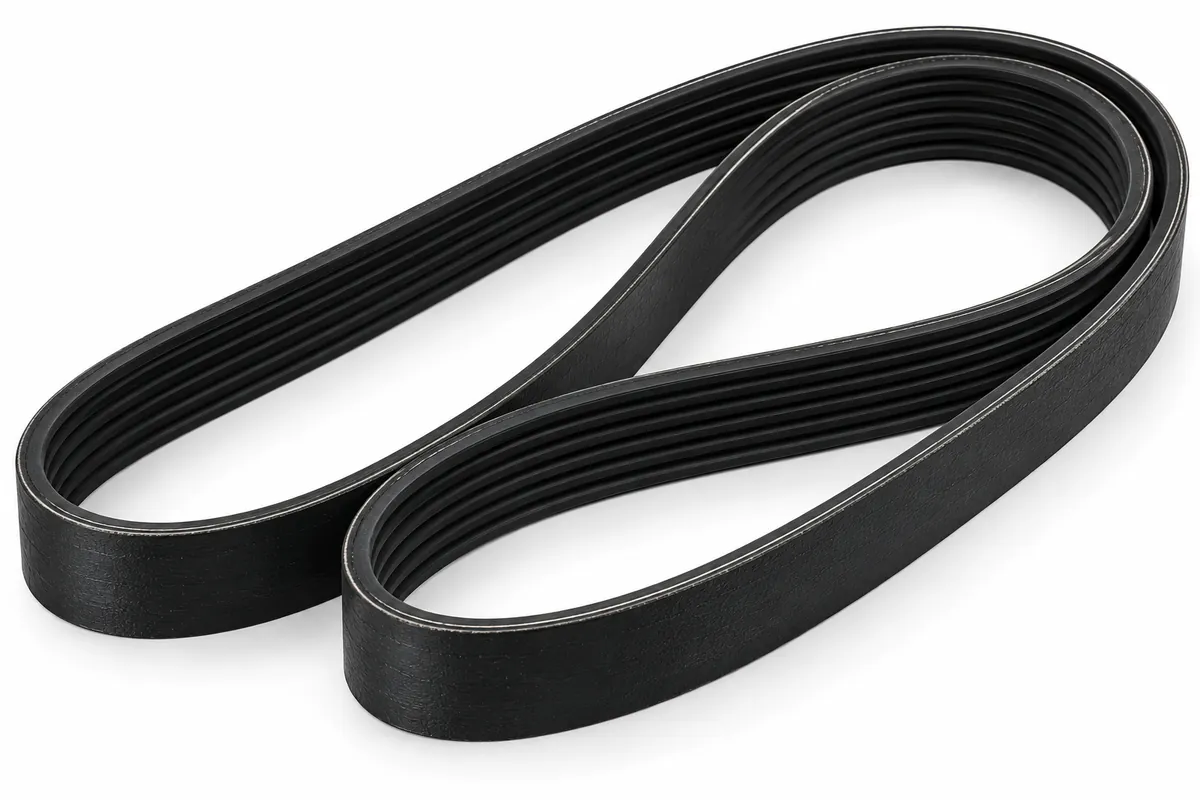
Mobile Serpentine Belt Inspection in Daytona Beach
A noisy belt drive should not automatically be repaired by installing a new belt.
Depending on the vehicle and symptoms, inspection can include checking:
- Serpentine belt ribs
- Back side of belt
- Cracks
- Rib wear
- Fraying
- Missing sections
- Glazing
- Oil contamination
- Coolant contamination
- Belt tension
- Automatic tensioner
- Tensioner pulley
- Idler pulleys
- Accessory pulleys
- Pulley alignment
- Belt routing
- Alternator pulley
- AC compressor pulley
- Water-pump pulley where belt-driven
- Power steering pulley where applicable
- Crankshaft pulley
- Harmonic balancer
- Belt tracking
- Belt noise
The objective is to determine whether the belt itself is worn or whether another accessory-drive problem is damaging or disturbing the belt.
What Is a Serpentine Belt?
A serpentine belt is a long, continuous accessory drive belt that routes around several pulleys at the front or side of an engine.
It is called “serpentine” because its routing often winds back and forth around multiple components.
Depending on vehicle design, one belt can drive:
- Alternator
- AC compressor
- Power steering pump
- Water pump
- Other engine accessories
Not every vehicle uses one belt for every accessory.
Serpentine Belt vs. Drive Belt
“Drive belt” is a broader term.
A serpentine belt is one type of engine accessory drive belt.
Some vehicles use:
- One serpentine belt
- Multiple accessory belts
- Stretch-fit belts
- Separate AC belts
The correct belt system should be identified before parts are ordered.
Serpentine Belt vs. AC Belt
Jimmy’s Mobile Care has a separate page for AC belt inspection and replacement because a dedicated AC belt is not always the same thing as the main serpentine belt.
Serpentine Belt
May drive several accessories from one continuous belt.
Dedicated AC Belt
Drives primarily or exclusively the AC compressor on vehicles designed with a separate compressor belt.
Some engines use a serpentine belt for most accessories and a second dedicated AC belt.
This page focuses on the main serpentine/accessory drive belt.
Serpentine Belt vs. Fan Belt
“Fan belt” is an older term that is still commonly used to describe an engine drive belt.
Older vehicles often used separate V-belts to drive:
- Cooling fan
- Alternator
- Water pump
- Power steering pump
Most modern vehicles use electric cooling fans and serpentine belts.
A customer asking for a fan belt may actually need a serpentine belt, V-belt, or another accessory belt depending on vehicle design.
Serpentine Belt vs. Timing Belt
A serpentine belt and timing belt perform completely different functions.
Serpentine Belt
Drives external engine accessories.
Timing Belt
Synchronizes internal engine components such as:
- Crankshaft
- Camshaft
A broken serpentine belt does not normally alter valve timing.
A broken timing belt can cause major internal engine problems on certain engines.
This page is not about timing-belt replacement.
What Does a Serpentine Belt Drive?
Depending on vehicle design, the belt can drive several components.
Alternator
Generates electrical power and charges the battery while the engine runs.
AC Compressor
Circulates refrigerant through the air-conditioning system.
Power Steering Pump
Provides hydraulic steering assist on vehicles using belt-driven hydraulic power steering.
Water Pump
Circulates coolant on engines where the water pump is driven by the accessory belt.
Modern vehicles may use electric versions of some of these components, so not every serpentine belt drives the same accessories.
How a Serpentine Belt Transfers Power
The crankshaft pulley turns whenever the engine runs.
The serpentine belt transfers this rotational force to accessory pulleys.
One side of the belt typically contains multiple longitudinal ribs that fit corresponding grooves in certain pulleys.
The smooth back side may run against smooth pulleys such as:
- Idler pulley
- Tensioner pulley
Correct:
- Routing
- Tension
- Alignment
are necessary for reliable operation.
Serpentine Belt Ribs
The ribbed side provides a large contact area while keeping the belt flexible enough to route around multiple pulleys.
Ribs can become:
- Worn
- Cracked
- Torn
- Contaminated
- Separated
Modern belt materials may not always develop obvious deep cracks before they wear out, so rib condition should be evaluated beyond simply looking for cracks.
EPDM Serpentine Belts
Many modern serpentine belts are made from EPDM rubber.
These belts tend to wear differently than older neoprene belts.
An EPDM belt may lose rib material and become worn without developing the dramatic cracking commonly associated with older belts.
That means a belt can be worn even when it does not look severely cracked.
Signs of a Worn Serpentine Belt
Possible signs include:
- Cracking
- Rib wear
- Fraying
- Glazing
- Missing rib sections
- Exposed cords
- Belt squeal
- Belt chirp
- Belt slipping
- Belt tracking incorrectly
- Visible contamination
Some accessory-drive symptoms can also come from the tensioner or pulleys, so inspection should include the entire drive system.
Cracked Serpentine Belt
Small cracks can develop as a belt ages.
Cracking can indicate:
- Heat exposure
- Material aging
- Flex fatigue
However, crack appearance alone should not be the only condition used to evaluate a modern EPDM belt.
Rib wear and material loss are also important.
Frayed Serpentine Belt
Fraying along one edge can indicate more than normal belt wear.
Possible causes include:
- Pulley misalignment
- Bent accessory bracket
- Damaged pulley
- Incorrect belt routing
- Belt running off-center
Replacing the belt without correcting the alignment problem may damage the new belt.
Missing Belt Ribs
Pieces of rib material can break away because of:
- Advanced belt deterioration
- Foreign object damage
- Misalignment
- Damaged pulley
A belt missing substantial rib material should be replaced, but the accessory drive should also be inspected for the cause.
Exposed Belt Cords
Internal tensile cords provide strength to the belt.
If cords become visible because the belt has:
- Frayed
- Split
- Worn through
the belt is significantly damaged.
Replacement should not be delayed.
Glazed Serpentine Belt
A glazed belt can develop a shiny, hardened surface.
Possible causes include:
- Slipping
- Excessive heat
- Incorrect tension
- Pulley problems
Glazing can reduce friction and contribute to continued slipping or squealing.
The reason the belt overheated should be found before replacement.
Serpentine Belt Squeal
A squealing accessory belt often indicates belt slip.
Possible causes include:
- Weak tensioner
- Contaminated belt
- Incorrect belt
- Seized accessory
- Pulley misalignment
- Excessive load
A new belt can still squeal if one of these underlying problems remains.
Serpentine Belt Chirp
A chirping belt often produces a repetitive sound that changes with engine speed.
Possible causes can include:
- Pulley misalignment
- Damaged belt ribs
- Pulley contamination
- Worn pulley bearing
- Belt tracking problem
Chirp and squeal can sound similar, but their causes may differ.
Belt Noise at Cold Start
A belt that squeals briefly after a cold start can result from:
- Moisture
- Weak tensioner
- Belt wear
- High alternator load
- Pulley problem
Cold-start noise should be evaluated rather than automatically treated with belt dressing.
Serpentine Belt Noise When AC Turns On
When the AC compressor engages, accessory-drive load can increase.
If the belt begins squealing at that time, possible causes include:
- Weak tensioner
- Worn belt
- AC compressor pulley problem
- Compressor drag
- Contamination
The compressor should not automatically be blamed, and neither should the belt.
The system should be inspected under load.
Belt Noise When Steering
On vehicles with a belt-driven hydraulic power steering pump, steering input can increase belt load.
Squeal during steering may result from:
- Weak belt tension
- Power steering pump load
- Contaminated belt
- Pulley problem
Vehicles with electric power steering may not use a belt-driven steering pump at all.
Serpentine Belt and Battery Warning Light
If the serpentine belt stops driving the alternator, the charging system may stop producing electrical power.
Possible symptoms include:
- Battery warning light
- Low charging voltage
- Eventually discharged battery
A battery light does not automatically mean the alternator has failed.
The belt and drive system should be inspected.
Serpentine Belt and Overheating
On engines where the serpentine belt drives the water pump, a broken or slipping belt can stop or reduce coolant circulation.
This may cause rapid overheating.
However, not every engine uses a belt-driven water pump.
Some use:
- Timing-belt-driven pump
- Timing-chain-driven pump
- Electric water pump
The specific engine design matters.
Serpentine Belt and Power Steering Loss
If the belt drives a hydraulic power steering pump and the belt breaks, steering assist may be lost.
The steering wheel may suddenly become much harder to turn.
Vehicles with electric power steering may not experience this symptom.
Serpentine Belt and AC Operation
If the main serpentine belt drives the AC compressor, a belt failure can stop compressor operation.
However, poor AC performance can also come from:
- Refrigerant problem
- Compressor problem
- Electrical control problem
Lack of AC operation alone does not prove the belt is bad.
Broken Serpentine Belt
A broken belt can disable several systems at once.
Depending on the vehicle, symptoms may include:
- Battery warning light
- Loss of AC
- Heavy steering
- Overheating
- Belt pieces in engine compartment
A broken belt should prompt inspection of the entire drive system before another belt is installed.
Why Did the Serpentine Belt Break?
Possible causes include:
- Severe belt wear
- Seized accessory pulley
- Seized idler
- Failed tensioner
- Misalignment
- Contamination
- Incorrect belt
- Damaged crank pulley
- Foreign object
Installing another belt without finding the reason for failure can result in a second broken belt.
Serpentine Belt Came Off
A belt can come off the pulleys because of:
- Weak or broken tensioner
- Pulley misalignment
- Bearing failure
- Damaged harmonic balancer
- Incorrect routing
- Wrong belt length
- Accessory movement
A thrown belt should not simply be reinstalled until the cause is found.
Shredded Serpentine Belt
A belt that shreds along one or more ribs often points toward an alignment or pulley problem.
Possible causes include:
- Pulley wobble
- Misaligned tensioner
- Bent bracket
- Damaged harmonic balancer
- Belt riding over pulley edge
The worn belt is often a symptom of the underlying fault.
Belt Wrapped Around Crankshaft Pulley
A shredded belt can sometimes wrap around the crankshaft pulley or nearby components.
Loose belt material should be removed carefully.
On some engines, belt debris near the crankshaft area can create additional problems.
If the belt has shredded severely, the entire area should be inspected before the engine is operated.
Oil on Serpentine Belt
Engine oil can damage belt material and reduce friction.
Common sources include:
- Valve-cover leak
- Front engine seal leak
- Oil-filter housing leak
- Other nearby engine leak
A belt soaked with oil may need replacement, but the leak should also be repaired.
Installing a new belt into an active oil leak can shorten its life.
Coolant on Serpentine Belt
Coolant can also contaminate the belt.
Possible sources include:
- Water pump leak
- Hose leak
- Thermostat housing leak
- Radiator-related leak
The cooling-system leak should be repaired and the belt inspected for deterioration.
Power Steering Fluid on Serpentine Belt
On hydraulic steering systems, a power steering leak can contaminate the drive belt.
Possible leak sources include:
- Power steering pump
- Reservoir
- Hose
- Fitting
Fluid contamination can contribute to belt slip and degradation.
Can a Contaminated Serpentine Belt Be Cleaned?
A belt heavily soaked with oil, coolant, or other automotive fluid may suffer material damage.
Cleaning the surface may not restore:
- Friction
- Rubber integrity
- Service life
If contamination is significant, replacement is generally appropriate after the leak source is corrected.
Serpentine Belt Dressing
Belt dressing is not a proper repair for a worn modern serpentine belt.
It may:
- Temporarily change noise
- Contaminate belt surfaces
- Hide the actual cause
Modern EPDM belts are generally intended to operate dry.
Noise should be diagnosed rather than masked with spray.
Serpentine Belt Tensioner
Most modern serpentine systems use an automatic tensioner.
The tensioner maintains pressure on the belt as:
- Belt wears
- Engine speed changes
- Accessories load and unload
A weak or damaged tensioner can cause problems even when the belt itself is new.
Automatic Belt Tensioner
An automatic tensioner commonly includes:
- Spring mechanism
- Pivot
- Tensioner arm
- Pulley
It must maintain sufficient force without excessive oscillation.
Possible failures include:
- Weak spring
- Seized pivot
- Excessive arm movement
- Pulley bearing failure
- Misalignment
Weak Belt Tensioner
A weak tensioner can allow the belt to slip.
Possible symptoms include:
- Squeal
- Belt flutter
- Poor accessory performance
- Rapid belt wear
A worn belt cannot compensate for a tensioner that no longer maintains proper force.
Tensioner Movement
Some tensioner movement while the engine runs is normal because accessory loads fluctuate.
Excessive bouncing or violent oscillation can indicate:
- Tensioner problem
- Damaged pulley
- Accessory problem
- Overrunning alternator pulley issue on vehicles equipped with one
The movement should be evaluated in context.
Belt Tensioner Pulley
The tensioner pulley rides against the serpentine belt.
Its bearing should rotate smoothly without:
- Roughness
- Grinding
- Excessive play
A failing tensioner-pulley bearing can produce noise or cause belt damage.
Idler Pulley
An idler pulley helps guide the belt around the accessory-drive path.
It does not drive an accessory itself.
A worn idler bearing can cause:
- Chirp
- Grinding
- Belt misalignment
- Belt derailment
An idler pulley should be checked whenever a belt is noisy or repeatedly fails.
Idler Pulley Bearing
With the belt removed, a pulley can often be checked for:
- Roughness
- Free play
- Binding
- Noise
A pulley that spins freely is not automatically good; some worn bearings may spin excessively or feel dry.
The overall bearing condition should be considered.
Serpentine Belt Pulley Alignment
All pulleys in the belt path must align closely enough to keep the belt centered.
Misalignment can cause:
- Edge wear
- Fraying
- Chirping
- Belt derailment
Potential causes include:
- Bent bracket
- Failed tensioner
- Incorrect pulley
- Accessory movement
- Damaged crank pulley
Alignment problems should be corrected before a new belt is installed.
Pulley Wobble
A pulley that visibly wobbles while rotating can indicate:
- Bent pulley
- Worn bearing
- Accessory shaft play
- Harmonic balancer failure
A wobbling pulley can push the belt sideways and quickly damage it.
Crankshaft Pulley
The crankshaft pulley is the primary driving pulley for the serpentine belt.
It is often integrated with or attached to the harmonic balancer.
Problems can include:
- Wobble
- Damaged grooves
- Rubber separation
- Misalignment
A belt repeatedly walking off the crank pulley can point to a crank-pulley or balancer problem.
Harmonic Balancer
A harmonic balancer commonly contains:
- Inner hub
- Rubber isolator
- Outer ring/pulley
If the rubber deteriorates, the outer section can shift or wobble.
Possible symptoms include:
- Belt misalignment
- Visible pulley movement
- Belt coming off
Replacing the belt will not correct a failed harmonic balancer.
Alternator Pulley
The alternator pulley is part of the serpentine drive on most conventional systems.
Its condition should be checked for:
- Damage
- Misalignment
- Bearing problems
Certain vehicles use an overrunning alternator pulley or decoupler that can also affect belt and tensioner behavior.
Overrunning Alternator Pulley
An overrunning alternator pulley can allow the alternator to behave differently during rapid engine-speed changes.
If it seizes or fails, symptoms may include:
- Tensioner oscillation
- Belt noise
- Vibration
This is a separate component from the belt itself and should be diagnosed accordingly.
AC Compressor Pulley
The serpentine belt may drive the AC compressor pulley.
Problems with:
- Pulley bearing
- Compressor clutch
- Compressor internals
can affect the belt drive.
A seized AC compressor or pulley can cause:
- Belt squeal
- Belt damage
- Belt failure
A replacement belt alone would not correct that problem.
Power Steering Pump Pulley
On vehicles using belt-driven hydraulic power steering, the pump pulley must remain:
- Aligned
- Secure
- Undamaged
A pulley installed too far in or out on the shaft can misalign the belt.
Water Pump Pulley
On engines where the serpentine belt drives the water pump, pulley condition should be checked.
Possible signs of pump or pulley trouble include:
- Wobble
- Roughness
- Coolant leakage
- Bearing noise
A failing water pump can damage or throw a belt.
Serpentine Belt Routing
The belt must follow a specific path around each pulley.
Routing varies by:
- Engine
- Accessory configuration
- Vehicle options
A routing diagram may be found:
- Under hood
- On radiator support
- In service information
Correct routing is essential.
Wrong Serpentine Belt Routing
Incorrect routing can result in:
- Accessories rotating incorrectly
- Insufficient pulley contact
- Poor tension
- Belt damage
A belt can sometimes appear to fit even when it has been routed incorrectly.
The correct diagram should be followed.
Serpentine Belt Length
The correct belt must have the proper:
- Length
- Width
- Number of ribs
A belt that is too long may not maintain sufficient tension.
A belt that is too short may:
- Be impossible to install correctly
- Overload accessories or tensioner
Application-specific fitment matters.
Serpentine Belt Rib Count
A belt must match the number and spacing of pulley grooves.
A belt with an incorrect rib count may not track properly.
All ribs should sit fully in their corresponding pulley grooves after installation.
Belt Overhanging a Pulley
If one rib hangs over the edge of a grooved pulley, the belt is not installed correctly.
Possible causes include:
- Belt shifted during installation
- Incorrect belt
- Misaligned pulley
Operating the engine with the belt off-center can quickly destroy the belt.
Belt Tracking
Once installed, the belt should remain centered on all pulleys.
If it begins walking toward an edge, possible causes include:
- Misalignment
- Worn tensioner
- Bent bracket
- Incorrect pulley
- Crank-pulley wobble
Tracking should be checked after replacement.
Serpentine Belt Inspection
A thorough inspection can include several steps.
Inspect the Ribbed Surface
Look for:
- Material loss
- Cracks
- Missing ribs
- Embedded debris
Inspect the Back Side
Check for:
- Glazing
- Cuts
- Heat damage
- Abrasion
Inspect Belt Edges
Look for:
- Fraying
- Exposed cords
- Uneven wear
Check for Fluid Contamination
Determine whether oil, coolant, or other fluids are contacting the belt.
Inspect Tensioner
Look for weak tension, binding, or abnormal motion.
Inspect Idler Pulleys
Check bearing condition and alignment.
Inspect Accessory Pulleys
Look for wobble, damage, or resistance.
Verify Belt Routing
Make sure the belt follows the proper path.
Serpentine Belt Wear Gauge
Because EPDM belts can wear without obvious cracking, specialized belt-wear gauges may be used to evaluate rib material loss.
The gauge helps identify when the ribs have worn enough to reduce effective contact with the pulleys.
Visual inspection remains important, but modern belt condition is not always obvious from cracks alone.
How Often Should a Serpentine Belt Be Replaced?
There is no universal mileage interval that applies to every vehicle.
Service life depends on:
- Belt material
- Engine design
- Heat
- Fluid exposure
- Pulley condition
- Driving conditions
Many modern belts can last a long time, but inspection is more useful than replacing them solely because of one fixed mileage number.
Manufacturer maintenance information should also be considered.
Serpentine Belt Life Expectancy
A belt can deteriorate from:
- Age
- Heat cycles
- Mechanical wear
- Contamination
- Pulley misalignment
Two vehicles with the same mileage may have very different belt conditions.
Physical condition and accessory-drive performance should guide replacement.
Should the Serpentine Belt Be Replaced Preventively?
Preventive replacement may be reasonable when the belt has:
- Significant wear
- Cracking
- Glazing
- Fraying
- High age or mileage combined with deterioration
A belt that remains in good condition and within manufacturer guidance does not automatically require replacement.
Should the Tensioner Be Replaced With the Belt?
Not automatically.
The tensioner should be inspected separately.
Replacement may be appropriate if it has:
- Weak spring tension
- Rough pulley bearing
- Excessive arm movement
- Binding
- Misalignment
A healthy tensioner does not need replacement solely because the belt is being changed.
Should Idler Pulleys Be Replaced With the Belt?
Again, not automatically.
Idler pulleys should be checked for:
- Rough bearing
- Play
- Noise
- Misalignment
A good idler can remain in service.
A worn pulley should be replaced to protect the new belt.
Serpentine Belt Replacement
Once inspection confirms the belt needs replacement and the accessory drive is otherwise serviceable, replacement generally includes:
- Identify the correct belt system. Confirm that the vehicle uses a main serpentine belt rather than multiple separate belts.
- Inspect the existing belt before removal. The wear pattern can reveal alignment or pulley problems.
- Inspect for fluid contamination.
- Locate the belt-routing diagram or document the routing.
- Identify the automatic tensioner or manual adjustment system.
- Inspect the tensioner and pulleys.
- Release belt tension using the proper tool.
- Remove the old belt from the pulleys.
- Inspect all accessible pulley grooves.
- Spin or inspect idler and tensioner pulleys as appropriate.
- Check accessory pulleys for roughness or play.
- Inspect the crankshaft pulley and harmonic balancer.
- Compare the new belt with the old belt.
- Verify width, rib count, and application.
- Route the new belt according to the correct diagram.
- Leave an easily accessible pulley for final installation when practical.
- Release the tensioner carefully.
- Seat the belt fully into every grooved pulley.
- Verify the smooth side is correctly positioned on smooth pulleys.
- Inspect belt tracking before starting the engine.
- Start the engine when appropriate.
- Observe the belt while running.
- Check for abnormal tensioner movement.
- Listen for squeal, chirp, or bearing noise.
- Verify the belt remains centered.
- Confirm normal charging, steering, cooling, and AC accessory operation as applicable.
The specific procedure depends on engine layout and belt access.
Releasing the Serpentine Belt Tensioner
Automatic tensioners usually have a location for:
- Wrench
- Ratchet
- Breaker bar
- Dedicated serpentine-belt tool
The tensioner is rotated against spring pressure to create enough slack to remove the belt.
Care is required because the tensioner can return forcefully if released suddenly.
Serpentine Belt Tool
Some engines have limited clearance between the tensioner and:
- Fender
- Frame
- Engine mount
A long, thin serpentine-belt tool can provide access where a standard ratchet does not fit.
Tool requirements vary by vehicle.
Installing a New Serpentine Belt
The new belt should be routed carefully so:
- Ribbed side contacts grooved pulleys
- Smooth side contacts appropriate smooth pulleys
- Every rib is seated correctly
- Belt follows the exact intended path
One mis-seated rib can quickly damage a new belt.
Checking Belt After Installation
Before the engine is started, every pulley should be inspected.
The belt should be:
- Centered
- Fully seated
- Properly tensioned
- Correctly routed
After startup, belt tracking should be observed from a safe position.
New Serpentine Belt Squeals
If a new belt squeals, possible causes include:
- Weak tensioner
- Fluid contamination
- Incorrect belt
- Misalignment
- Seized or dragging accessory
- Damaged pulley
Installing another belt is unlikely to solve the problem until the underlying cause is identified.
New Serpentine Belt Chirps
A new belt chirp can point toward:
- Misalignment
- Pulley groove contamination
- Damaged pulley
- Incorrect belt
- Tensioner alignment
The belt should be inspected while it tracks across all pulleys.
New Belt Keeps Coming Off
Repeated belt derailment usually indicates another mechanical problem.
Possible causes include:
- Failed tensioner
- Bent pulley
- Harmonic balancer separation
- Incorrect routing
- Wrong belt
- Accessory bearing failure
Repeatedly reinstalling the belt is not a proper repair.
New Belt Shredded Quickly
Rapid belt destruction strongly suggests:
- Severe misalignment
- Pulley damage
- Foreign object
- Seized component
- Belt installed off one rib
The drive system should be inspected before another belt is installed.
Serpentine Belt and Alternator Diagnosis
A worn belt can affect alternator speed if it slips badly.
However, low charging voltage can also result from:
- Alternator failure
- Battery problem
- Cable problem
- Charging-system control
The charging system should be tested if electrical symptoms remain after belt inspection.
Serpentine Belt and Water Pump Diagnosis
A failing water pump bearing can create:
- Noise
- Pulley wobble
- Belt damage
A coolant leak near a belt-driven pump can also contaminate the belt.
The water pump should be diagnosed separately rather than replacing the belt alone.
Serpentine Belt and Power Steering Pump Diagnosis
Hydraulic steering pumps can load the belt heavily.
A steering-related belt squeal can result from:
- Belt slip
- Weak tensioner
- Pump problem
- Pulley misalignment
The source should be identified before replacement.
Serpentine Belt and AC Compressor Diagnosis
A compressor or compressor-pulley fault can increase drag on the belt.
Possible results include:
- Squeal
- Heat
- Belt damage
- Broken belt
The AC system and compressor drive should be evaluated if belt problems occur when the compressor is engaged.
Serpentine Belt and Engine Misfire
A worn serpentine belt does not normally cause an engine combustion misfire.
If the engine is:
- Shaking
- Hesitating
- Setting P0300-series codes
the ignition, fuel, air, or mechanical engine systems should be diagnosed separately.
Belt vibration can sometimes feel like engine roughness, but the systems are different.
Serpentine Belt and Timing Problems
A normal accessory belt issue does not alter crankshaft-to-camshaft timing.
If the engine has timing-related faults, those should be diagnosed separately.
The serpentine belt should not be confused with the timing belt.
Stretch-Fit Belts
Some modern engines use stretch-fit accessory belts.
These belts do not use a conventional adjustable or spring-loaded tensioner.
They are designed to stretch into position using a specific installation procedure or tool.
A stretch-fit belt should not be treated like an ordinary serpentine belt.
Stretch Belt vs. Serpentine Belt
A stretch-fit belt may:
- Drive one accessory
- Have no tensioner
- Require special installation method
Some vehicles use both:
- Main serpentine belt
- Separate stretch belt
The correct belt type should be identified before removal.
Can a Stretch Belt Be Reused?
Many stretch-fit belts are intended for one-time installation.
Once removed, they may not maintain the intended tension if reinstalled.
Manufacturer guidance should be followed.
Manual-Tension Accessory Belts
Older or specialized vehicles may use manually adjusted belts rather than automatic tensioners.
Proper tension is set by moving an accessory or adjusting a tensioning mechanism.
These are drive belts, but they are not always true serpentine systems.
Overtightening can damage accessory bearings.
Serpentine Belt Replacement and Engine Mount Removal
Some engine layouts route the belt around or through areas obstructed by an engine mount.
Replacement may require:
- Supporting engine
- Removing mount component
- Additional disassembly
This can make belt replacement significantly more involved than the belt itself suggests.
Serpentine Belt Replacement in Tight Engine Bays
Transverse engines can have limited clearance near:
- Fender
- Frame rail
- Splash shield
Access may require:
- Removing wheel
- Removing splash shield
- Working from above and below
The exact procedure depends on vehicle design.
Serpentine Belt Replacement Cost
Serpentine belt replacement cost depends on factors such as:
- Vehicle year, make, and model
- Number of accessory belts
- Belt access
- Engine layout
- Tensioner condition
- Idler condition
- Pulley problems
- Fluid contamination
- Additional disassembly required
A straightforward belt on one engine can be very different from a belt located behind an engine mount or combined with additional stretch-fit belts.
Call Jimmy’s Mobile Care at (386) 308-2509 with your vehicle information and symptoms so we can determine the appropriate inspection and replacement service.
Why Inspect the Serpentine Drive Before Replacing the Belt?
A belt is only one part of the accessory-drive system.
Is the Belt Actually Worn?
Cracking, material loss, fraying, or contamination should be evaluated.
Is the Tensioner Weak?
A new belt cannot correct inadequate tension.
Is an Idler Pulley Failing?
A rough bearing can destroy a replacement belt.
Are the Pulleys Aligned?
Misalignment can cause repeated belt wear and chirping.
Is an Accessory Seizing?
A dragging alternator, AC compressor, water pump, or other accessory can overload the belt.
Is the Harmonic Balancer Wobbling?
A shifted crank pulley can repeatedly throw or shred belts.
Is a Fluid Leak Contaminating the Belt?
A new belt can quickly become damaged if the leak remains.
Is This Actually a Separate AC Belt?
Vehicles with multiple accessory belts should have the correct belt identified before repair.
Checking the complete drive system helps prevent repeated belt failure.
Mobile Serpentine Belt Inspection in Daytona Beach
Jimmy’s Mobile Care provides mobile car serpentine belt inspection in Daytona Beach for vehicles experiencing:
- Belt squealing
- Belt chirping
- Cracked belt
- Frayed belt
- Glazed belt
- Missing ribs
- Oil or coolant contamination
- Belt slipping
- Belt repeatedly coming off
- Broken serpentine belt
- Suspected tensioner or pulley problems
We inspect the belt and the accessory-drive components needed to determine why the problem occurred.
Mobile Serpentine Belt Replacement in Daytona Beach
When inspection confirms that the serpentine belt needs replacement and the accessory drive is otherwise serviceable, Jimmy’s Mobile Care can replace many serpentine belts at your Daytona Beach location.
After replacement, we can verify:
- Correct belt routing
- Proper rib engagement
- Belt tracking
- Tensioner operation
- Pulley alignment
- No obvious belt slip
- Normal accessory operation
Vehicles with seized accessories, damaged crank pulleys, severe oil or coolant leaks, specialized stretch-belt arrangements, or repairs requiring extensive engine-support procedures may require additional work.
Schedule Car Serpentine Belt Inspection & Replacement in Daytona Beach
A squealing, chirping, frayed, or broken serpentine belt may be the failed component—or it may be the result of a weak tensioner, bad pulley bearing, misalignment, fluid leak, damaged harmonic balancer, or failing accessory.
Jimmy’s Mobile Care inspects the complete serpentine drive before replacement so the new belt is not installed into a problem that will damage it again.
Call Jimmy’s Mobile Care at (386) 308-2509 to schedule car serpentine belt inspection and replacement in Daytona Beach, FL. Call today and we'll come to your location.